Understanding Disc Herniation in Mercier–Hochelaga-Maisonneuve: A Beginner’s Patient Guide to Neurovertebral Decompression Therapy
November 3, 2025
Cervical Disc Prosthesis in Quebec City: Preserve Neck Flexibility
November 3, 2025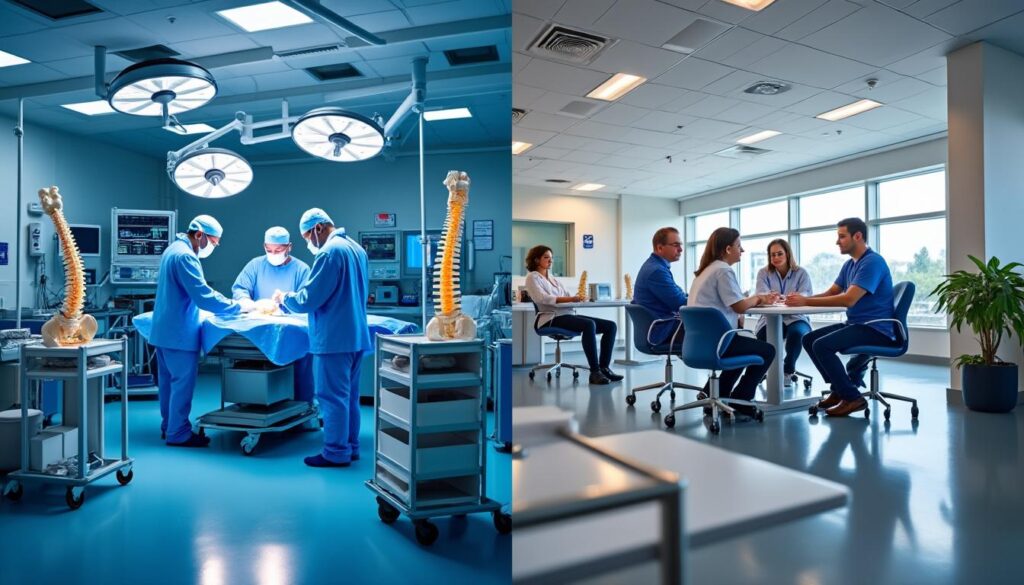
As patients in Quebec face prolonged waiting times and substantial healthcare expenses for spinal disorders, the transatlantic collaboration between Quebec and France emerges as a promising avenue. This innovative partnership intertwines French scientific rigor and cutting-edge techniques with individualized care, offering Quebecois patients timely access to advanced spinal surgical options. The evolving landscape of spine care now necessitates a comprehensive understanding of the discrepancies and synergies between these two systems. Evaluating how these divergent healthcare approaches affect surgical decisions provides valuable insights for clinicians and patients alike, fostering informed choices amid complex treatment paths.
Within this context, the expertise of seasoned professionals with decades of experience ensures that patients receive thorough education about available surgical procedures in France — ranging from simple decompression to fusion and dynamic motion-preserving implants. This comparative framework highlights biomechanical advantages of modern technologies alongside economic and human factors influencing the transatlantic care pathway. Structured protocols and collaborative networks support a secure and evidence-based approach, enhancing decision-making quality while prioritizing patient safety and outcomes.
The Landscape of Spine Surgery in France and Quebec: Comparative Healthcare Models Impacting Surgical Outcomes
Spinal care in France and Quebec operates under distinct healthcare paradigms affecting patient access, procedural techniques, and follow-up protocols. Quebec’s public system, although providing free-at-point-of-care services, often struggles with long delays for specialty consultations and limited physiotherapy coverage, delaying intervention and prolonging patient discomfort. Conversely, France integrates both public and private sectors, enabling quicker access to innovative spinal surgical procedures, including minimally invasive approaches and dynamic implant technologies.
These differing care models create a complex environment in which Quebec patients seeking prompt, advanced treatment increasingly turn to French centers. A notable example is the comprehensive coordination offered by entities like Franchir, which streamlines patient referrals, travel logistics, and multidisciplinary collaboration. An appreciation of these models is crucial as they profoundly influence surgical decision-making by factoring in treatment timelines, technological availability, and recovery infrastructure.
- Quebec healthcare emphasis: Chronic care management, extensive conservative treatment before surgery consideration, focus on rehabilitation continuity
- French healthcare tendencies: Prioritized surgical access, rapid integration of innovative technologies, personalized pathways including motion-preserving implants
- Transatlantic collaboration: Co-management strategies involving expert consultation and post-op rehabilitation to ensure comprehensive care
| Aspect | Quebec System | French System |
|---|---|---|
| Waiting Time for Surgery | Often exceeds 6 months to 1 year | Accelerated access via specialized centers |
| Access to Advanced Implants | Primarily traditional implants | Wide availability of dynamic and motion-preserving implants |
| Post-Operative Care Coordination | Fragmented, variable by region | Integrated within multidisciplinary teams |
Understanding these fundamental distinctions elucidates why French surgical innovation and patient-centric protocols are increasingly shaping spinal care decisions for Quebec patients. The comparative benefits include enhanced functional outcomes, decreased secondary complications, and optimized societal reintegration timelines.

Understanding Sciatic Pain: Key Symptoms and When to Seek Medical Advice
Sciatic pain is a prevalent condition impacting a wide demographic, manifesting primarily as intense pain radiating from the lower back down the leg. This pain stems from irritation or compression of the sciatic nerve, a major nerve extending through the…

The Stepwise Role of Functional Recovery in Achieving Successful Outcomes
The journey to full recovery following spinal surgery is often complex and multifaceted, demanding a meticulously structured approach to ensure optimal functional outcomes. In recent years, the concept of functional recovery through a stepwise approach has garnered significant attention in…
Innovative Surgical Techniques Transforming Spinal Care in France and Their Clinical Relevance for Quebec Patients
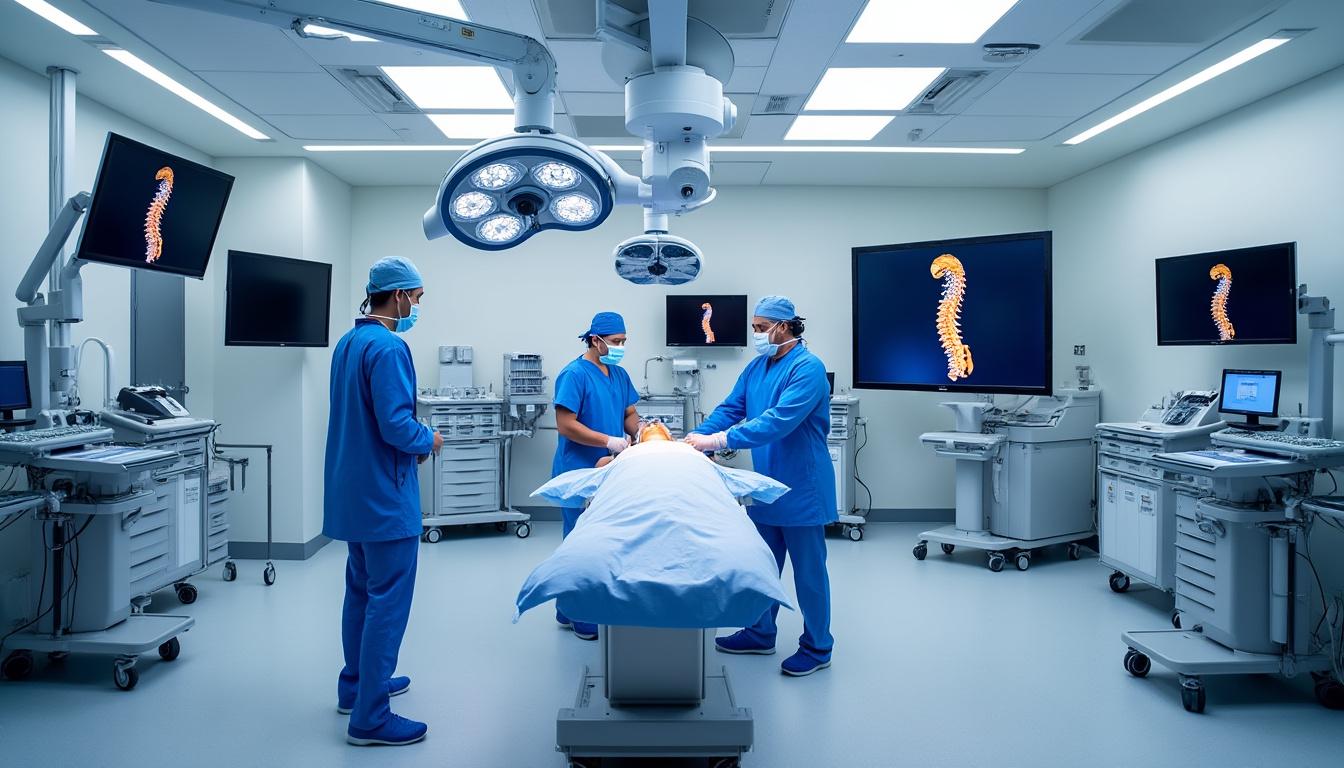
France has embraced a diverse array of spinal surgical techniques, underpinned by rigorous scientific assessment and pioneering implant technologies. These innovations extend beyond classical decompression and fusion approaches, promoting biomechanical preservation and minimizing adjacent segment degeneration risks.
Key Surgical Modalities in French Spine Care
- Simple decompression: Mini-invasive or endoscopic procedures decompress affected neural elements without fusion, facilitating rapid recovery. Microdiscectomy for lumbar herniated discs exemplifies this technique.
- Arthrodesis (fusion): Fusing vertebrae remains the gold standard for spinal instability or deformity. French centers deploy premium implants from companies like Medtronic and Zimmer Biomet, enhancing fixation strength and surgical outcomes.
- Motion-preserving technologies: Dynamic implants such as TOPS and Intraspine enable segmental mobility retention, reducing chronic pain and further degeneration. Cervical and lumbar disc prostheses, aided by cutting-edge implants from Globus Medical and NuVasive, exemplify this evolution.
Each modality is tailored through comprehensive patient assessment to align therapeutic goals with safety considerations. Innovative techniques supported by manufacturers like Stryker and Smith & Nephew also integrate advanced imaging and navigation platforms provided by Siemens Healthineers and GE Healthcare, reinforcing precision and minimizing surgical trauma.
| Surgical Technique | Primary Indications | Advantages | Representative Implant/Technology |
|---|---|---|---|
| Simple decompression (mini-invasive/endoscopy) | Lumbar disc herniation, mild stenosis | Less invasive, faster recovery, avoids spinal rigidity | Microdiscectomy tools, endoscopic platforms |
| Arthrodesis (fusion) | Instability, severe deformities | Stable, long-term correction, relapse prevention | Medtronic rods and screws, Zimmer Biomet cages |
| Motion-preserving implants | Chronic pain, mobility preservation | Preserves spine function, reduces adjacent degeneration | TOPS system, Intraspine prostheses by Globus Medical |
This extensive spectrum not only represents technical advancement but also introduces a new paradigm in surgical decision-making, evidenced in multiple clinical studies and patient-reported outcomes from centers such as the Clinic du Pré specializing in innovative spinal surgery. Quebec patients accessing these options benefit from procedures unavailable or delayed within their local system.

Transatlantic Patient Journey: Insights into Indications, Benefits, and Challenges
The emergence of the Transatlantic Patient Journey as a strategic model within healthcare continues to capture attention for its innovative potential, especially in specialized fields such as spinal surgery. This cross-border care pathway integrates rigorous medical evaluation from Quebec with…
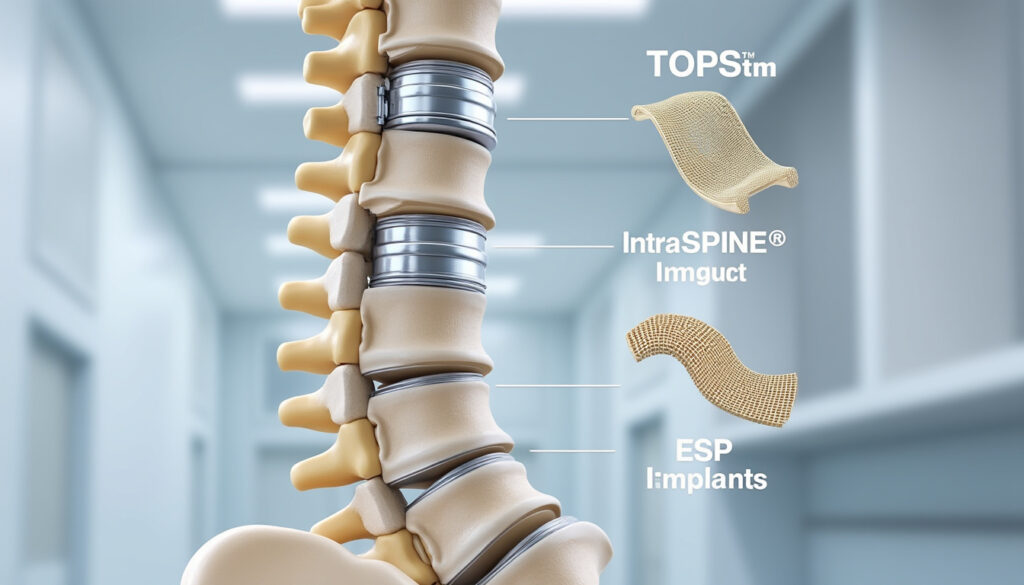
The evolving field of spinal surgery is witnessing a transformative shift, fueled by cutting-edge implant technologies such as TOPS, Intraspine, and ESP. These innovative implants redefine treatment possibilities by emphasizing preservation of natural spinal mechanics, while ensuring durable stabilization and…
Designing a Seamless Transatlantic Care Pathway for Spinal Surgery: The Patient Journey Between Quebec and France
Successful spine surgery depends on a meticulously coordinated care pathway. For Quebec patients, the transatlantic journey involves several critical phases ensuring optimized preparation, operative success, and recovery continuity.
Stages of Transatlantic Spine Care Coordination
- Initial assessment and conservative treatment in Quebec: Extensive clinical evaluation and imaging reviews occur, with a 3-6 month minimum conservative treatment including neuro-vertebral decompression techniques led by clinics like TAGMED.
- Personalized referral and logistics management: Franchir coordinates patient referral to the most suitable French specialists and clinics, overseeing appointment scheduling, travel, and accommodations aligned with medical needs.
- Surgical intervention in France: Patients receive treatment in high-volume centers using state-of-the-art implants and robotic assistance by renowned surgeons backed by models from Boston Scientific and NuVasive.
- Postoperative rehabilitation and monitoring in Quebec: Neurothérapie Montréal spearheads rehabilitation, offering tailored recovery programs to maximize functional restoration and manage complications.
| Phase | Responsible Entity | Core Activities |
|---|---|---|
| Assessment and Conservative Care | Dr. Sylvain Desforges & TAGMED | Comprehensive exam, imaging analysis, controlled neuro-vertebral decompression |
| Referral & Travel Coordination | Franchir | Specialist assignment, travel planning, appointment scheduling |
| Surgery | French Spine Surgery Centers | Advanced surgical procedures, robotics-assisted navigation, intraoperative safety |
| Rehabilitation & Follow-Up | Neurothérapie Montréal | Customized rehab, complication management, functional assessment |
Such well-structured pathways alleviate many limitations imposed by Quebec’s healthcare system, expediting care delivery while maintaining a high standard of multidisciplinary support, as detailed in studies addressing international patient care models focused on clinical outcomes.


Preparing for Surgery in France: Key Indications, Benefits, and Limitations
In an evolving global healthcare landscape, France emerges as a beacon of advanced surgical expertise, particularly attracting international patients seeking expedited and innovative medical interventions. Patients from regions experiencing long wait times, such as Quebec, increasingly view France as an…

Unveiling the Hidden Benefits of Quality and Certification in Devices
The landscape of device manufacturing and clinical application in 2026 has been fundamentally shaped by the rigorous interplay between quality management and certification processes. Within this complex framework, the hidden benefits of adhering to international standards and obtaining relevant certifications…
Biomechanical, Economic, and Human Advantages of International Spine Surgery Pathways
Leveraging transatlantic spine care models yields comprehensive benefits spanning biomechanical, financial, and psychosocial domains for individuals grappling with spinal pathologies.
Biomechanical and Technological Benefits
- Use of dynamic implants: Devices such as TOPS and Intraspine help retain spine mobility, crucial for reducing adjacent segment disease, a frequent concern in classic fusion.
- Advanced imaging and robotic assistance: Systems from Siemens Healthineers and eCential Robotics support precise implant placement and minimize surgical risks.
- Minimized invasiveness: Techniques reduce tissue disruption, contributing to decreased postoperative pain and expedited return to daily activities.
Economic and Accessibility Considerations
- Quebec’s healthcare structure: While providing cost-free public services, it faces staffing shortages leading to extended operative delay and indirect societal costs.
- French system advantages: Though involving higher immediate expenses, access to rapid, state-of-the-art interventions cuts long-term disability and productivity losses.
- Cost-effectiveness of transatlantic care: Despite upfront patient investments, improved surgical efficacy and follow-up reduce overall financial and health burdens.
Human and Ethical Dimensions
- Patient-centered communication: French and Quebec experts emphasize transparency and engagement, prompting informed shared decision-making.
- Comprehensive support throughout treatment: From preoperative counseling to post-discharge rehabilitation, caregiving structures prioritize psychological well-being.
- Cross-border continuity: Ongoing collaboration among care providers ensures management consistency and patient safety.
| Domain | Quebec Healthcare | French Healthcare | Transatlantic Pathway |
|---|---|---|---|
| Access to Surgery | Extended wait times | Priority with innovation | Rapid, well-coordinated |
| Technological Edge | Traditional implants | Dynamic, robotic-assisted | Full access with expertise |
| Outcomes and Quality | Variable, fragmented | Consistent, integrated | Optimized, collaborative |
| Patient Experience | Limited personalization | Individualized care pathways | Holistic, humanistic support |
This synergy underscores an important paradigm shift where cross-national collaboration injects cutting-edge solutions and ethical rigor into spinal surgery, shaping enhanced treatment landscapes.
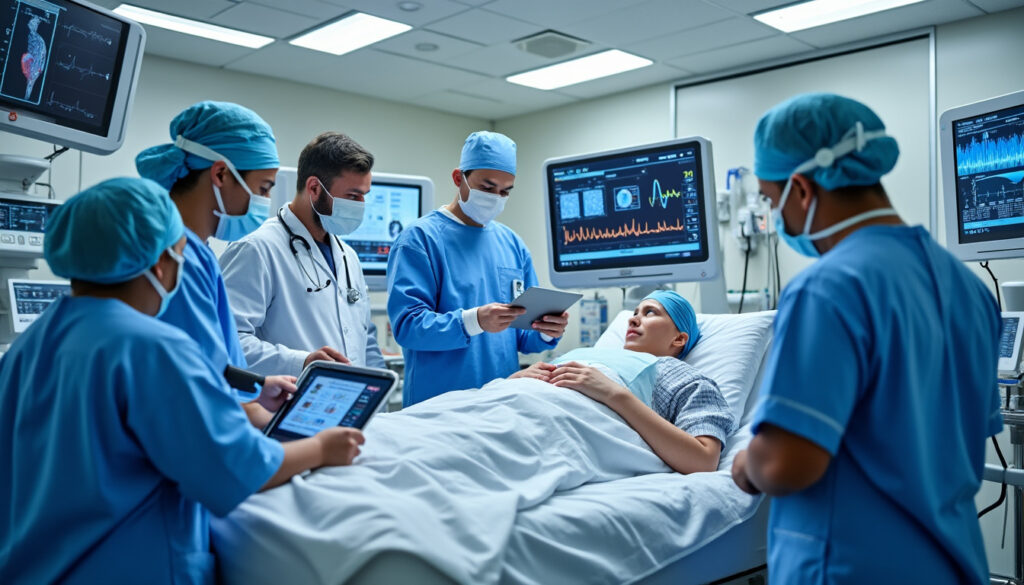
Why Experts Advocate for Comprehensive Preoperative Evaluations
In the complex and demanding field of spinal surgery, the emphasis on comprehensive preoperative evaluations has become a fundamental pillar supporting successful surgical outcomes. These evaluations, far beyond mere routine checks, integrate detailed analyses of patient health, surgical risk assessments,…
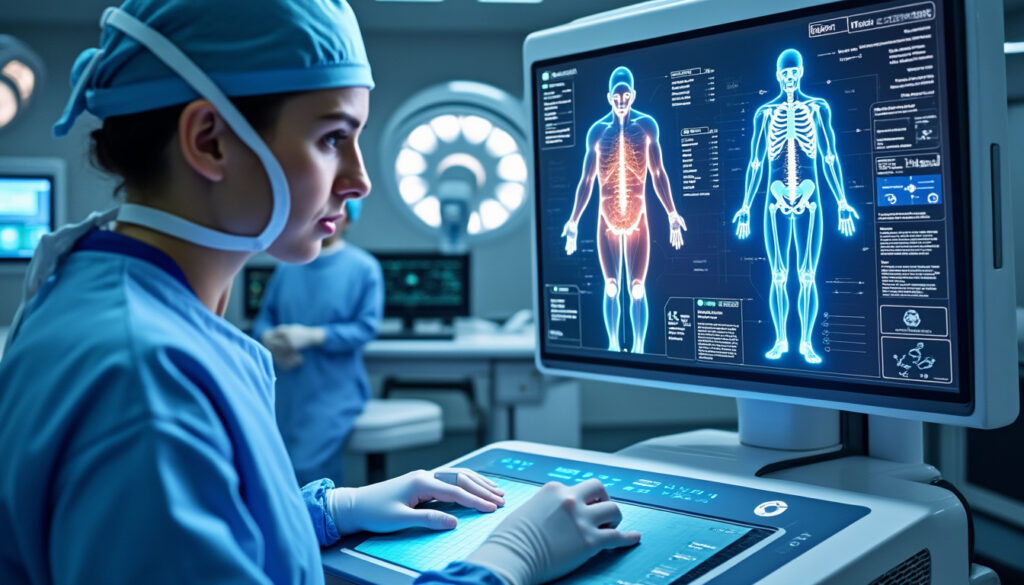
The Future of Surgery Lies in Stepwise Functional Recovery
The evolution of surgical care in 2026 reveals a compelling shift toward approaches that prioritize the holistic recovery of patients, moving beyond traditional metrics like length of hospital stay or mortality rates. This modern paradigm highlights the principle that the…
The Critical Role of Conservative Treatments Before Considering Spine Surgery
Surgical intervention should remain a considered option after exhaustive conservative approaches, emphasizing safety and functional improvement. Preoperative management includes comprehensive non-surgical therapies aimed at alleviating symptoms and potentially negating the need for surgery.
- Duration of conservative care: A minimum 3-6 months course is recommended, as supported by expert guidelines.
- Advanced decompression techniques: Computer-assisted neuro-vertebral decompression at specialized centers like TAGMED exemplify the precision optimization of conservative care.
- Monitoring and evaluation: Continuous assessment guides the timely escalation to surgery only when truly indicated.
| Conservative Treatment | Recommended Duration | Objectives | Benefits |
|---|---|---|---|
| Neuro-vertebral decompression (robot-assisted) | 3–6 months | Reduce nerve pressure | Precise mechanical relief, improves neurological function |
| Supervised treatment plans | Variable based on patient condition | Strengthen spine health | Reduces unnecessary surgeries |
Adhering to this rigorous conservative phase facilitates more informed surgical decisions, mitigating risks and enhancing postoperative outcomes, as emphasized in clinical comparisons available through expert reviews on spinal care between France and Quebec.
Leveraging Expert Evaluation: Key to Personalized and Ethical Surgical Decision-Making
Expert evaluation forms the cornerstone of successful spinal surgical pathways. Renowned specialists with decades of focused experience apply comprehensive clinical, radiological, and biomechanical assessments without overstepping into independent diagnostics. Their role encompasses supervision of conservative efforts alongside transparent, patient-centered communication strategies.
- Personalized assessment of medical dossiers: Integrating detailed histories and advanced imaging analysis for nuanced treatment planning.
- Supervision of innovative conservative therapies: Promoting robot-assisted decompression and monitoring progress.
- Coordinating seamless transatlantic collaboration: Guaranteeing patient safety and continuity through partnerships among European and Canadian institutions.
- Educational transparency: Clarifies surgical indications, risks, and alternatives to empower patient autonomy.
| Expert Role | Impact on Patient Care |
|---|---|
| Rigorous evaluation | Targeted selection of candidates for surgery |
| Conservative treatment oversight | Decreases unnecessary surgeries and complications |
| International care network coordination | Enhances treatment efficiency and safety |
| Clear patient education | Enables informed and confident decision-making |
Through this structured approach, patients navigate their treatment journey with clarity and confidence, maximizing the benefits of both innovative technologies and ethical medical stewardship, as explored in extensive research on surgical outcomes worldwide.
Interactive Comparative Table: Spine Care in Quebec and France
Search will filter the rows to show relevant results only.
| Aspect ▲▼ | Quebec Healthcare System ▲▼ | French Healthcare System ▲▼ |
|---|
* Click column headers to sort ascending/descending.
What are the main differences between spine care systems in France and Quebec?
France offers expedited surgical access with advanced implant technologies and integrated care pathways, while Quebec provides free public services but faces longer wait times and limited access to some innovations.
Why do some Quebec patients opt for spine surgery in France?
Patients seek France’s advanced surgical techniques, shorter wait times, and comprehensive post-op support unavailable or delayed in Quebec’s healthcare system.
What advanced implants are commonly used in France but not widely in Quebec?
Dynamic implants such as the TOPS system and Intraspine prostheses, which preserve spinal mobility and reduce adjacent segment degeneration, are prevalent in France but scarce in Quebec.
How important is conservative treatment before spine surgery?
Conservative care lasting 3 to 6 months is critical to mitigate symptoms, improve function, and potentially avoid surgery. It forms the foundation for safe and effective surgical decision-making.
How does the international patient pathway ensure continuity of care?
A coordinated network involving assessment, surgical referral, and tailored rehabilitation across Quebec and France ensures patients receive seamless, high-quality care throughout their treatment journey.