
Comprehensive Guide to Partner Hospitals and Surgeons
June 13, 2026
Step-by-Step Functional Recovery: A Clear Guide for Quebec Patients
June 13, 2026
Innovations in spinal care have propelled a remarkable shift for patients facing significant back and neck conditions, driving a notable trend in transatlantic patient journeys between Canada and France. As healthcare systems contend with long wait times and escalating costs, especially in specialized spinal surgery, patients increasingly explore options beyond borders. The cross-border collaboration leverages France’s pioneering surgical techniques and state-of-the-art medical technologies alongside Quebec’s expert medical evaluation, crafting a pathway that marries scientific rigor with empathetic, personalized care. This guide unfolds the key aspects of this journey, highlighting how Medical Travel has evolved from a purely logistical challenge into an orchestrated Healthcare Coordination effort that enhances Patient Experience and treatment success.
Medical Tourism, once primarily associated with elective procedures, now expands into complex domains such as spinal surgery. This evolution reflects not only technological sophistication but also advanced Patient Navigation frameworks that streamline clinical and non-clinical transitions from inquiry through recovery. This shift profoundly impacts both patient empowerment and healthcare outcomes by fostering international treatment collaborations that prioritize safety, efficiency, and optimized resource allocation. As cross-Atlantic health partnerships grow, understanding the multifaceted stages of these journeys becomes essential for patients, providers, and policymakers striving to enhance access and quality in modern Healthcare systems.
Transatlantic Healthcare Coordination: A Keystone for Seamless Patient Navigation
Successful transatlantic patient journeys hinge on meticulous Healthcare Coordination that transcends geographic divides. Such coordination requires synchronized efforts among multidisciplinary teams both in the patient’s country of origin and destination, ensuring continuity of care across borders. For Quebec patients seeking spinal surgery in France, coordination begins with a thorough pre-operative evaluation led by seasoned specialists who assess the feasibility and timing of international treatment. This early phase integrates data sharing, diagnostics confirmation, and conservative treatment trials to align expectations.
Subsequently, partnerships with specialized medical logistics providers, such as dedicated care facilitators, coordinate travel, accommodation, and scheduling, alleviating administrative burden and minimizing delays. This logistical orchestration directly alleviates patient stress and encourages adherence to treatment protocols. Additionally, transparent communication channels enable swift resolution of queries and clinical concerns. After surgery, follow-up and rehabilitation programs are tailored to the patient’s recovery timeline with ongoing remote monitoring and in-person care upon return, highlighting a bi-national continuum of care that safeguards patient safety and satisfaction.
Healthcare Coordination is also supported by recent advances in digital platforms designed to map patient journeys comprehensively. These innovative methods visualize treatment pathways and patient experiences, enabling clinical teams to anticipate needs, adjust protocols, and deliver personalized interventions. Studies exploring patient journey mapping in cardiac care serve as a model, revealing how insights from diverse stakeholders bolster clinical decision-making and optimize resource use amidst complex medical tourism arrangements. This holistic approach is increasingly recognized in transatlantic patient journeys as pivotal to achieving both clinical success and positive Patient Experience.
The transatlantic model exemplifies how cross-border care initiatives can mitigate disparities in healthcare access by leveraging international expertise and resources efficiently. In this context, robust Healthcare Coordination emerges not just as a logistical must-have but a therapeutic pillar enhancing outcomes in international treatment scenarios.


Understanding Sciatic Pain: Key Symptoms and When to Seek Medical Advice
Sciatic pain is a prevalent condition impacting a wide demographic, manifesting primarily as intense pain radiating from the lower back down the leg. This pain stems from irritation or compression of the sciatic nerve, a major nerve extending through the…
Innovations in Spinal Surgery Accessible Through Transatlantic Medical Travel
France represents a global leader in advanced spinal surgery, employing innovative procedures that are often either less accessible or associated with longer wait times in Quebec. Medical Travel opens the door for patients to receive treatments such as minimally invasive microdiscectomy, endoscopic spinal decompression, and motion preservation surgeries, expanding therapeutic possibilities with superior outcomes.
Minimally invasive techniques exemplify progress by reducing tissue trauma and accelerating recovery periods. For instance, endoscopic spine surgery uses millimeter-scale incisions and specialized cameras to decompress nerve roots with precision, offering advantages including diminished post-operative pain, shortened hospital stays, and faster return to daily activities. These technological strides are supported by continuous educational programs like the EUROSPINE Endoscopic Spine Courses, enhancing surgical proficiency across Europe.
When spinal instability is pronounced, fusion surgeries provide long-term stabilization. However, France innovates beyond traditional rigid fusions by utilizing dynamic implants such as TOPS and IntraSPINE devices. These systems stabilize problematic segments while preserving segmental mobility, balancing spinal mechanics and mitigating adjacent segment degeneration—a common downside in conventional approaches. The availability of such biomimetic solutions through transatlantic pathways enriches patient choices and quality of life.
The concept of motion preservation revolutionizes spinal care further through cervical and lumbar disc arthroplasty, allowing the replacement of damaged discs with artificial implants that maintain physiological movement. Patient profiles favoring active lifestyles particularly benefit since these procedures potentially reduce the risks of postoperative rigidity and secondary discomfort. Cutting-edge spine implant manufacturers in France, including Premia Spine and Cousin Spine, lead the development of these devices with extensive clinical validation, guaranteeing trusted access for international patients.
Moreover, the integration of robotics and 3D imaging in surgical navigation increasingly supports precision and safety, a factor significantly improving outcomes in these complex interventions. Platforms like eCential Robotics have recently received regulatory approvals, adding another layer to transatlantic patient benefit through enhanced intraoperative guidance and minimized human error. Collectively, these innovations underscore how cross-border medical journeys transform access to evolving therapies.
Examples of Spinal Surgery Techniques Through the Transatlantic Pathway
- Microdiscectomy: Removal of herniated disc material using minimally invasive tools to relieve nerve compression.
- Endoscopic Decompression: Employing fiberoptic technology for precise nerve root alleviation via tiny incisions.
- Dynamic Fusion Implants: Devices like TOPS and IntraSPINE allowing spinal stabilization with maintained segmental mobility.
- Disc Arthroplasty: Replacement of damaged discs with motion-preserving artificial discs for lumbar or cervical regions.
- Robot-Assisted Spine Surgery: Incorporation of 3D guidance and robotic arms for enhanced surgical accuracy and reduced complications.

The Stepwise Role of Functional Recovery in Achieving Successful Outcomes
The journey to full recovery following spinal surgery is often complex and multifaceted, demanding a meticulously structured approach to ensure optimal functional outcomes. In recent years, the concept of functional recovery through a stepwise approach has garnered significant attention in…
Structured Steps in the Transatlantic Patient Journey From Initial Consultation to Postoperative Care
Transatlantic Patient Journey management involves a carefully phased procedure designed to ensure safety, efficacy, and patient comfort throughout an international healthcare experience. The first critical phase begins in Quebec, where patients receive comprehensive evaluation by experts such as those at TAGMED Clinic under guidance from leaders like Dr. Sylvain Desforges. This includes diagnostic imaging, functional assessments, and trials of conservative interventions ranging from physiotherapy to robotic neurovertebral decompression.
With conservative treatment outcomes monitored closely, only patients who require surgical care proceed to the next stage involving referral to France-based centers. Here, organizations like Franchir facilitate surgeon selection, travel logistics, accommodation arrangements, and appointment coordination, reducing patient burden and optimizing timeline management.
Upon arrival in France, patients benefit from advanced surgical intervention at leading facilities such as Clinique du Pré or the Clinic associated with Pr. Pré, which specialize in spinal care. Surgical plans and implant choices reflect multidisciplinary evaluations to tailor therapy. Recovery is supported by immediate postoperative care emphasizing pain control, mobilization, and complication surveillance.
Following discharge, patients return to Quebec for rehabilitation and follow-up overseen by teams such as Neurothérapie Montréal, endorsing a full-cycle continuum of care. This staged model accentuates a seamless transition between healthcare systems, ensuring continuous Patient Experience excellence and clinical vigilance.


Transatlantic Patient Journey: Insights into Indications, Benefits, and Challenges
The emergence of the Transatlantic Patient Journey as a strategic model within healthcare continues to capture attention for its innovative potential, especially in specialized fields such as spinal surgery. This cross-border care pathway integrates rigorous medical evaluation from Quebec with…
Conservative Treatments as a Cornerstone Before Considering Surgery
Recognizing surgery as a last resort, the transatlantic patient journey embeds an emphasis on rigorous conservative treatments preceding any invasive procedures. Clinics like TAGMED apply advanced protocols including robot-assisted neurovertebral decompression which offer precision therapy to alleviate symptoms and improve spinal function non-invasively.
This approach has several documented benefits. It achieves significant pain relief by mechanically decompressing neural tissues with minimal discomfort. Functionally, it promotes safer resumption of day-to-day activities and may delay or obviate the need for surgery, reducing overall risk. Patients also receive tailored monitoring ensuring treatment adaptations based on clinical responses.
Robust conservative care not only aligns with ethical considerations but sharpens surgical candidacy by priming the spine for potential future interventions. Within this continuum, close collaboration between Quebec and French specialists guarantees that decisions to transition toward surgery respect both scientific evidence and patient preference.
Such protocols illustrate the transformative role of specialized non-invasive treatments in Medical Tourism. They reflect a holistic patient-centered philosophy that prioritizes conservative management, optimally preparing the patient for healthcare coordination in subsequent surgical stages.
Key Advantages of Specialized Conservative Treatments Before Surgery
- Reduced pain and inflammation through targeted decompression.
- Improved spinal function facilitating daily activities and mobility.
- Lower risk of surgical complications by optimizing preoperative condition.
- Extended time for evaluating surgical necessity, potentially avoiding surgery.
- Stronger patient engagement through progressive, transparent care steps.
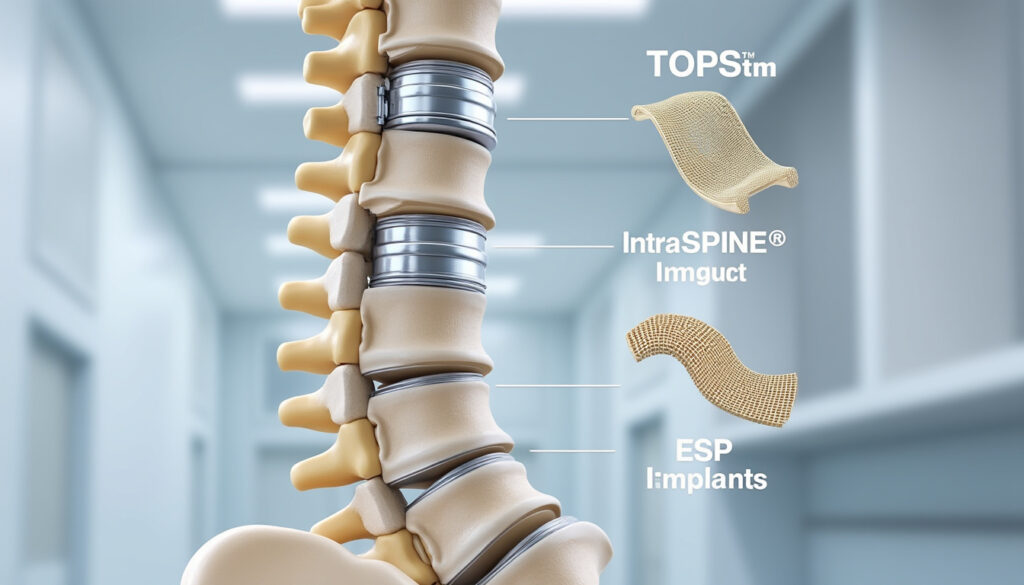
The evolving field of spinal surgery is witnessing a transformative shift, fueled by cutting-edge implant technologies such as TOPS, Intraspine, and ESP. These innovative implants redefine treatment possibilities by emphasizing preservation of natural spinal mechanics, while ensuring durable stabilization and…
Economic and Humanistic Benefits Driving the Preference for Transatlantic Spinal Care
Beyond clinical merits, the transatlantic patient journey delivers tangible financial and humanistic advantages. Economically, while international travel introduces upfront costs, bundled services coordinated by agencies such as SOS Tourisme Médical and Franchir often result in overall savings. This is especially true compared to private local care in Quebec, which may be prohibitively expensive or encumbered with long waiting lists.
Coordinated care packages reduce fragmented expenses by integrating pre-operative assessment, surgical procedures, travel, lodging, and follow-up. Furthermore, treatment in France often leverages innovative implant technologies at competitive rates due to healthcare system efficiencies and reimbursement structures, offering patients cost-effective access to superior interventions.
On a human level, this pathway emphasizes personalized patient education, psychological support, and empowerment. The collaborative transatlantic model nurtures strong doctor-patient communication, informed consent, and clarity about treatment options, milestones, and potential outcomes. These elements enhance trust and reduce anxiety throughout the patient journey, fostering greater satisfaction and adherence.
| Aspect | Transatlantic Patient Journey Advantages | Key Contributors and Tools |
|---|---|---|
| Biometrics & Technology | State-of-the-art implants preserving motion, robotic assistance | TOPS, IntraSPINE, Premia Spine, eCential Robotics |
| Economic | Cost optimization through integrated care and choice of centers | Franchir, SOS Tourisme Médical |
| Humanistic | Personalized follow-up, pain management, transparent communication | Neurothérapie Montréal, Dr. Desforges |
| Logistics | Seamless travel, accommodation, scheduling & patient support | Franchir |
| Communication | Multicultural exchanges ensuring coordinated care quality | Canada-France Healthcare Teams |

Preparing for Surgery in France: Key Indications, Benefits, and Limitations
In an evolving global healthcare landscape, France emerges as a beacon of advanced surgical expertise, particularly attracting international patients seeking expedited and innovative medical interventions. Patients from regions experiencing long wait times, such as Quebec, increasingly view France as an…
Medical Tourism Regulations and Safety Standards in France and Canada
Engagement in international treatment protocols necessitates stringent adherence to regulatory frameworks and safety standards. France’s healthcare system is renowned for rigorous surgical oversight and patient protection through comprehensive regulations, including preoperative evaluations, surgical licensing, and postoperative monitoring. Facilities incorporating advanced techniques supplement compliance with continuous quality audits and accreditation processes.
Similarly, Quebec enforces strict guidelines governing patient referrals abroad, emphasizing informed consent, accurate documentation, and follow-up arrangements. This dual-regulatory environment safeguards patients within transatlantic journeys and underpins trust in Medical Travel outcomes.
Recent inflation of emerging technologies like robotic surgery and dynamic spinal implants is accompanied by detailed performance evaluations to detect complications early. Complementary educational initiatives like the Diplôme Inter-Universitaire de Chirurgie du Rachis provide surgeons with standardized advanced training, ensuring expertise is consistent and up-to-date.
Awareness of these frameworks is crucial for patients and providers alike to navigate international care safely and confidently, adding a robust quality assurance layer to cross-border healthcare delivery.

Unveiling the Hidden Benefits of Quality and Certification in Devices
The landscape of device manufacturing and clinical application in 2026 has been fundamentally shaped by the rigorous interplay between quality management and certification processes. Within this complex framework, the hidden benefits of adhering to international standards and obtaining relevant certifications…
Emerging Technologies Shaping the Future of the Transatlantic Patient Experience
The next frontier in transatlantic healthcare integration lies in harnessing technological advancements such as artificial intelligence, precision robotics, and telemedicine. These innovations hold promise for transforming patient experience by offering enhanced diagnostics, surgical accuracy, and personalized recovery monitoring irrespective of geographical distances.
Advancements in 3D imaging combined with AI-driven predictive analytics enable surgical teams to tailor interventions precisely to anatomical variations and pathology severity. Robotics platforms streamlining spine navigation improve procedural safety and minimize invasiveness. Postoperative telehealth follow-ups allow real-time tracking of healing metrics, timely intervention upon deviations, and reduced travel burdens for recovering patients.
Moreover, digital patient journey mapping employing sophisticated software offers healthcare teams critical insights into timelines, treatment bottlenecks, and patient feedback, which in turn guide continuous process optimization. The ongoing integration of such technologies is in line with broader global trends emphasizing patient-centered and evidence-based cross-border care.
The confluence of these tools not only enhances clinical outcomes but also nurtures patient confidence, wellbeing, and autonomy throughout the transatlantic patient pathway.
Comprehensive Guide to the Transatlantic Patient Journey: Innovations Comparison

Why Experts Advocate for Comprehensive Preoperative Evaluations
In the complex and demanding field of spinal surgery, the emphasis on comprehensive preoperative evaluations has become a fundamental pillar supporting successful surgical outcomes. These evaluations, far beyond mere routine checks, integrate detailed analyses of patient health, surgical risk assessments,…
Integrating Patient Education Within the Transatlantic Cross-Border Care Model
Informed decision-making is at the heart of successful international treatments. Transatlantic patient journeys prioritize patient education to empower individuals in comprehending their conditions, therapeutic options, and the implications of cross-border care. Clear communication reduces uncertainties and aligns patient expectations with clinical realities.
Structured programs led by medical experts provide accessible explanations of surgical procedures, potential risks, recovery timelines, and the roles of different stakeholders throughout the journey. Educational resources incorporate multimedia that addresses language barriers and varying health literacy levels, thus supporting inclusive patient engagement.
This educational effort also confronts common pitfalls in Medical Travel, such as misaligned expectations, logistic misunderstandings, or inconsistent follow-up, by equipping patients with necessary tools and contacts. Moreover, guidance on navigating cultural differences and healthcare system variations contribute to smoother cross-border encounters, enriching the overall Patient Experience and health outcomes.
By fostering patient autonomy and confidence, education within this framework elevates transatlantic healthcare journeys from mere treatment sequences to transformative patient-centric experiences.

The Future of Surgery Lies in Stepwise Functional Recovery
The evolution of surgical care in 2026 reveals a compelling shift toward approaches that prioritize the holistic recovery of patients, moving beyond traditional metrics like length of hospital stay or mortality rates. This modern paradigm highlights the principle that the…
Patient Experience and Psychological Support Throughout International Medical Travel
Adapting to healthcare environments abroad involves psychosocial challenges including anxiety, cultural unfamiliarity, and concerns about post-surgical support. The transatlantic patient journey acknowledges these human factors by embedding psychological support and empathetic communication within its coordination strategy.
Dedicated care coordinators and therapists liaise closely with patients during pre- and post-operative phases to address fears and provide coping mechanisms. Continuity of care is complemented by virtual counseling sessions and access to peer support networks, ensuring that patients feel accompanied beyond physical treatment.
These support systems are pivotal in promoting adherence to rehabilitation regimens and facilitating smoother recovery trajectories. Mental wellbeing thus becomes an integral part of international treatment success, highlighting that Medical Travel transcends mere physical interventions to encompass comprehensive patient care.
Key Elements Enhancing Patient Psychological Wellbeing in Medical Travel
- Pre-travel counseling: helping patients prepare emotionally and practically for international treatment.
- Multilingual communication: reducing language barriers and misunderstandings.
- Postoperative mental health support: remote therapy and peer groups aid recovery.
- Clear articulation of care pathways: alleviating uncertainty and reinforcing control.
- Empathic care coordination: humanizing a complex logistical process.
Strategies for Optimizing Transatlantic Medical Travel Outcomes
Effective management of transatlantic patient journeys requires ongoing attention to detail, flexibility, and cultural sensitivity. Strategic initiatives include personalized travel coordination, integration of health IT systems for data sharing, and continuous quality improvement based on feedback analysis.
From the patient’s perspective, preparation involving comprehensive health evaluations, financial planning, and familiarization with foreign healthcare environments is crucial. Patients advised to engage with authoritative guidance material, including essential tips for preparing their transatlantic patient journey, experience fewer complications and anxiety during travel.
Clinicians benefit from liaison with international providers and logistics experts to synchronize appointments and ensure that patient data and treatment plans transfer securely. Multidisciplinary teams regularly update their knowledge on evolving regulatory policies, surgical innovations, and cultural competencies to optimize care delivery.
Looking ahead, fostering bilateral health agreements and enhancing cross-border communication channels promise to further streamline patient transfers and access, minimizing delays and enhancing outcomes across the healthcare continuum.
Transatlantic Patient Journey Quiz
You scored ${score} out of ${quizData.questions.length}!
Thank you for participating in the Transatlantic Patient Journey Quiz.
`; nextBtn.disabled = true; nextBtn.style.display = “none”; resultDiv.textContent = ”; }// Initialize quiz on load renderQuestion(currentIndex);/* Event Listener for Next button */ nextBtn.addEventListener(‘click’, nextStep);{“@context”:”https://schema.org”,”@type”:”FAQPage”,”mainEntity”:[{“@type”:”Question”,”name”:”What makes the transatlantic patient journey unique in spinal care?”,”acceptedAnswer”:{“@type”:”Answer”,”text”:”It combines expert medical evaluation in Quebec with advanced surgical technologies in France, ensuring personalized, coordinated care that optimizes treatment outcomes and patient experience.”}},{“@type”:”Question”,”name”:”How do conservative treatments fit into the transatlantic patient pathway?”,”acceptedAnswer”:{“@type”:”Answer”,”text”:”They form an essential preparatory phase, aiming to alleviate symptoms and improve spinal function before surgery, possibly avoiding invasive procedures altogether.”}},{“@type”:”Question”,”name”:”What logistical supports are available for international spinal surgery patients?”,”acceptedAnswer”:{“@type”:”Answer”,”text”:”Organizations like Franchir manage travel arrangements, accommodation, and medical appointment coordination to ensure a stress-free and efficient experience.”}},{“@type”:”Question”,”name”:”Are advanced spinal implants available through transatlantic care?”,”acceptedAnswer”:{“@type”:”Answer”,”text”:”Yes, patients can access advanced dynamic implants and disc prostheses in France, which offer mobility preservation and improved postoperative quality of life.”}},{“@type”:”Question”,”name”:”What steps help maintain psychological wellbeing during international medical travel?”,”acceptedAnswer”:{“@type”:”Answer”,”text”:”Pre-travel counseling, multilingual communication, postoperative mental health support, and empathic care coordination are foundational to supporting patient mental health during this journey.”}}]}What makes the transatlantic patient journey unique in spinal care?
It combines expert medical evaluation in Quebec with advanced surgical technologies in France, ensuring personalized, coordinated care that optimizes treatment outcomes and patient experience.
How do conservative treatments fit into the transatlantic patient pathway?
They form an essential preparatory phase, aiming to alleviate symptoms and improve spinal function before surgery, possibly avoiding invasive procedures altogether.
What logistical supports are available for international spinal surgery patients?
Organizations like Franchir manage travel arrangements, accommodation, and medical appointment coordination to ensure a stress-free and efficient experience.
Are advanced spinal implants available through transatlantic care?
Yes, patients can access advanced dynamic implants and disc prostheses in France, which offer mobility preservation and improved postoperative quality of life.
What steps help maintain psychological wellbeing during international medical travel?
Pre-travel counseling, multilingual communication, postoperative mental health support, and empathic care coordination are foundational to supporting patient mental health during this journey.