TOPS™ in Gatineau: Enhancing Mobility and Alleviating Pain
June 30, 2026
Preventing Post-Laminectomy Syndrome: Insights and Experiences from Patients and Experts
June 30, 2026
The contrasting spinal care systems of France and Quebec offer a unique lens through which to analyze universal healthcare’s efficacy in addressing a common yet complex medical concern: spine treatment. Despite both regions boasting robust, publicly-funded health services designed to ensure access and equity, day-to-day patient experiences reveal significant disparities shaped by organizational structures, resource allocation, and innovative practices. Examining these differences not only highlights challenges such as wait times and geographical inequalities but also uncovers promising pathways for enhancing patient outcomes on a global scale.
Recent comparative research, including clinical studies and healthcare system analyses, stresses the importance of understanding how cultural, administrative, and technological factors influence medical practices. Both France and Quebec address spinal disorders with a spectrum of approaches that range from conservative therapies to advanced surgical interventions. However, each healthcare system’s unique setup impacts accessibility, quality of care, and ultimately the patient’s recovery journey. By delving into the cross-cultural analysis of spinal care—grounded in evidence from multidisciplinary clinical collaborations—medical professionals and policy-makers can glean insights to improve treatment algorithms and promote equitable healthcare delivery worldwide.
Organizational Structures in Spinal Care: Contrasts Between France and Quebec’s Healthcare Systems
The spinal care frameworks in France and Quebec share the foundational principle of universal healthcare, designed to guarantee access to essential medical services without direct cost burdens to patients. Yet their operational models diverge significantly, leading to varied patient pathways and clinical outcomes. In France, healthcare organization is characterized by a hybrid of public and private sectors where patients enjoy considerable freedom in choosing practitioners. This system fosters a decentralized approach, integrating general practitioners, hospital-based specialists, and private clinics. However, it simultaneously grapples with the growing issue of ‘medical deserts’—especially in rural zones—where specialized spinal care is sparse, thereby prolonging appointment delays and complicating follow-up care.
Quebec’s healthcare model contrasts through a more centralized, family medicine-guided access system. General practitioners act as gatekeepers, managing referrals and care coordination for spinal conditions. While this framework aims to streamline patient management and resource utilization, it is impeded by an acute shortage of family doctors, exacerbating wait times for specialist consultations. Additionally, overburdened emergency departments sometimes serve as de facto entry points for spinal care, reflecting systemic strains rather than patient choice. This leads to episodic rather than continuous care, impacting long-term management of chronic spinal disorders crucial in Quebec’s focus on chronic care pathways.
This juxtaposition delineates a fundamental healthcare comparison where the French system’s openness conflicts with territorial imbalances, and Quebec’s coordinated model contends with capacity limitations. Both systems face challenges in equitably delivering advanced spinal treatments, spotlighting the necessity of adaptable healthcare policies that respond to demographic shifts, such as an aging population and rising chronic conditions.

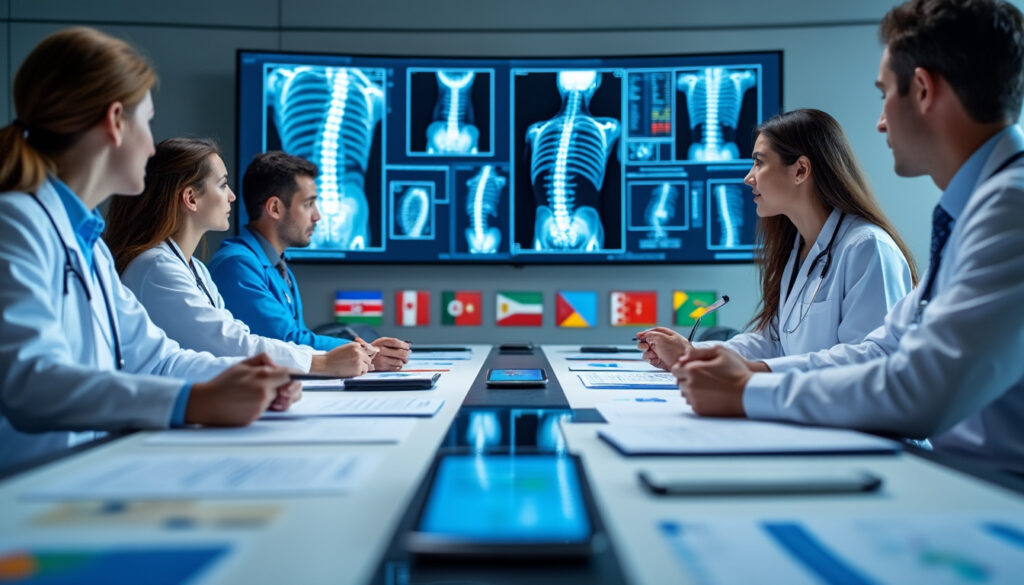
International Comparison: Exploring Eligibility Criteria for Back Surgery
Back surgery remains a highly specialized field within spinal surgery, where patient selection and clear eligibility criteria play a pivotal role in achieving successful surgical outcomes. Around the globe, healthcare systems approach these criteria through diverse yet scientifically guided frameworks,…
Innovative Surgical Techniques in France: Advancements Enhancing Spinal Treatment Outcomes
France is recognized for pioneering a broad range of high-tech spinal surgeries, many of which significantly improve patient outcomes by preserving mobility, minimizing complications, and expediting recovery. The country’s surgical repertoire includes conventional spinal fusion (arthrodesis), aimed at stabilizing degenerative or unstable vertebral segments. While effective for pain relief, fusion surgery sacrifices segmental movement, sometimes leading to adjacent segment degeneration—a challenge that cutting-edge procedures seek to overcome.
A notable advance lies in motion-preserving surgeries. These techniques incorporate cervical and lumbar disc prostheses and dynamic stabilization devices such as the IntraSPINE implant and TOPS system. By maintaining natural vertebral motion, these solutions reduce biomechanical stresses on adjacent spinal levels and improve postoperative functionality. Importantly, such procedures provide an alternative to fusion, decreasing long-term degenerative risks.
Further innovation is evident in minimally invasive and endoscopic spinal surgeries. Utilizing robotic assistance, laser technology, and neuro-decompression platforms, these approaches reduce tissue trauma, lower infection risks, and shorten hospital stays. The integration of robotics, exemplified by French collaborations with developers like eCential Robotics, introduces 3D imaging and navigation that enhance precision. These advances underline a commitment to evidence-based and ethical spine treatment, ensuring patients access state-of-the-art care within regulated frameworks.
The accessibility of these innovative techniques to Quebec patients is made possible through well-coordinated transatlantic partnerships, where surgical expertise and advanced implants available in France supplement provincial capabilities. This interaction optimizes outcomes for patients who might otherwise face lengthy delays or limited options due to local resource constraints.
Examples of French Surgical Innovations:
- Dynamic disc prostheses: Preserve segmental motion and improve postoperative mobility.
- Minimally invasive endoscopic spine surgery: Allows faster recovery with fewer complications.
- Robotic navigation systems: Enhance surgical accuracy and reduce operative risks.

Understanding Post-Surgery rTMS Integration: A Guide for Quebec Patients
Every year, a significant number of Quebec patients embark on the challenging journey of spinal surgery abroad, predominantly in France, to address complex spinal pathologies. These patients face the daunting task of not only undergoing critical surgical procedures but also…
Conservative Care Practices: Quebec’s Focused Approach to Managing Chronic Spinal Disorders
While France places considerable emphasis on surgical innovation, Quebec excels in structured conservative management, primarily targeting chronic spinal conditions. Central to this strategy is the use of carefully supervised rehabilitation protocols aimed at pain modulation and functional restoration, reducing the need for invasive interventions. The province’s healthcare system prioritizes family physicians as primary coordinators of such care, facilitating continuity and patient follow-up.
Among the forefront conservative techniques is robotic-assisted neurovertebral decompression. Pioneered within clinics such as TAGMED, this modality employs computer-controlled traction devices that precisely unload pressure on spinal discs and nerve roots. This non-invasive treatment enhances disc hydration and circulation, effectively alleviating neuropathic pain while preserving spinal anatomy. Clinical evidence indicates that sustained application over 3 to 6 months can delay or even obviate the necessity for surgery.
Furthermore, Quebec integrates complementary therapies, including physiotherapy, acupuncture, and postural education, into comprehensive rehabilitation plans. This multidisciplinary approach addresses physical, neurological, and psychosocial components of spinal pain, acknowledging the complexity of spinal disorders. By fostering patient engagement and education, the system aims to empower individuals to take active roles in their treatment pathways, potentially improving long-term outcomes.
Nevertheless, the scarcity of physiotherapists and specialist access delays due to systemic bottlenecks often challenge timely care initiation. These bottlenecks can lead to exacerbations of spinal conditions, underscoring the critical role of early, coordinated intervention and innovation in service delivery models.
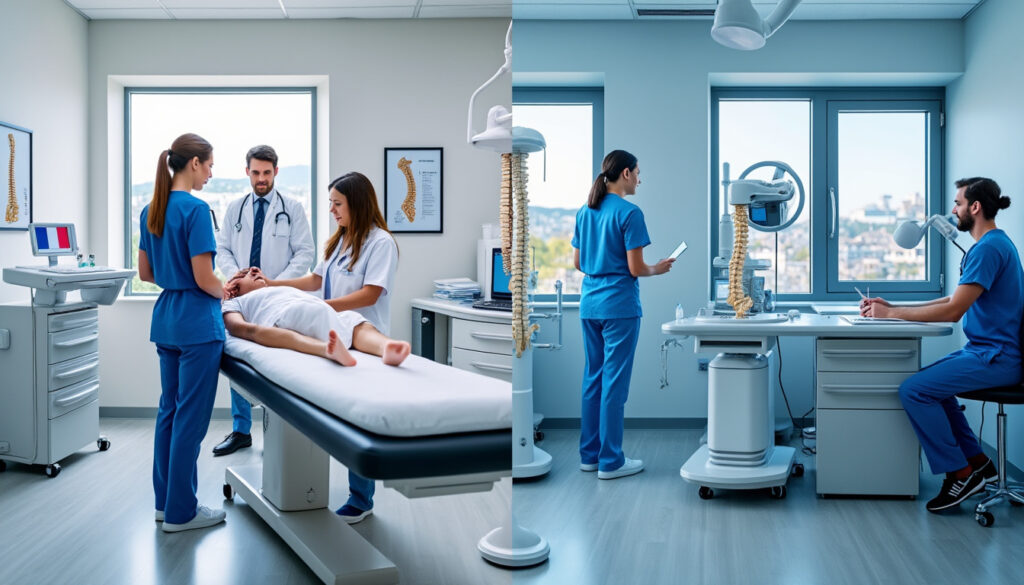
International Comparison: Spotlight on Spinal Care Practices between France and Quebec
In recent years, spinal health has become a focal point in the realm of global healthcare due to its significant impact on quality of life and workforce productivity. The ongoing challenges posed by spinal disorders, such as herniated discs and…
Patient Navigation and Transatlantic Care Coordination: A Model Enhancing Spinal Treatment Accessibility
Addressing wait times and regional disparities, a groundbreaking transatlantic care coordination program orchestrates patient journeys from Quebec to France for spinal treatments, combining best practices in medical evaluation, surgical care, and rehabilitation. Spearheaded by leading clinical experts and organizations, this framework ensures seamless transitions between evaluation, intervention, and follow-up across borders.
The process begins with meticulous case assessment by multidisciplinary teams in Quebec, utilizing advanced diagnostics and conservative trial treatments. Upon indication for surgery, patient placement in French specialized centers is arranged, facilitated by agencies proficient in medical tourism logistics, ensuring smooth travel arrangements and continuity of care.
Postoperative rehabilitation is organized within Quebec through partnerships with clinics like Neurothérapie Montréal, promoting personalized recovery regimens and ongoing monitoring. This model not only shortens treatment delays but also broadens access to surgical innovations typically unavailable locally. Importantly, patient education and transparent communication remain central, enabling informed decision-making and reducing anxiety common in cross-border care scenarios.


Comprehensive Guide to Medical Logistics and Accommodation
Medical logistics forms the backbone of effective healthcare delivery, particularly in complex, international medical pathways such as spinal surgery. Managing the seamless flow of medical equipment, pharmaceuticals, and patient accommodation is an intricate process that demands precision, coordination, and cutting-edge…
Comparative Clinical Studies in Spine Treatment: Illuminating Practice Variations and Outcomes
Emerging clinical research provides valuable comparative data on spinal care efficacy across France and Quebec, facilitating a nuanced understanding of treatment variability and patient outcomes. These studies systematically evaluate factors such as access delays, procedural success rates, complication incidences, and functional recovery metrics, identifying strengths and gaps within each system.
For example, studies highlight France’s higher use of advanced motion-preserving implants correlates with improved postoperative mobility and reduced secondary degeneration. Quebec’s comprehensive conservative care protocols, meanwhile, contribute to lower immediate surgical rates, emphasizing pain management and functional rehabilitation.
However, research also identifies challenges: long wait times in Quebec’s public system correlate with prolonged patient discomfort and potential disease progression, while France contends with inequalities in rural access and the financial burden of certain private sector interventions despite universal coverage.
By integrating evidence from such cross-cultural analyses, healthcare professionals gain insight into tailoring patient-specific treatment plans, balancing conservatism with surgical innovation. These findings inform policy discussions on resource allocation, prioritization, and the adoption of emerging technologies within universally accessible frameworks.

Comprehensive Guide to Preparing for Surgery in France
Facing surgery abroad often presents a complex blend of practical challenges and emotional concerns. When the destination is France, known for its innovative healthcare system and advanced surgical techniques, preparation becomes both an opportunity and a responsibility. Patients must navigate…
Incorporating Advanced Technologies: Robotics and 3D Imaging Transforming Spinal Surgery in Both Regions
The interface of technology and spinal care reveals remarkable progress, particularly in surgical planning and execution with robotics and 3D imaging. French institutions have been at the forefront of adopting robot-assisted minimally invasive techniques that enhance precision while safeguarding neurological structures. Devices such as those developed by eCential Robotics, receiving FDA approvals, enable surgeons to visualize complex spinal anatomy in real-time, adaptively navigating instruments, reducing human error.
Quebec is progressively integrating these innovations, often through collaborative ventures and training programs. This alignment allows for harmonized skill development among spinal surgeons and accelerates technology diffusion. Moreover, educational programs such as the Diplôme Inter-Universitaire de Chirurgie du Rachis promote standardized training, bridging expertise gaps and fostering cutting-edge surgical competencies.
The translational impact of these technologies is profound, yielding safer surgeries, diminished complications, and expedited patient recoveries. Future trends point toward expanding robotic navigation capabilities coupled with AI-guided diagnostics, promising continuous improvement in spine treatment protocols across continents.

Preventing Post-Laminectomy Syndrome: Insights and Experiences from Patients and Experts
Post-Laminectomy Syndrome remains a challenging consequence following spinal surgery, where patients encounter persistent or recurring pain despite undergoing procedures aimed at relieving discomfort. This syndrome, often marked by chronic pain and mobility challenges, influences thousands of patients annually, significantly impacting…
Addressing Regional Disparities: How Cross-Cultural Collaboration Shapes Equitable Spinal Care Delivery
Despite universal healthcare ideals, both France and Quebec face pronounced regional disparities in spinal care availability. Geographic and demographic factors result in unequal access to specialists and advanced therapies, particularly impacting rural and remote populations. These inequities necessitate innovative systemic responses.
Cross-cultural collaborations enable resource sharing and knowledge exchange, mitigating local limitations. For instance, telemedicine initiatives emerging between Quebec and French centers facilitate remote consultations and preoperative evaluations, reducing travel burdens. Additionally, sharing best practices in clinical governance and patient education strengthens care quality universally.
Furthermore, joint research projects evaluating patient-reported outcomes refine understanding of individual needs and cultural contexts. This patient-centered perspective is pivotal for developing interventions that resonate effectively across diverse health environments, enhancing satisfaction and adherence.

Global Comparison: Spotlight on Partner Hospitals and Surgeons
The landscape of spinal surgery and patient care is undergoing a dynamic transformation propelled by groundbreaking technologies and robust international medical collaborations. The emerging paradigm highlights the critical role of partner hospitals and surgeons who not only bring surgical excellence…
Policy Insights From Healthcare Comparisons: Advancing Global Spine Care Standards
Healthcare comparisons between France and Quebec provide crucial policy insights, informing the design of resilient and adaptable spine care systems globally. Both territories offer lessons underscoring the significance of integrating surgical innovation with robust conservative management, enhancing patient outcomes through flexible, patient-centered pathways.
Policymakers in regions aspiring to universal healthcare can draw from France’s surgical expertise and Quebec’s comprehensive chronic care models to construct hybrid frameworks tailored to local contexts. Strategic investments in workforce development, infrastructure, and emerging technologies emerge as catalysts for optimizing spinal health services.
Moreover, the importance of addressing non-clinical determinants such as logistics, healthcare navigation, and administrative support becomes evident. Facilitating seamless patient journeys across systems ensures timely care and alleviates psychological burdens inherent in spine disorders.
This balanced approach advocates for international cooperation fostering research networks, clinical training programs, and knowledge dissemination platforms, driving spine care advancement beyond geographical boundaries. To explore these comparative opportunities and innovations in spinal health, detailed resources are available at comprehensive insights into spinal care practices between France and Quebec.
| Aspect | France Spinal Care | Quebec Spinal Care |
|---|

How Comprehensive Preoperative Assessment is Transforming Outcomes for Quebec Patients
As the landscape of healthcare continues to evolve, Quebec patients facing spinal surgery in France are witnessing a transformative shift thanks to a methodical approach called Comprehensive Preoperative Assessment. This detailed evaluation process encompasses more than just routine checks; it…
Practical Insights for Patients: Navigating Spine Treatment Across Borders
For patients encountering spinal pain conditions, understanding the intricacies of healthcare systems is essential for informed decision-making. Those in Quebec facing prolonged wait times or limited access to advanced surgical options increasingly consider transatlantic solutions that leverage French expertise and facilities. Key factors influencing patient choices include quality of care, recovery timelines, financial considerations, and logistical feasibility.
Engaging in multidisciplinary care—with conservative approaches as a foundational step—ensures that surgery remains the last resort, aligned with current best practices. The availability of innovative dynamic implants and minimally invasive surgeries abroad, alongside coordinated postoperative follow-up, offers compelling advantages for selected cases.
Moreover, tools supporting patient education and navigation empower individuals to proactively manage their health journeys. Whether opting for local conservative care or international surgical intervention, transparent communication and personalized pathways underpin successful outcomes. Resources detailing these pathways and eligibility criteria are accessible through healthcare coordination networks and medical tourism organizations.

Integrating Patient Experiences with Clinical Data: Enhancing Outcomes Through Holistic Care
Integrating patient perspectives with clinical data forms the cornerstone of evolving spinal care models. Qualitative and quantitative assessments reveal that a patient’s journey encompasses not only medical interventions but also psychological support, informed consent, and ongoing education. This holistic view is operationalized in France and Quebec through patient-centered programs that tailor treatments based on individual needs and preferences.
Shared decision-making, reinforced by clear explanations of conservative versus surgical options, increases adherence and satisfaction. For instance, Quebec clinics emphasize prolonged conservative therapies, allowing patients to weigh risks and benefits carefully before surgery. In France, preoperative education incorporates expectations from advanced surgeries and rehabilitation timelines, reducing postoperative anxiety.
Patient-reported outcomes collected through systematic programs contribute to continuous quality improvement, guiding clinicians in refining protocols. Such real-world evidence also supports comparative clinical studies, reinforcing the relevance of personalized care paradigms in both healthcare systems.
{“@context”:”https://schema.org”,”@type”:”FAQPage”,”mainEntity”:[{“@type”:”Question”,”name”:”What are the primary differences between France and Quebec in spinal care delivery?”,”acceptedAnswer”:{“@type”:”Answer”,”text”:”Franceu2019s system offers patient freedom in choosing specialists with a hybrid public-private model, facing challenges from medical deserts. Quebec employs a centralized approach with family physician gatekeeping, dealing with shortages impacting wait times for spinal care.”}},{“@type”:”Question”,”name”:”How does Quebecu2019s focus on conservative treatment benefit patients with spinal disorders?”,”acceptedAnswer”:{“@type”:”Answer”,”text”:”Quebec emphasizes non-invasive treatments such as robotic-assisted neurovertebral decompression and multidisciplinary rehabilitation, which can delay or negate the need for surgery, improving quality of life while minimizing risk.”}},{“@type”:”Question”,”name”:”What innovative spinal surgeries are prevalent in France?”,”acceptedAnswer”:{“@type”:”Answer”,”text”:”France leads in motion-preserving implants, minimally invasive and endoscopic techniques, and robotic-assisted surgeries, offering advanced options that maintain spinal mobility and facilitate faster recovery.”}},{“@type”:”Question”,”name”:”How does the transatlantic care coordination improve patient outcomes?”,”acceptedAnswer”:{“@type”:”Answer”,”text”:”Coordinated care between Quebec and France reduces delays, expands access to innovative surgeries and technologies, and ensures continuous rehabilitation, improving clinical outcomes and patient satisfaction.”}},{“@type”:”Question”,”name”:”Where can patients find more information on spinal care comparisons between France and Quebec?”,”acceptedAnswer”:{“@type”:”Answer”,”text”:”Comprehensive resources and professional guidance are available through networks such as this detailed spinal care comparison platform.”}}]}What are the primary differences between France and Quebec in spinal care delivery?
France’s system offers patient freedom in choosing specialists with a hybrid public-private model, facing challenges from medical deserts. Quebec employs a centralized approach with family physician gatekeeping, dealing with shortages impacting wait times for spinal care.
How does Quebec’s focus on conservative treatment benefit patients with spinal disorders?
Quebec emphasizes non-invasive treatments such as robotic-assisted neurovertebral decompression and multidisciplinary rehabilitation, which can delay or negate the need for surgery, improving quality of life while minimizing risk.
What innovative spinal surgeries are prevalent in France?
France leads in motion-preserving implants, minimally invasive and endoscopic techniques, and robotic-assisted surgeries, offering advanced options that maintain spinal mobility and facilitate faster recovery.
How does the transatlantic care coordination improve patient outcomes?
Coordinated care between Quebec and France reduces delays, expands access to innovative surgeries and technologies, and ensures continuous rehabilitation, improving clinical outcomes and patient satisfaction.
Where can patients find more information on spinal care comparisons between France and Quebec?
Comprehensive resources and professional guidance are available through networks such as this detailed spinal care comparison platform.