
TOPS™ in Gatineau: FDA-Approved Treatment Now Available
May 21, 2026
International Comparison: Spotlight on the Transatlantic Patient Journey
May 21, 2026
In the evolving landscape of healthcare, initial questionnaires and exams hold an indispensable role in shaping patient care pathways. These foundational tools act as the first critical step in determining the course of treatment, particularly for complex medical arenas such as spinal surgery. With increasing international cooperation—such as between Quebec and France—2026 marks a pivotal moment where streamlined assessments enable precision-driven patient assessment and facilitate access to cutting-edge treatments abroad. This article delves into the multidimensional value of early diagnostics, their integration into clinical workflows, and the ways they establish a comprehensive framework to ensure safe, effective, and patient-centered care.
Patient journeys are increasingly intricate due to advances in medical technology alongside expectations for personalized, multidisciplinary care. Initial data collection through structured questionnaires and targeted exams enable physicians and healthcare teams to map out tailored medical evaluations, promoting collaboration across borders. For spinal surgery patients specifically, these diagnostic tools are pivotal in bridging the geographical divide, coordinating preoperative and postoperative phases, and mitigating risks associated with transatlantic treatment. Understanding the significance of these elements reinforces their position as cornerstones in any healthcare process focused on improving outcomes and patient satisfaction.
Comprehensive Role of Initial Questionnaires in Patient Care Pathways
Early-stage patient evaluation via initial questionnaires serves as a platform for capturing essential health data that cuts across symptoms, functional capacity, and quality of life metrics. Their importance is especially underscored in spinal surgery, where nuances like pain severity, mobility limitation, and psychosocial factors influence therapeutic decisions. Standardized tools such as PROMs (Patient Reported Outcome Measures) and PREMs (Patient Reported Experience Measures) gather patient-centered data, allowing clinicians to quantify subjective experiences in an objective manner. These questionnaires help differentiate between patients eligible for conservative care versus those who would benefit from advanced surgical intervention.
In practice, the use of initial questionnaires streamlines the clinical workflow, supporting multidisciplinary teams in creating integrated care plans. For example, a patient from Quebec undergoing evaluation for surgery in France will complete carefully designed surveys detailing pain timelines, medication history, and lifestyle factors. This information, combined with clinical insights, outlines patient expectations and guides risk stratification. A structured approach reduces unnecessary diagnostic delays and enables a smooth transition within intricate care pathways.
Additionally, these questionnaires help identify potential contraindications through detailed inquiries into patient history. Questions probing cardiovascular health, previous neurological conditions, or psychological readiness are vital to ensuring patient safety. The active involvement of coordinators, such as those specializing in neurotherapy, guarantees that questionnaire outcomes are interpreted with clinical precision, which ultimately informs surgical candidacy and postoperative strategy. The acknowledged benefits of initial questionnaires are documented extensively in healthcare literature, including recommended question frameworks for initial patient exams.


Understanding Neurovertebral Decompression: A Guide for Quebec Patients
Chronic spinal disorders represent a growing challenge for many Quebec patients, affecting mobility, comfort, and overall quality of life. Traditional surgical approaches, while sometimes necessary, often carry risks that lead many to seek alternative treatments. Neurovertebral decompression emerges as a…
Critical Medical Exams Complementing Initial Questionnaires for Accurate Patient Assessment
Alongside questionnaires, targeted medical exams form the backbone of an effective patient assessment. These exams include a thorough review of imaging such as MRI, CT scans, and X-rays, as well as physical and neurological examinations. In spinal surgery cases, these assessments provide vital objective data to corroborate patient-reported symptoms and highlight anatomical or physiological issues requiring intervention. For Quebec-based patients considering surgery in France, prior medical imaging acquired locally is analyzed meticulously to reduce duplication and facilitate international collaboration.
The integration of exams with questionnaires leverages multidimensional data to enhance diagnostic accuracy. For instance, advanced neurofunctional assessments can reveal subtle nervous system impairments, offering additional granularity beyond routine clinical observation. Specialists proficient in neurotherapy interpret these findings, optimizing preoperative evaluation and anticipating neurological risks. They also evaluate autonomic nervous system function, which plays a significant role in postoperative recovery and pain regulation.
Such exams underpin decision-making about the type of surgical technique—whether minimally invasive, fusion, or mobility-preserving procedures are most suitable. Furthermore, exam results contribute to identifying comorbidities or psychosocial barriers that might compromise surgical outcomes, prompting prehabilitation or conservative therapy orders before proceeding with surgery. This comprehensive groundwork encourages alignment with best practices recommended in contemporary healthcare processes and promotes interprofessional information sharing across healthcare networks.
Examples of Diagnostic Exams Integral to Spinal Surgery Pathways
- Magnetic Resonance Imaging (MRI) for soft tissue and nerve visualization
- Computed Tomography (CT) for detailed bony structure imaging
- Electromyography (EMG) to assess nerve function
- Neurological physical exam focusing on reflexes, motor strength, and sensation
- Psychosocial screening to evaluate patient readiness and support systems
Integration of these exams within early assessments enriches patient profiles and directs tailored surgical planning. Healthcare teams rely on such comprehensive data to define eligibility criteria and anticipate intra- and postoperative needs, safeguarding both patient safety and care quality.

Quality and Certification of Devices: Insights and Experiences from the Field
In the rapidly evolving landscape of medical technologies, the quality assurance and certification of devices have become pivotal in ensuring patient safety and optimizing clinical outcomes. Particularly in complex fields like spinal surgery, stringent compliance with regulatory frameworks helps bridge…
Building Patient Care Pathways through Structured Diagnostic Tools and Clinical Workflows
Patient care pathways become increasingly effective when initial questionnaires and exams are systematically incorporated into clinical workflows. The transformation from raw assessment data to actionable care plans demands coordination among multidisciplinary teams including surgeons, neurologists, neurotherapists, and care coordinators. This orchestrated effort ensures that each patient receives a personalized treatment trajectory mapped from initial contact through rehabilitation.
Organized care pathways not only reduce fragmentation but reinforce consistency in care delivery across geographical regions. For patients moving between healthcare systems—from Quebec clinics to specialized centers in France—the alignment of data formats and assessment tools smooths transitions, eliminating inefficiencies and enhancing communication between providers. Tools such as secure digital platforms enable real-time data sharing, allowing instant updates and collaborative decision-making.
In spinal surgery, this structured approach safeguards against common pitfalls like treatment delays or redundant imaging, which can jeopardize recovery prospects. The coordinated workflow emphasizes continuity of care, ensuring that patient history, examination results, and follow-up data are accessible at every stage. This methodology aligns with evolving frameworks in international healthcare, underscored in resources on clinical pathway development.


How to Effectively Prepare for Surgery in France: A Comprehensive Guide
Undergoing surgery in a foreign country can be a complex and demanding endeavor. France, renowned for its advanced healthcare system and cutting-edge surgical techniques, attracts many patients seeking top-tier medical care. However, preparing for surgery in France involves meticulous planning,…
International Coordination for Optimizing Patient Outcomes in Transatlantic Spine Surgery
International cooperation elevates the complexity and magnitude of patient care pathways. Quebec patients pursuing spinal surgery in France exemplify the nuanced coordination necessary to ensure seamless care transitions across borders. Central to this orchestration is the role of expert coordinators adept in neurotherapy and system navigation, who manage the continuum from initial patient evaluation to post-surgery follow-up.
Through direct liaison with multidisciplinary teams, coordinators ensure that initial questionnaires and exams conducted in Quebec meet French surgical centers’ standards. This includes harmonizing documentation, verifying eligibility, and planning logistics such as travel and accommodation through specialized agencies. The process addresses unique patient concerns including cross-cultural communication, time zone differences, and maintaining continuity postoperatively.
Advanced neurotherapeutic techniques incorporated during pre- and postoperative care enhance patient recovery. Using biofeedback technologies and personalized rehabilitation protocols, practitioners maintain close contact with patients after returning home, allowing adjustments tailored to evolving clinical needs. This ongoing support, central to French-Quebec collaborations, improves overall quality of life and reduces complications arising from fragmented care.
Can Integrating rTMS Post-Surgery Help Patients Avoid Additional Surgical Interventions?
The integration of repetitive transcranial magnetic stimulation (rTMS) into post-surgical care has emerged as a transformative advancement in enhancing patient recovery after spinal surgery. This non-invasive neuromodulation technique offers a promising adjunct to traditional rehabilitation programs, potentially minimizing the need…
Innovations and Technologies Enhancing Initial Assessments and Surgical Interventions
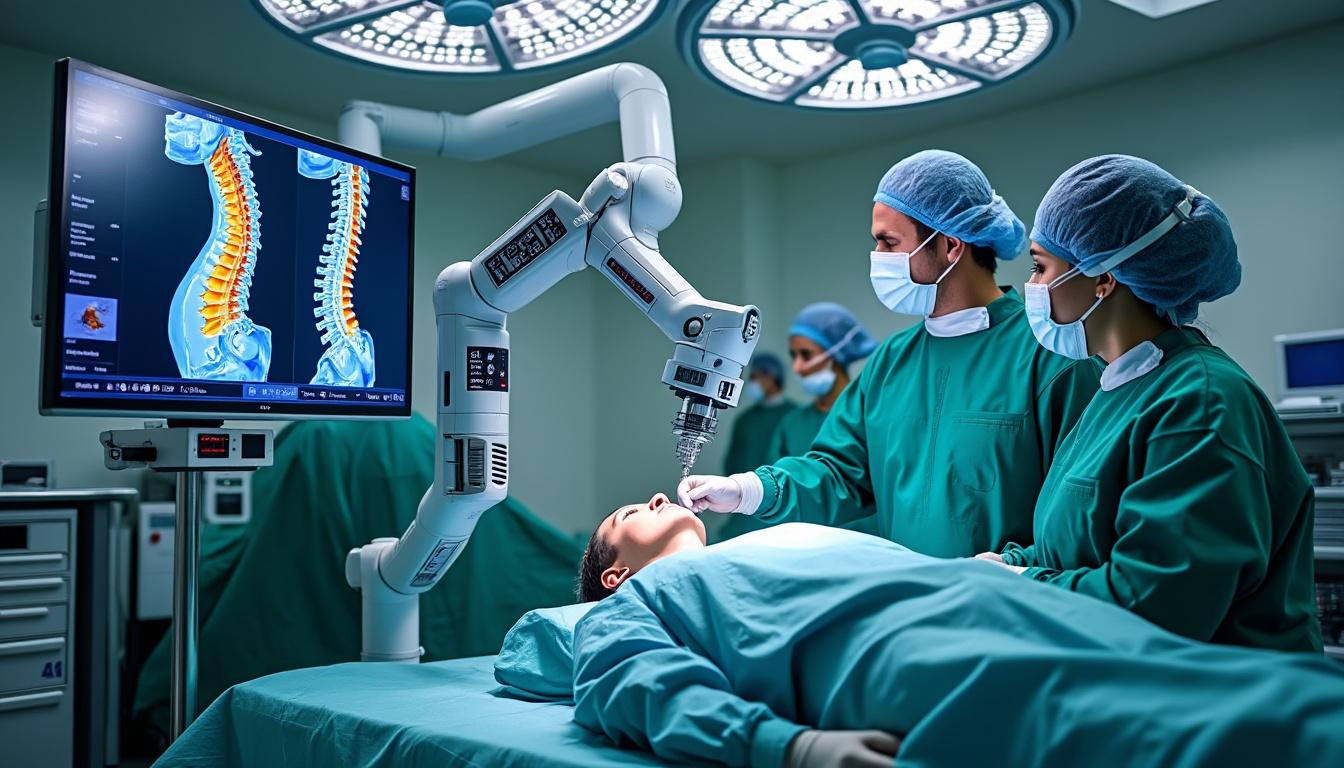
The rapid development of diagnostics and surgical technologies contributes significantly to refining initial questionnaires and exams. In 2026, techniques such as 3D spinal imaging and robotic-assisted surgery platforms are becoming integral components of advanced care pathways. These innovations allow precise visualization and execution of complex spinal procedures, decreasing intraoperative risk and improving outcomes.
Robotically assisted navigation systems utilize data from early assessments to plan and guide surgical interventions with extraordinary accuracy. The integration of complex diagnostic data into these platforms ensures that surgeries are highly personalized and minimize trauma to surrounding tissues. Coupled with minimally invasive techniques such as endoscopic spine surgery, these advances shorten recovery times and preserve postoperative function.
Moreover, diagnostic tools are evolving to include neurophysiological evaluations and AI-based predictive analytics, which provide deeper insight into patient risk profiles. Combining questionnaire inputs with physiologic data enables clinicians to customize care dynamically and foresee complications. These cutting-edge methods have started to reshape protocols in prominent French healthcare institutions, setting new standards for international patient care.
Summary of Innovations Influencing Spinal Surgery Pathways
| Innovation | Impact on Initial Assessment | Benefit for Patient Care |
|---|---|---|
| 3D Imaging and Modeling | Enhanced anatomical visualization | Improved surgical planning and prediction of outcomes |
| Robotic Surgical Assistance | Precise instrument navigation based on assessment data | Minimized tissue damage and faster recovery |
| AI Predictive Analytics | Risk stratification and complication forecasting | Tailored treatment plans reducing adverse events |
| Neurofunctional Monitoring | Real-time neurological status evaluation | Enhanced intraoperative safety and postoperative outcomes |
These cutting-edge technologies exemplify the synergy between thorough initial evaluations and state-of-the-art surgical interventions, reaffirming the importance of comprehensive diagnostic tools within structured care pathways.
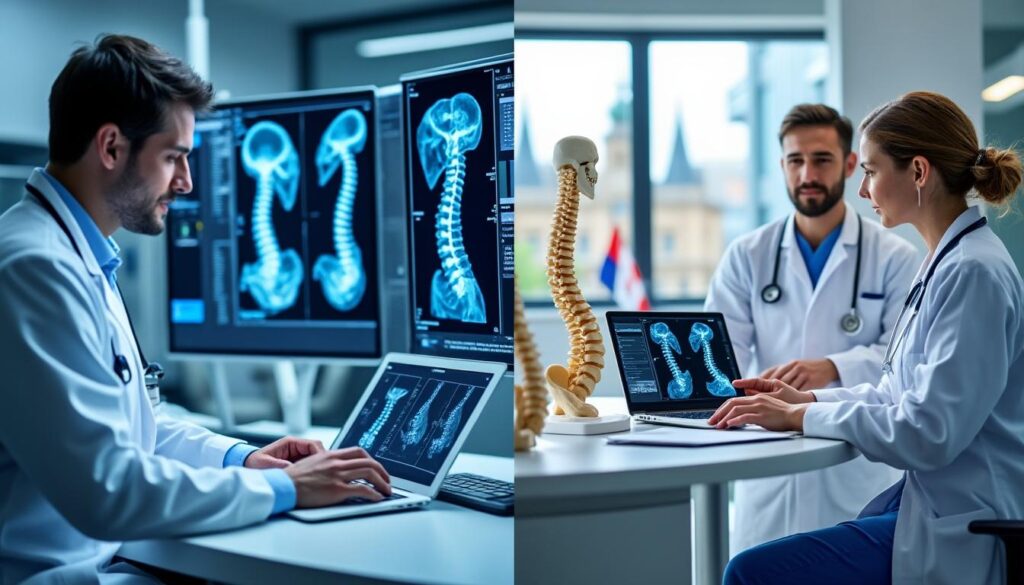
Comparing France and Quebec: Key Insights for Successful Spinal Care Pathways
Spinal disorders represent a prevalent health challenge globally, impacting patient quality of life and posing significant treatment complexities. Comparing how two distinct regions, France and Quebec, approach spinal care offers valuable insights into the organization, innovation, and patient outcomes associated…
Implementing a Multidisciplinary, Patient-Centric Approach in Care Pathways
The success of patient care hinges on a multidisciplinary framework that leverages initial questionnaires and exams to incorporate diverse perspectives into treatment planning. Collaboration among surgeons, neurotherapists, radiologists, physiotherapists, and care coordinators enables holistic management of spinal pathologies. This teamwork ensures all facets of the patient’s condition—physical, neurologic, psychological, and social—are addressed simultaneously.
Patient engagement is vital; questionnaires serve not only as data collection instruments but also empower patients by involving them in their healthcare journey. Understanding precise symptoms, lifestyle impact, and treatment expectations fosters shared decision-making. In complex transatlantic cases, maintaining continuous communication through digital platforms bridges gaps and enhances trust.
Organizations supporting medical travel, such as Franchir, and specialized teams like TAGMED in Quebec facilitate coordination among disciplines, instrumental in aligning care goals and resources. These comprehensive pathways underscore how integrated initial assessments contribute to refined patient-centered care delivery, improving outcomes and satisfaction.

International Comparison: Spotlight on the Transatlantic Patient Journey
In an era where healthcare demands grow increasingly complex, the transatlantic patient journey offers an illuminating example of how international collaboration enhances access, quality, and outcomes. Facing stretched healthcare systems and extended wait times, patients from regions such as Quebec…
Key Steps and Documentation Required for Initial Patient Assessment in International Care Pathways
To navigate the patient care pathway efficiently, especially for those considering surgery abroad, systematic collection of essential documentation during initial patient assessment is paramount. The process typically includes:
- Detailed completed questionnaires on health status, pain characterization, and quality of life
- Recent imaging reports such as MRI, CT scans, and plain radiographs
- Comprehensive medical history and prior treatment summaries
- Current medication and ongoing conservative therapy information
- Psychosocial and functional status evaluations
This documentation enables a thorough review and aids multidisciplinary teams in making informed decisions regarding suitability and timing of surgery. Maintaining up-to-date and accurate records fosters an efficient healthcare process and helps prevent delays or redundancies. Patients are encouraged to collaborate actively in the preparation phase to facilitate smooth progression along their care pathway.
Initial Questionnaires and Exams: The Cornerstones of Patient Care Pathways
Explore how key components connect to build effective patient care pathways.
Select a component to learn more

The Future of Surgery: Rehabilitation and Return to Work at the Forefront
As surgical techniques evolve with unprecedented sophistication, the landscape of postoperative care is undergoing a revolutionary transformation. The future of surgery is not confined solely to the operating room; rather, it encompasses a holistic approach that integrates advanced rehabilitation and…
Postoperative Follow-Up and Continuous Care Coordination Enhancing Recovery
Successful surgical outcomes are closely linked to diligent postoperative care, underpinned by initial assessments and seamless coordination. Patients benefit from structured follow-up plans led by neurotherapy experts who monitor neurofunctional recovery and adjust rehabilitation protocols accordingly. Such continuous care prevents complications and promotes gradual restoration of independence.
Maintaining an open line of communication between patients and clinicians ensures rapid response to emerging concerns. Digital health tools and telemedicine play an increasing role in enabling remote monitoring, particularly for international patients who return to their home country after surgery. This approach is championed by specialty centers that prioritize integrated care beyond the operating room, supporting long-term wellness and quality of life.
The involvement of coordinated support teams throughout the journey reassures patients and their families—reducing anxiety and empowering them with comprehensive information on pain management, mobility exercises, and lifestyle adaptation. This dedication to continuity of care effectively encapsulates the ethos of contemporary patient care pathways, grounded in thorough initial evaluations and sustained by multidisciplinary collaboration.
What is the purpose of initial questionnaires in patient care pathways?
Initial questionnaires collect patient-reported data on symptoms, function, and quality of life to guide personalized medical evaluations and treatment planning.
Which exams complement initial questionnaires for spinal surgery evaluation?
Medical imaging like MRI and CT scans, neurological assessments, and psychosocial evaluations work in tandem with questionnaires to accurately assess patient condition.
How does international coordination improve patient outcomes in transatlantic care?
Coordination ensures standardized evaluations, seamless data sharing, and tailored support throughout travel, surgery, and recovery phases, leveraging expertise across borders.
What innovations are shaping modern initial patient assessments?
Technologies such as 3D imaging, robotic assistance in surgery, neurofunctional monitoring, and AI predictive analytics enhance the precision of patient evaluations and interventions.
What documents are essential for initial patient assessment in international pathways?
Completed health questionnaires, recent imaging results, medical history, treatment records, and psychosocial evaluations form the core documentation for assessment.

How to Effectively Prepare for Spinal Surgery in France
Spinal surgery represents a significant step in many patients’ lives, often prompted by chronic pain, mobility issues, or degenerative conditions that impair quality of life. In the context of 2026, France stands out as a premier destination for spinal surgery…