

Saint-Eustache Lumbar Disc Rehabilitation After Injury
June 11, 2026
Post-Surgical rTMS Integration: Exploring Indications, Benefits, and Limitations
June 11, 2026
The evolution of healthcare in a globally connected world has paved the way for transatlantic patient journeys, reshaping how patients access care and clinicians deliver treatment. As medical tourism grows beyond a simple concept of travel for treatment, it now embodies detailed international healthcare collaboration, aiming to improve patient outcomes and healthcare quality across borders. In particular, patients from Quebec suffering from chronic spinal conditions increasingly seek advanced surgical interventions in France, leveraging a well-coordinated pathway that integrates innovative technology with personalized care. This cross-border healthcare exchange emphasizes not only therapeutic advances but also the human dimension of patient support, ensuring safety and continuity throughout the care continuum.
These transatlantic journeys serve as a response to systemic challenges such as waiting times, treatment access limitations, and the high costs faced domestically. By tapping into France’s advanced spinal surgery techniques, including motion-preserving implants and robot-assisted decompression, patients benefit from highly specialized care unavailable or delayed in their local systems. This model highlights how healthcare collaboration transcends geographical boundaries, combining scientific rigor with compassionate patient management. As such, it offers a nuanced alternative to conventional medical tourism by setting higher standards for treatment integration, patient preparation, and outcome optimization, delivering healthcare success from first contact to long-term recovery.
Advanced Surgical Innovations in France Enhancing Transatlantic Patient Outcomes
The French healthcare system has distinguished itself as a leader in spinal surgery innovations, shaping the transatlantic patient journey into a conduit for optimized healthcare success. Three key surgical approaches dominate this landscape: minimally invasive simple surgeries, spinal fusion (arthrodesis), and motion-preserving techniques utilizing dynamic implants.
Minimally invasive surgery, notably the endoscopic approach, uses cutting-edge imaging and small incisions to relieve nerve compression or remove herniated discs. This technique reduces postoperative pain and hospitalization duration, allowing patients to return swiftly to normal activities. The integration of robotic assistance platforms approved by global medical authorities, such as the FDA, enhances surgical precision and safety, marking a remarkable leap from traditional open surgeries. For example, robotic navigation facilitates the exact placement of instruments during decompression, significantly decreasing complications reported in degenerative spinal surgeries proven by longitudinal studies completed through 2024 in France.
For cases involving vertebral instability or severe degeneration, fusion surgery stabilizes affected spine segments by connecting the vertebrae using metallic implants or interbody cages. While this method effectively mitigates pain from pathological micro-movements, it sacrifices segment mobility. Consequently, patients face restricted spinal flexibility, a trade-off generally accepted when stability supersedes movement preservation.
France’s pioneering work in motion-preserving spine surgery offers alternatives designed to maintain natural spinal kinematics. Devices such as the TOPS and IntraSPINE systems dynamically stabilize spinal segments without fusion, reducing chronic postoperative stiffness and preventing adjacent segment degeneration—a significant advancement for younger and active patients. These implants allow a continuum of spinal motion and have been successfully integrated within the transatlantic care pathway, ensuring patients from North America gain access to this progressive technology under rigorous selection criteria and follow-up protocols.
In each surgical category, patient assessment and candidacy determination are critical. The transatlantic journey typically commences with expert evaluation and conservative management led by specialized Canadian teams using robot-assisted neurovertébral decompression techniques. This preparatory stage ensures that surgery is reserved as a last resort, respecting ethical and scientific rigor. Consequently, France’s sophisticated surgical offerings complement rather than replace foundational treatment strategies, underwriting positive healthcare quality advances through international healthcare cooperation.

Understanding Sciatic Pain: Key Symptoms and When to Seek Medical Advice
Sciatic pain is a prevalent condition impacting a wide demographic, manifesting primarily as intense pain radiating from the lower back down the leg. This pain stems from irritation or compression of the sciatic nerve, a major nerve extending through the…
Coordinated Care: The Backbone of Transatlantic Patient Journey Efficiency
Success in transatlantic medical care is heavily dependent on meticulous coordination amongst multidisciplinary teams spanning continents. The patient journey from Quebec to France exemplifies this collaborative model, characterized by structured communication and integrated management that optimize treatment timelines and ensure patient safety.
The process begins with an extensive evaluation in Quebec, overseen by leading specialists in spinal pathology and conservative treatments. Clinical examinations, imaging reviews, and prior treatment assessments establish the patient’s condition baseline, guiding the appropriateness of surgical intervention abroad. This phase reflects a comprehensive approach whereby national healthcare standards are respected and adapted to international protocols to uphold quality assurance.
Following diagnostic confirmation, logistical orchestration is undertaken by dedicated agencies such as Franchir. This facilitation includes selecting the ideal surgical center and expert surgeons in France, tailoring care to individual patient pathology and desired implants. Additionally, travel, accommodation, and preoperative clinical consultations are arranged to minimize patient stress and maximize clinical readiness.
Preoperative multidisciplinary consultations in France allow fine tuning of the surgical plan and patient education. Open dialogue between Canadian referring clinicians and French surgical teams fosters a transparent exchange of medical knowledge, aligning treatment objectives and expectations while addressing patient concerns.
After surgery, patients return to Quebec for comprehensive postoperative follow-up, management of rehabilitation, and psychosocial support, often through specialized centers like Neurothérapie Montréal. This continuity circumvents interruptions in care, which studies have linked to poorer recovery outcomes in cross-border healthcare. Instead, the transatlantic journey creates a seamless pathway enhancing recovery trajectories and long-term healthcare success.
Such exemplary coordination echoes broader calls for integrated care pathways internationally, demonstrating how patient-focused design coupled with healthcare collaboration across borders can serve as a blueprint for complex chronic conditions management, especially those requiring advanced surgical intervention.


The Stepwise Role of Functional Recovery in Achieving Successful Outcomes
The journey to full recovery following spinal surgery is often complex and multifaceted, demanding a meticulously structured approach to ensure optimal functional outcomes. In recent years, the concept of functional recovery through a stepwise approach has garnered significant attention in…
The Role of Preoperative Preparation in Maximizing Transatlantic Healthcare Success
The foundation of successful transatlantic patient journeys rests on thorough preoperative preparation, a stage pivotal to maximizing patient outcomes and minimizing risks associated with complex spinal surgeries. Preparation extends beyond clinical evaluation to encompass psychological readiness, detailed patient education, and logistical arrangements, collectively contributing to optimized healthcare quality.
Initial questionnaires and clinical examinations are employed extensively to assess patient medical history, comorbidities, and psychosocial factors. This step ensures surgical risk is accurately stratified and mitigated. The integration of digital platforms and teleconsultations has greatly facilitated these assessments, especially important for patients residing far from specialist centers. Such innovations align with findings from recent healthcare research emphasizing the importance of early engagement and comprehensive risk assessment in medical tourism contexts.
Patient education is another cornerstone element. Clear and accessible communication about the surgical process, possible complications, rehabilitation expectations, and lifestyle modifications post-surgery contributes to informed consent and reduces anxiety. Transatlantic collaborations have invested in multilingual resources and virtual seminars, reinforcing a patient-centered approach where individuals can actively participate in their care decisions.
Logistical planning, including travel coordination and accommodation tailored to medical needs, minimizes patient distress and supports physical and emotional stability prior to surgery. Agencies specializing in medical tourism provide this vital bridge, ensuring compliance with healthcare regulations in both countries and helping patients navigate insurance and financial aspects efficiently.
This comprehensive preparation framework underpins the overall success of cross-border healthcare delivery, reducing unnecessary delays and complications while fostering trust between patients and healthcare providers.

Transatlantic Patient Journey: Insights into Indications, Benefits, and Challenges
The emergence of the Transatlantic Patient Journey as a strategic model within healthcare continues to capture attention for its innovative potential, especially in specialized fields such as spinal surgery. This cross-border care pathway integrates rigorous medical evaluation from Quebec with…
Innovative Technologies Driving Success in Transatlantic Spinal Surgery
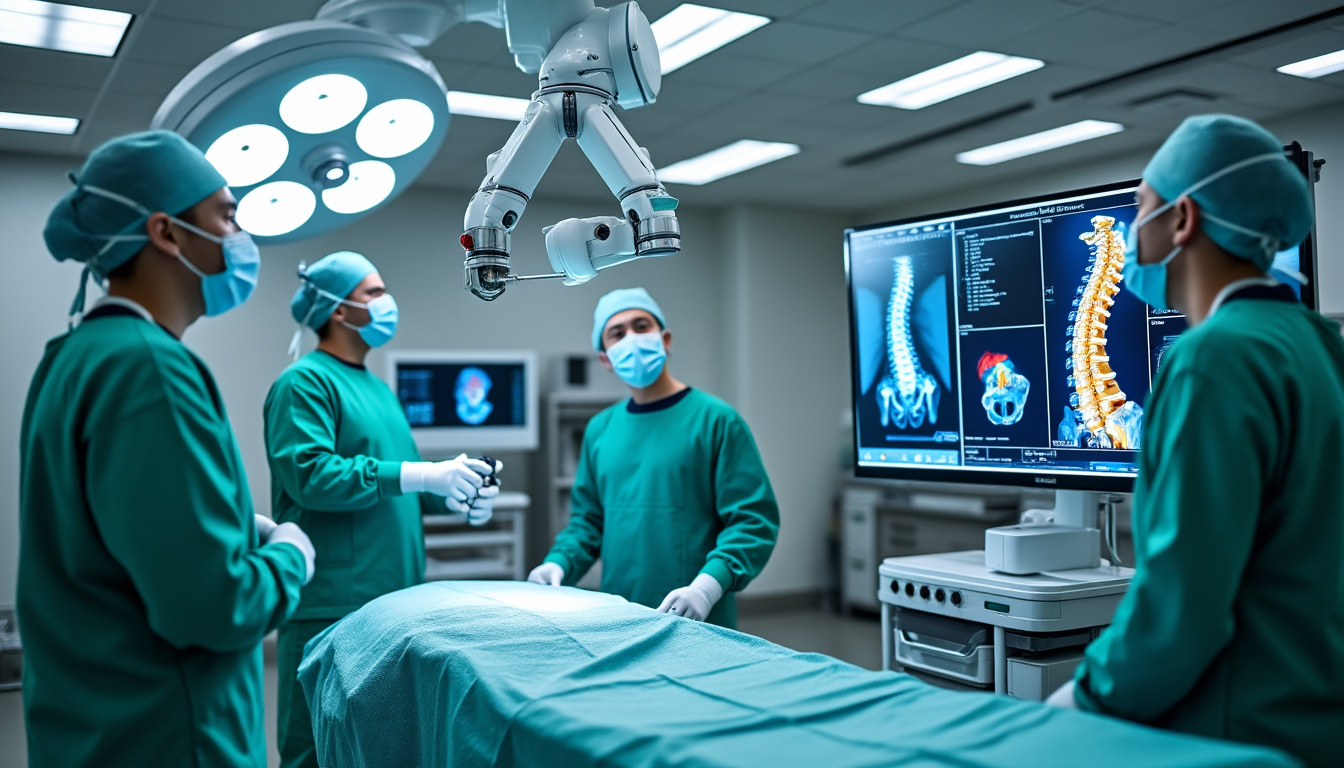
Technological advancement has been a linchpin in elevating healthcare quality within transatlantic patient journeys, especially in spinal surgery. French centers have integrated breakthroughs such as 3D imaging, robotic navigation, and neurovertébral decompression robotics, set to revolutionize therapeutic approaches and patient outcomes.
Robotic-assisted spine surgery platforms enable unparalleled precision during operations. Using real-time 3D imaging and enhanced navigation, surgeons can target affected areas with minimal tissue disruption. Beyond safety improvements, this technology accelerates recovery times and reduces postoperative complications. The FDA clearance of robotic devices highlights regulatory acceptance and growing confidence in these innovations globally.
Intraoperative imaging also enhances procedural accuracy, allowing adjustments during surgery informed by up-to-date anatomical visualization. This capability is particularly transformative for complex or revision surgeries where spinal landmarks are distorted.
Neurovertébral decompression methods utilizing robotic technology have shown promise in pre-surgical conservative therapy, decreasing nerve pressure and enabling some patients to avoid surgery altogether. This approach embodies a paradigm shift, emphasizing minimally invasive treatment algorithms aligned with patient-tailored care pathways.
Moreover, 3D printing capabilities facilitate custom implants and anatomical models, further refining planning and implant fitting. The French focus on integrating these technologies within transatlantic programs ensures patients receive state-of-the-art surgical care backed by the latest scientific evidence from centers of excellence.
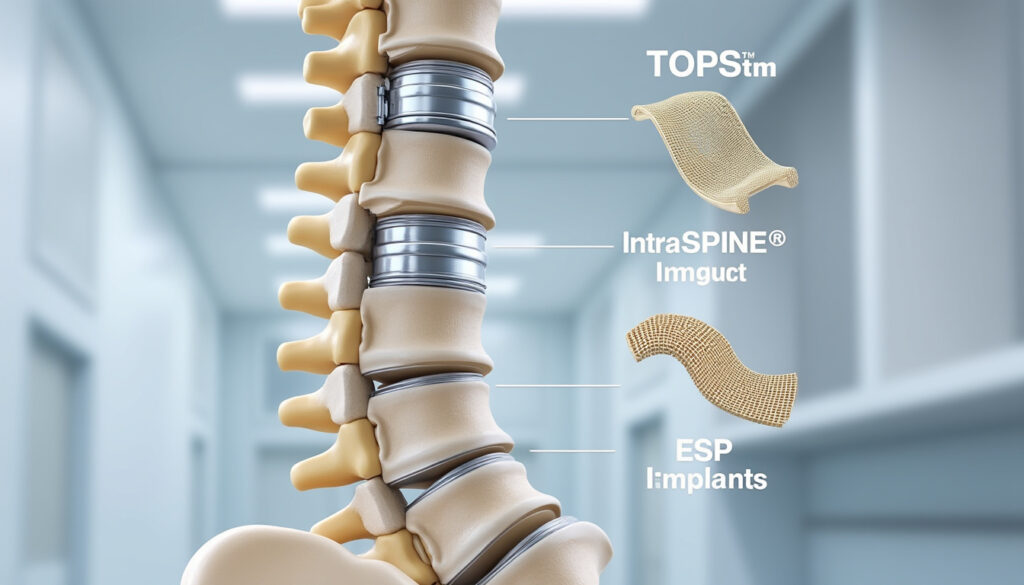
The evolving field of spinal surgery is witnessing a transformative shift, fueled by cutting-edge implant technologies such as TOPS, Intraspine, and ESP. These innovative implants redefine treatment possibilities by emphasizing preservation of natural spinal mechanics, while ensuring durable stabilization and…
Economical and Biomechanical Advantages of Transatlantic Spinal Patient Care
Transatlantic patient journeys do not solely hinge on clinical advancements but present compelling economic and biomechanical benefits, ultimately contributing to greater healthcare success. Careful comparison reveals that international cooperation often provides higher value care, balancing cost efficiency with superior clinical results.
Biomechanically, dynamic implants like TOPS and IntraSPINE offer preservation of spinal motion, reducing chronic pain and preventing secondary degeneration in adjacent vertebral segments. This reduction in long-term morbidity translates to improved functionality and quality of life post-treatment, a benefit difficult to quantify but pivotal for active patients.
Economically, access to specialized surgery in France frequently surpasses private care options available locally in Quebec, offering a more affordable yet technologically advanced solution. The integrated care model includes preoperative evaluation, surgical intervention, and postoperative rehabilitation, mitigating hidden expenses associated with complications or fragmented care continuity.
Table: Comparative Benefits of Transatlantic Patient Journey Versus Local Private Surgery
| Aspect | Transatlantic Care | Local Private Surgery |
|---|---|---|
| Cost | Lower overall costs with integrated services | Higher costs, fragmented billing |
| Technology | Access to advanced robotic and motion-preserving implants | Technology varies, often limited |
| Recovery Time | Accelerated due to minimally invasive techniques | Longer due to traditional methods |
| Continuity of Care | Seamless across countries with structured follow-up | Potential gaps in postoperative management |
Furthermore, the human element enhances patient satisfaction, with multidisciplinary teams focusing on education and emotional support, decreasing anxiety related to complex journeys. This holistic approach defines healthcare success beyond pure clinical endpoints, incorporating patient empowerment and well-being as essential factors.

Preparing for Surgery in France: Key Indications, Benefits, and Limitations
In an evolving global healthcare landscape, France emerges as a beacon of advanced surgical expertise, particularly attracting international patients seeking expedited and innovative medical interventions. Patients from regions experiencing long wait times, such as Quebec, increasingly view France as an…
Challenges and Best Practices in Managing Transatlantic Patient Journeys
While transatlantic patient journeys open new horizons for treatment access and healthcare quality, they also present challenges necessitating careful management to prevent pitfalls. Understanding and addressing these obstacles serves to enhance the overall success and sustainability of such care models.
One major challenge is the variability of healthcare regulations and funding mechanisms between countries. Aligning insurance, reimbursement policies, and consent protocols demands close collaboration and legal expertise. Patients may encounter difficulties navigating administrative procedures, which can deter participation without adequate guidance.
Another critical aspect involves transportation logistics and medical record sharing. Transfer of comprehensive medical information must be timely and secure, ensuring that both referring and receiving teams are fully informed. Technological interoperability and data privacy compliance remain ongoing areas of development crucial to this end.
Best practices focus on transparent communication, early involvement of multidisciplinary teams, and patient-centered coordination by dedicated agencies facilitating the entire process. Effective pre-travel preparation and clear postoperative care pathways reduce risk of complications and maximize healthcare success.
Experts also emphasize the importance of avoiding common pitfalls such as underestimating language barriers or psychological strain associated with long-distance care. Employing cultural mediators, multilingual educational tools, and psychosocial support programs strengthens patient adherence and satisfaction throughout the journey.
For a practical framework, healthcare providers and facilitators refer to comprehensive guides on managing transatlantic patient journeys, which outline actionable strategies to optimize coordination and clinical outcomes.
Key Steps in a Successful Transatlantic Patient Journey
Hover or focus on each step to learn more.
Select a step above to see detailed description here.
Step ${index + 1}
` + `${stepDetailsMap[step]}
`;// Announce update for screen readers detailsSection.focus(); }li.addEventListener(“click”, showDetails); li.addEventListener(“keydown”, (e) => { if (e.key === “Enter” || e.key === ” “) { e.preventDefault(); showDetails(); } });return li; }// Initialize steps list in DOM stepsData.forEach((step, idx) => { ul.appendChild(createStepItem(step, idx)); });
Unveiling the Hidden Benefits of Quality and Certification in Devices
The landscape of device manufacturing and clinical application in 2026 has been fundamentally shaped by the rigorous interplay between quality management and certification processes. Within this complex framework, the hidden benefits of adhering to international standards and obtaining relevant certifications…
The Ethical Dimensions of Transatlantic Medical Tourism and Patient Care
Ethical considerations strongly underpin the transatlantic patient journey, given the complexity of cross-border healthcare delivery. This dimension involves fairness of access, informed consent, confidentiality, and the respectful treatment of patients’ autonomy across different healthcare systems.
Equity issues arise when only patients with certain financial means or geographic proximity access advanced international care options. Thus, establishing policies that minimize disparities is pivotal. Providers are tasked with ensuring that transatlantic care does not exacerbate inequalities but rather contributes to raising the standard of care for broader populations.
Informed consent in an international setting requires clear communication about risks, benefits, and alternatives, especially when cultural or language differences exist. Patient education efforts are therefore ethically imperative, encompassing understandable explanations and opportunities for questions well before surgical procedures.
Confidentiality and data sharing present ethical and legal challenges related to cross-border medical records exchange. Healthcare teams employ stringent protocols to protect personal health information while maintaining adequate access for care continuity, a balance essential for responsible international healthcare collaboration.
Ultimately, the human-centered approach embedded in the transatlantic patient journey fosters respect, empathy, and empowerment, aligning with modern principles of medical ethics and care transparency. By weaving ethical rigor into practice, this model sets a benchmark for future developments in medical tourism and cross-border healthcare.


Why Experts Advocate for Comprehensive Preoperative Evaluations
In the complex and demanding field of spinal surgery, the emphasis on comprehensive preoperative evaluations has become a fundamental pillar supporting successful surgical outcomes. These evaluations, far beyond mere routine checks, integrate detailed analyses of patient health, surgical risk assessments,…
Future Perspectives: Strengthening Transatlantic Healthcare Collaboration for Improved Patient Success
Looking ahead, the transatlantic patient journey represents a fertile ground for ongoing innovation and integration that could redefine international healthcare standards by 2030. Bridging Canadian and French medical expertise offers a prototype for expansive collaboration, merging scientific advances with practical implementation strategies.
Enhancements in digital health are expected to streamline patient assessments, data sharing, and telemedicine consultations. This virtual integration will further reduce barriers related to geography and bureaucracy, making treatment access more equitable and efficient.
Continuous evolution of surgical technologies, such as augmented reality-assisted procedures and AI-driven decision support, promises deeper precision and personalization within spine surgery and beyond. Transatlantic pathways are well-positioned to pilot these emergent tools, ensuring early patient access and clinician education standards.
Expanding multidisciplinary training programs and interuniversity diplomas focused on spine pathology and surgery, as seen at institutions in Bordeaux and Paris, will cultivate future healthcare professionals adept at managing complex international cases with cultural sensitivity and technical proficiency.
Strategic policy dialogues between governments will hopefully address regulatory harmonization, funding models, and ethical frameworks. Such alignment will foster trust and sustainability of cross-border healthcare that benefits comprehensive patient outcomes at scale.
In sum, the transatlantic patient journey is more than a treatment option—it is a dynamic platform inspiring healthcare success through international collaboration, technology fusion, and unwavering commitment to patient-centered care.
What are the main benefits of transatlantic patient journeys in spinal care?
Transatlantic journeys provide access to advanced surgical techniques unavailable locally, including minimally invasive procedures and motion-preserving implants, along with coordinated pre- and postoperative care enhancing patient outcomes.
How do healthcare providers ensure continuity of care across countries?
Care is coordinated from initial evaluation through postoperative rehabilitation using dedicated agencies and multidisciplinary teams that communicate extensively, preventing care discontinuity and optimizing recovery.
Are there economic advantages to seeking spinal surgery abroad?
Yes, the integrated transatlantic model often offers lower overall costs compared to private local surgeries while providing access to cutting-edge technology and comprehensive follow-up, improving both financial and health outcomes.
What ethical issues arise in transatlantic medical tourism?
Key ethical issues include equitable access, informed consent with cultural sensitivity, and safeguarding patient confidentiality when sharing medical data across borders.

The Future of Surgery Lies in Stepwise Functional Recovery
The evolution of surgical care in 2026 reveals a compelling shift toward approaches that prioritize the holistic recovery of patients, moving beyond traditional metrics like length of hospital stay or mortality rates. This modern paradigm highlights the principle that the…