Initial Questionnaires and Exams: Essential Insights Every Patient Should Know
November 14, 2025Boucherville Sciatica Relief Through TAGMED’s Protocol
November 14, 2025In the specialized field of spinal surgery, the assurance of quality and certification of medical devices serves as a cornerstone for patient safety and optimal outcomes. Within Quebec, an increasing number of individuals face complex spinal conditions requiring precise surgical intervention. Thanks to an innovative partnership bridging Quebec and France, patients now benefit from access to advanced, certified implants that prioritize mobility preservation and reduce surgical risks. This transatlantic collaboration, coordinated by seasoned medical experts with extensive experience, integrates robust quality management protocols and internationally recognized standards, fostering a care pathway built on reliability, safety, and efficacy.
The backbone of this quality assurance effort is the adherence to ISO 13485, an internationally acclaimed standard that lays out stringent requirements for the quality management systems governing the development and manufacture of implantable devices. For the informed patient, grasping these safeguards is crucial when navigating care options, from the selection of devices such as TOPS, Intraspine, and B-DYN, to the surgical expertise and post-operative support provided by renowned centers and professionals. Consequently, these certified devices are tracked meticulously through stringent traceability systems, reducing post-surgical complications appreciably and elevating patient confidence.
This holistic approach is further supported by local medical actors like Neurothérapie Montréal, ensuring robust follow-up care, alongside expert evaluations directed by specialists including Dr. Sylvain Desforges. Coordinated logistics managed by entities such as Franchir streamline patient journeys, ensuring a seamless experience from preoperative assessment to convalescence. Ultimately, Quebec patients engaging with this network access cutting-edge MedTech quality solutions, benefiting from certified implants that embody the highest standards of quality and safety in medical device innovation.
Fundamentals of Medical Device Quality Management for Quebec Spinal Surgery Patients
The essence of quality in spinal medical devices lies in comprehensive management systems that meticulously cover the entire product lifecycle—from conception and design through to manufacturing, clinical usage, and surveillance. Central to these processes is the ISO 13485 standard, widely recognized as the global benchmark for quality management in the medical device sector. This standard requires manufacturers to operate under stringent procedures ensuring consistency, safety, and regulatory compliance.
For Quebec patients undergoing spinal surgery, understanding the ISO 13485 framework helps demystify the protections embedded within the devices used. Leading manufacturers in France, responsible for pioneering implants such as TOPS, Intraspine, and B-DYN, follow these rigorous protocols to ensure that every implant delivered is safe and effective.
Key Components of ISO 13485 Quality Management
- Evidence-based Design: Devices undergo intensive research and development tailored to the biomechanical and anatomical features of the spinal column.
- Traceability: Implants are cataloged with batch numbers and serial codes, enabling swift retrieval in any event of recall or complication.
- Biocompatible Materials: Only certified metals and composites are utilized, ensuring implants remain durable and well-tolerated within the human body.
- Independent Quality Audits: Organizations like SGS conduct external examinations, verifying compliance with ISO requirements and manufacturing excellence.
- Continuous Professional Training: Medical teams operate under strict, ongoing acquisition of skills, guaranteeing cohesive and standardized surgical procedures.
This systematic framework ensures that when Quebec patients opt for spine surgery via the collaborative route, they engage with products and professionals accredited under globally recognized quality criteria. According to the official guidance from Health Canada, these certifications are vital markers of ensuring patient safety and device efficacy past regulatory approvals.
| Quality Element | Description | Patient Impact |
|---|---|---|
| ISO 13485 Certification | International quality management standard specific to medical device systems | Assures global regulatory compliance and trusted device performance |
| Complete Traceability | Detailed tracking of implants via unique identifiers | Improves patient safety via rapid incident response |
| Biocompatible Materials | Use of certified metals and composites | Enhances implant longevity and reduces adverse reactions |
| Independent Testing | Regular assessments by third-party agencies like SGS | Ensures measurable, reproducible quality in manufacturing |

Understanding Sciatic Pain: Key Symptoms and When to Seek Medical Advice
Sciatic pain is a prevalent condition impacting a wide demographic, manifesting primarily as intense pain radiating from the lower back down the leg. This pain stems from irritation or compression of the sciatic nerve, a major nerve extending through the…
Dynamic Spinal Implants: Advancing Mobility Preservation for Quebec Patients
The traditional paradigm of spinal fusion, often limiting spinal mobility, is increasingly being supplanted by dynamized implant systems that maintain natural joint movement while stabilizing the spine. This shift is fueled by clinical evidence gathered from over 3,000 successful surgeries involving devices such as TOPS (Total Posterior Spine System), Intraspine, and B-DYN.
These implants leverage patented technologies, granting several clinical advantages:
- Segmental Mobility Maintained: Unlike fusion, these implants preserve spinal motion segments to reduce adjacent segment degeneration.
- Pain Reduction: By respecting physiological movement, patient discomfort is markedly diminished post-operation.
- Personalized Implantation: Each device choice is tailored to individual anatomic considerations and pathology.
- Accelerated Recovery: Minimally invasive surgical approaches enabled by these devices result in shorter hospital stays and faster rehabilitation.
This approach is embedded within a rigorous quality management regime, reinforced by ongoing post-market surveillance from companies like Cousin Spine and Premia Spine, which ensure strict adherence to CE, FDA, and ISO certifications. Such layered oversight is critical to patient assurance when pursuing care internationally.
| Implant Model | Primary Indications | Clinical Benefits | Certifications |
|---|---|---|---|
| TOPS | Lumbar stenosis, mild instability | Mobility preservation, pain relief | CE Mark, FDA, ISO 13485 |
| Intraspine | Disc degeneration, lumbar arthritis | Improved functionality, dynamic support | CE Mark, ISO 13485 |
| B-DYN | Segmental instability, chronic pain | Maintained mobility, adjacent wear reduction | CE Mark, FDA |
Quebec patients benefit from these advancements by gaining access to top-tier MedTech quality devices, bolstered by comprehensive certification systems such as SafeMed Certifications and MediTrust Quebec.

The Stepwise Role of Functional Recovery in Achieving Successful Outcomes
The journey to full recovery following spinal surgery is often complex and multifaceted, demanding a meticulously structured approach to ensure optimal functional outcomes. In recent years, the concept of functional recovery through a stepwise approach has garnered significant attention in…
Orchestrating a Transatlantic Surgical Journey: Quebec to France Patient Pathway
Integral to securing innovative spinal care is a well-coordinated medical logistics system enabling Quebec patients to undergo surgery in France seamlessly. Experts in medical organization and patient care pathways meticulously manage the journey, encompassing evaluation, travel, intervention, and rehabilitation.
The steps include:
- Initial Assessment in Quebec: Conducted by specialists like Dr. Sylvain Desforges at TAGMED, who assess suitability and explore conservative management.
- Surgical Referral: Orchestrated by agencies such as Franchir, which evaluate patient profiles and match cases with expert French surgeons and centers.
- Travel and Accommodation Arrangement: Full logistics managed by Franchir, including flights, stays near facilities, and patient support throughout the process.
- Surgical Procedure: Executed in accredited French hospitals known for adhering to the latest MedTech quality standards and minimally invasive methodologies.
- Post-operative Follow-up: Ensured locally at Neurothérapie Montréal, providing rehabilitation and longitudinal care, reducing incidence of complications.
| Step | Responsible Entity | Objective | Patient Benefit |
|---|---|---|---|
| Initial Evaluation & Conservative Care | Dr. Sylvain Desforges, TAGMED | Comprehensive diagnosis, non-surgical options | Reduce surgical risks where possible |
| Surgical Referral & Coordination | Franchir | Optimal surgeon and center selection | Access to elite surgical expertise |
| Logistics & Accommodation Planning | Franchir | Organize travel and stay details | Minimize stress and maximize comfort |
| Surgical Intervention | Accredited French surgeons | Safe, evidence-based operative care | Improve surgical outcomes and safety |
| Post-operative Rehabilitation | Neurothérapie Montréal | Ongoing recovery support | Enhance long-term health and function |
Such a multifaceted pipeline is pivotal in guaranteeing that Quebec patients receive a continuum of care that integrates the highest QualityCare Medical standards at every turn. For details on this subject, exploring resources like this overview on Quebec medical orientation roles underscores the importance of coordinated patient management in international contexts.

Transatlantic Patient Journey: Insights into Indications, Benefits, and Challenges
The emergence of the Transatlantic Patient Journey as a strategic model within healthcare continues to capture attention for its innovative potential, especially in specialized fields such as spinal surgery. This cross-border care pathway integrates rigorous medical evaluation from Quebec with…
ISO 13485:2016 Crucial Requirements and Patient Safety Benefits in Medical Device Certification
The ISO 13485:2016 standard mandates a comprehensive and documented quality management system for medical devices. It serves as a critical framework underpinning manufacturer responsibility and patient safety assurance. Adherence to this standard deters errors and enables continuous process improvement through rigorous audits and analytics.
Core enforcement areas within ISO 13485 include:
- Leadership Accountability: Executive commitment to transparent quality oversight and resource allocation.
- Resource Management: Ensuring competent staff and suitable infrastructure are consistently maintained.
- Product Realization: Strict control from design through production to delivery, reducing variability.
- Performance Evaluation: Ongoing internal and external audits to identify non-conformities and drive corrective action.
| ISO 13485 Element | Requirement Details | Patient Impact |
|---|---|---|
| Leadership Responsibility | Set and maintain quality policies with management review | Increased confidence and transparency in care delivery |
| Resource Management | Staff training, equipment calibration, suitable work environment | Consistency in product safety and clinical effectiveness |
| Product Realization | Controlled design and manufacturing according to specifications | Highly reliable implant function and patient outcomes |
| Measurement & Analysis | Data-driven corrective/preventive actions | Reduced complication rates and innovation sustainment |
HealthCert Solutions and MedTech Quality experts emphasize that this robust structure fosters ongoing safety and effectiveness. With continuous monitoring and strict regulatory compliance, this certification safeguards Quebec patients’ interests as they seek spinal interventions in France and beyond.
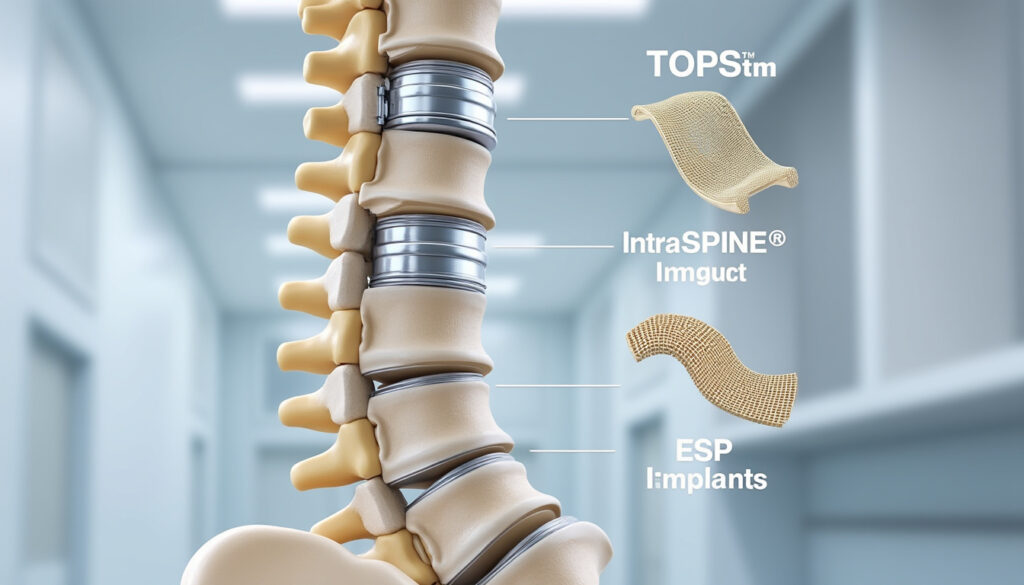
The evolving field of spinal surgery is witnessing a transformative shift, fueled by cutting-edge implant technologies such as TOPS, Intraspine, and ESP. These innovative implants redefine treatment possibilities by emphasizing preservation of natural spinal mechanics, while ensuring durable stabilization and…
Visible Benefits of Certified Medical Devices and Accompanying Expert Guidance for Quebec Patients
Beyond regulatory compliance, the advantages for patients extend to tangible improvements in surgical success, comfort, and recovery experience. Coordinated by experienced professionals, this pathway ensures:
- Expedited access to cutting-edge operative techniques: Including mini-invasive procedures enabled by precision implants.
- Tailored intervention plans: Each surgical approach and device selection is customized to the patient’s unique medical profile.
- Comprehensive journey management: From travel logistics to clinical consultations and post-surgery rehabilitation.
- Dedicated follow-up care: Delivered locally by specialized teams like Neurothérapie Montréal to mitigate long-term risks.
Patient testimonials frequently highlight perceived reductions in postoperative pain and improved spinal function, attributable to devices certified under trusted systems like CertiMed Systems and TrustHealth Devices. The coordination of care also reduces stress, providing quality assurance throughout the process.
| Aspect | Patient Benefit | Example/Illustration |
|---|---|---|
| Operative Techniques | Less pain, mobility preserved | Use of TOPS and Intraspine implants in accredited centers |
| Personalization | Adapted to body and pathology | Multidisciplinary case reviews coordinated by Franchir |
| Organization | Comfortable travel, reduced anxiety | Full logistic support from Franchir |
| Postoperative Care | Optimal long-term healing | Rehabilitation through Neurothérapie Montréal |
Preparing for Surgery in France: Key Indications, Benefits, and Limitations
In an evolving global healthcare landscape, France emerges as a beacon of advanced surgical expertise, particularly attracting international patients seeking expedited and innovative medical interventions. Patients from regions experiencing long wait times, such as Quebec, increasingly view France as an…
Advanced Quality Standards Integration: MedTech Quality and CertiMed Systems in Quebec Healthcare
The synergy of MedTech Quality principles with systems such as CertiMed Systems plays a critical role in elevating standards within Quebec’s healthcare landscape. These frameworks reinforce rigorous assessment, certification, and continuous improvement modes, central to the evolving demands of spine care technology.
Key features include:
- Systematic device performance monitoring: Ensuring efficacy and identifying any anomalies early.
- Regulatory alignment: Supporting Canadian as well as international regulatory compliance for cross-border patient care.
- Stakeholder collaboration: Promoting communication between manufacturers, health providers, and patients to optimize outcomes.
- Continuous education: Facilitating training programs and workshops to maintain high competence levels in device handling and surgery.
Integration of these systems with Quebec MedCert and QualityCare Medical ensures that patient safety and product quality are never compromised, affirming Quebec’s commitment to world-class spinal surgical care.
| System | Role in Quality Improvement | Benefit to Patients |
|---|---|---|
| MedTech Quality | Baseline framework for device quality control | Reliable, consistent implant performance |
| CertiMed Systems | Certification and compliance management | Enhanced patient trust and regulatory assurance |
| Quebec MedCert | Regional oversight and quality tracking | Localized patient-centric safety monitoring |
| QualityCare Medical | Clinical quality and process integration | Holistic care improvement ensuring patient satisfaction |
Comparative Table: Medical Device Quality & Certification Systems
| Certification System | ISO 13485 Certified | Regulatory Approval | Patient Safety Focus | Support Available | Quality Score |
|---|

Unveiling the Hidden Benefits of Quality and Certification in Devices
The landscape of device manufacturing and clinical application in 2026 has been fundamentally shaped by the rigorous interplay between quality management and certification processes. Within this complex framework, the hidden benefits of adhering to international standards and obtaining relevant certifications…
Role of Traceability and Post-Market Surveillance in Ensuring BioSafe Devices for Quebec Patients
Traceability is an indispensable facet of medical device safety, enabling clinicians and regulators to track every implant’s history and performance throughout its lifecycle. For Quebec patients, this translates into heightened confidence and the ability to respond quickly should adverse events arise.
Post-market surveillance systems in France and Quebec work closely together to collect data on device functionality, patient outcomes, and any emerging complications. Notably, companies involved in this collaboration enforce strict monitoring and reporting in adherence to MedTech Quality protocols and SafeMed Certifications.
- Implant Identification: Each device is cataloged with identifiers enabling swift recall procedures.
- Adverse Event Reporting: Real-time logging of complications, supporting immediate responses.
- Longitudinal Outcomes Tracking: Evidence-based updates in clinical guidance derived from patient data analyses.
- Feedback Loop to Manufacturers: Facilitates design improvements grounded in actual use cases.
| Traceability Aspect | Implementation | Benefit for Patients |
|---|---|---|
| Unique Device Identification (UDI) | Serial numbers and batch coding systems | Rapid recall and issue resolution |
| Adverse Event Logs | Mandatory multidisciplinary reporting frameworks | Improved safety and accelerated interventions |
| Clinical Follow-up Registries | Centralized databases capturing long-term data | Enhanced implant longevity and clinical protocols |
| Manufacturer Feedback Integration | Regular updates driven by real-world evidence | Continuous improvement of device design and quality |
For those interested in exploring logistic essentials for patient journeys, refer to comprehensive guidance such as Patient Logistics and Accommodation in Quebec. Understanding this ecosystem clarifies the interconnected roles of technological quality, certification, patient pathway management, and long-term care.
Why Experts Advocate for Comprehensive Preoperative Evaluations
In the complex and demanding field of spinal surgery, the emphasis on comprehensive preoperative evaluations has become a fundamental pillar supporting successful surgical outcomes. These evaluations, far beyond mere routine checks, integrate detailed analyses of patient health, surgical risk assessments,…
Medical Device Standards: Navigating Global Compliance for Quebec Patients’ Assurance
The medical device arena comprises a complex intersection of international standards and national regulations. Quebec patients benefit directly when devices and processes comply not only with Canadian authorities but also conform to European CE marking, FDA clearance, and ISO certifications.
- ISO Standards: ISO 13485 is favored for its tailored demands on medical device quality management, offering deeper specifications than the broader ISO 9001.
- Dual Certification: Devices like TOPS and B-DYN often hold both CE and FDA certifications, reinforcing their legitimacy across regions.
- Regulatory Navigation Services: Entities such as HealthCert Solutions support manufacturers in meeting these multi-jurisdictional requisites.
- Cross-border Quality Assurance: MedTech Quality and related initiatives facilitate alignment between Canadian and European regulations.
| Standard/Certification | Scope | Relevance to Quebec Patients |
|---|---|---|
| ISO 13485 | Quality management system specific to medical devices | Ensures consistent safety and efficacy in devices used |
| CE Mark | European conformity for health, safety, and environmental protection | Allows devices to be marketed and used across Europe and partner countries |
| FDA Clearance | Regulatory approval in the United States | Signifies safety and performance compliance for U.S. and often Canadian markets |
| Health Canada Licensing | National regulatory approval | Mandatory for device use in Canada; ensures local legal compliance |
Leading references for managing these certifications include extensive resources like Quick Guide to Medical Device Standards and detailed best practice guides available through medical device certification and accreditation services.
What are the advantages of ISO 13485 certified medical devices for patients?
ISO 13485 certified devices ensure rigorous design, manufacturing, and monitoring processes, providing patients with maximum safety, complete traceability, and proven clinical performance.
How is the medical journey structured for Quebec patients seeking spinal surgery in France?
Patients start with a thorough evaluation by Quebec specialists such as Dr. Sylvain Desforges, followed by a surgical referral coordinated by Franchir to appropriate French centers, with logistics and post-operative care managed by expert teams on both sides.
Why prioritize dynamic implants like TOPS or Intraspine?
These implants preserve natural spinal mobility, reduce post-operative pain, and lower the risk of adjacent segment degeneration compared to traditional fusion methods.
Which major French hospitals are recommended for these spinal interventions?
Hospitals in Toulouse, Bordeaux, and Le Mans are affiliated with the network, offering experienced surgeons and state-of-the-art facilities for certified implants.
What safety assurances does ISO 13485 provide?
Certification mandates quality control at every step, rigorous resource management, compliant design processes, and ongoing evaluation—all ensuring patient health and device safety.
The Future of Surgery Lies in Stepwise Functional Recovery
The evolution of surgical care in 2026 reveals a compelling shift toward approaches that prioritize the holistic recovery of patients, moving beyond traditional metrics like length of hospital stay or mortality rates. This modern paradigm highlights the principle that the…