
Lumbar Disc Herniation in Saint-Jérôme: Comprehensive Monitoring and Neurovertebral Decompression Treatment Approach
November 10, 2025
How Post-Operative Care Transforms Recovery for Quebec’s Back Surgery Patients
November 11, 2025
In the evolving landscape of spinal healthcare, France has emerged as a pioneer in offering highly advanced and patient-centered spine surgery solutions. Specialists within the country continue to push the bounds of modern medicine, utilizing innovative techniques and technologies that greatly improve patient outcomes and recovery experiences. With growing attention to precision, personalized care, and the integration of cutting-edge technologies, France is fast becoming a preferred destination for patients worldwide seeking expert spinal interventions.
Backed by a structured healthcare system and a network of renowned experts, France’s approach to spinal surgery is unique due to its emphasis on collaboration between multidisciplinary teams, high-tech surgical centers, and international cooperation with renowned specialists. This dynamic synergy ensures that patients receive not only state-of-the-art surgical treatments but also comprehensive perioperative care and rehabilitation to maximize their quality of life. The significance of such an approach is particularly noteworthy for individuals facing complex spinal disorders or chronic back conditions resistant to traditional management.
Comprehensive Expertise Behind Spine Surgery Recommendations in France
Expertise plays a pivotal role in why spine surgery in France is regarded with such high recommendation. French surgeons are required to complete a rigorous minimum of eleven years of medical education and specialized training. This demanding preparation ensures that those who operate within this realm have a deep understanding not only of surgical anatomy but also of the latest cerebrally innovative approaches to spinal disorders.
For example, numerous spine specialists in France uphold certifications such as the Diplôme Inter-Universitaire de Chirurgie du Rachis, a coveted qualification that heightens knowledge in complex pathological evaluations and surgical techniques related to the spine. Institutions like the French Spine Institute foster ongoing training courses and workshops to maintain this high standard.
- Elite Spine Clinic accreditation is a hallmark of quality, signifying centers with multidisciplinary teams including surgeons, radiologists, physiatrists, and pain management specialists.
- Centers like the Spine Center at Groupe Hospitalier Privé Ambroise Paré are world-renowned for their dedicated spinal care.
- Collaborative networks such as FRANCHIR enhance knowledge sharing and patient referral efficiency, ensuring timely and appropriate care decisions.
This depth of expertise empowers French spine surgeons to treat a wide spectrum of conditions, from herniated discs and spinal stenosis to complex scoliosis and degenerative arthralgia, leveraging both classical and innovative interventions. Such exhaustive preparation and an interdisciplinary model stand as a testament to why surgery recommendations carry strong clinical backing and trust from both patients and referring physicians.

Understanding Sciatic Pain: Key Symptoms and When to Seek Medical Advice
Sciatic pain is a prevalent condition impacting a wide demographic, manifesting primarily as intense pain radiating from the lower back down the leg. This pain stems from irritation or compression of the sciatic nerve, a major nerve extending through the…
Advanced Surgical Techniques Transforming Spine Care in France
The evolution of surgical techniques in France has transitioned significantly from traditional open procedures to minimally invasive and motion-preserving modalities, driven by precision and patient recovery priorities.
Several notable surgical approaches stand out:
- Arthrodesis or spinal fusion: This remains a reliable technique used to stabilize unstable vertebral segments, especially effective for conditions such as scoliosis and severe spinal arthritis.
- Motion preservation: Innovative devices like the Intraspine and TOPS implants support spinal stability while maintaining natural movement, improving the postoperative functional outcome and reducing adjacent segment degeneration.
- Minimally invasive surgery (MIS): Endoscopic and percutaneous techniques drastically reduce tissue trauma, hospital stays, and postoperative pain. Procedures such as neurodecompression and microdiscectomy are now often performed with robotic navigational assistance.
- Specialized interventions: Innovative treatments such as vertebral cementoplasty or kyphoplasty cater to osteoporotic or tumorous vertebral compression fractures, facilitating faster recovery and pain relief.
| Technique | Indications | Key Benefits | Examples of Technologies |
|---|---|---|---|
| Arthrodesis (Fusion) | Spinal instability, deformities like scoliosis | Durable stabilization, slows disease progression | Plates, rods, screws |
| Motion Preservation | Disc degeneration with preserved facet joints | Maintains spine mobility, reduces pain | Intraspine, TOPS prostheses |
| Minimally Invasive Surgery | Herniated disc, spinal stenosis | Less postoperative pain, faster recovery | Endoscopy, robotic navigation |
| Specialized Procedures | Vertebral fractures, tumors | Reduced trauma, accelerated rehabilitation | Cementoplasty, kyphoplasty |
This diversified surgical armamentarium demonstrates the adaptability and innovative spirit embedded within France Spine Solutions, highlighting why expert spine surgeons highly recommend spine surgery in the country. The range of techniques ensures tailored intervention strategies uniquely suited to each patient’s pathology and lifestyle goals.

The Stepwise Role of Functional Recovery in Achieving Successful Outcomes
The journey to full recovery following spinal surgery is often complex and multifaceted, demanding a meticulously structured approach to ensure optimal functional outcomes. In recent years, the concept of functional recovery through a stepwise approach has garnered significant attention in…
Transatlantic Collaboration Elevates Patient Care and Outcomes
An exemplary aspect supporting the recommendation of spine surgery in France is the well-structured international collaboration, particularly benefiting patients from Québec and other regions with long healthcare wait times.
The partnership forged between French spine experts and Canadian counterparts, epitomized by figures like Dr. Sylvain Desforges, enables a seamless pathway for patients deemed surgical candidates after carefully supervised conservative treatments. Clinics such as TAGMED offer specialized non-surgical options like robot-assisted neurovertebral decompression, leveraging innovative technology to exhaust every feasible conservative step before surgery is considered.
- Step 1: Specialized conservative care with precise evaluation and monitored treatments in Québec.
- Step 2: Coordination and surgical orientation through platforms like FRANCHIR and SOS Tourisme Médical that manage logistics, scheduling, and clinical matching to elite surgical centers.
- Step 3: Surgery performed at advanced French facilities equipped with the latest technology and expert multidisciplinary teams.
- Step 4: Postoperative follow-up and rehabilitation coordinated with local partners such as Neurothérapie Montréal, ensuring continuity and quality of care.
- Step 5: Long-term monitoring supporting patient recovery and symptom management in their home environment.
This organized transatlantic pathway accentuates the strengths of both healthcare systems and reassures patients of receiving expert care in a timely and efficient manner. The collaboration has established a new gold standard in spine care, mitigating the strain of treatment delays and improving surgical success rates with personalized and humane support.

Transatlantic Patient Journey: Insights into Indications, Benefits, and Challenges
The emergence of the Transatlantic Patient Journey as a strategic model within healthcare continues to capture attention for its innovative potential, especially in specialized fields such as spinal surgery. This cross-border care pathway integrates rigorous medical evaluation from Quebec with…
Role of Pre-Surgical Conservative Treatments in Patient Outcomes
Practitioners in France emphasize that surgery must be the final step after the failure of well-structured conservative therapies. This policy aims to minimize risks and optimize overall patient trajectories.
For instance, at the Clinique TAGMED in Québec, patients undergo advanced non-invasive treatments such as robot-assisted neurovertebral decompression, which applies controlled traction to relieve nerve compression. Coupled with osteopathy and educational support, this comprehensive approach often results in significant symptom relief.
- Decompression neurovertébrale robotisée: Provides targeted spinal traction with high precision to reduce neural impingement.
- Osteopathic care: Addresses musculoskeletal imbalances contributing to pain, encouraging functional restoration.
- Patient education: Enhances engagement by explaining pathology and self-management techniques.
This combination of treatments usually spans 3 to 6 months, a duration deemed sufficient to observe notable functional improvement. Should conservative approaches fail to yield desired results, surgery is then advised with confidence, having ensured all non-invasive options have been exhausted. This patient-first ethos highlights why French spinal surgery programs are trusted worldwide.
| Conservative Treatment | Description | Main Goal |
|---|---|---|
| Robot-assisted decompression | Precise spinal traction using advanced robotics technology | Decrease nerve pressure and improve spinal mobility |
| Osteopathy | Manual therapy focusing on musculoskeletal health | Reduce pain and restore function |
| Patient education | Information about pathology and treatment adherence | Promote patient participation and treatment success |
By mandating conservative treatments as a prerequisite, expert spine surgeons advocate for a prudent and well-informed surgical decision-making process that ultimately benefits the longevity of surgical results and minimizes complications.
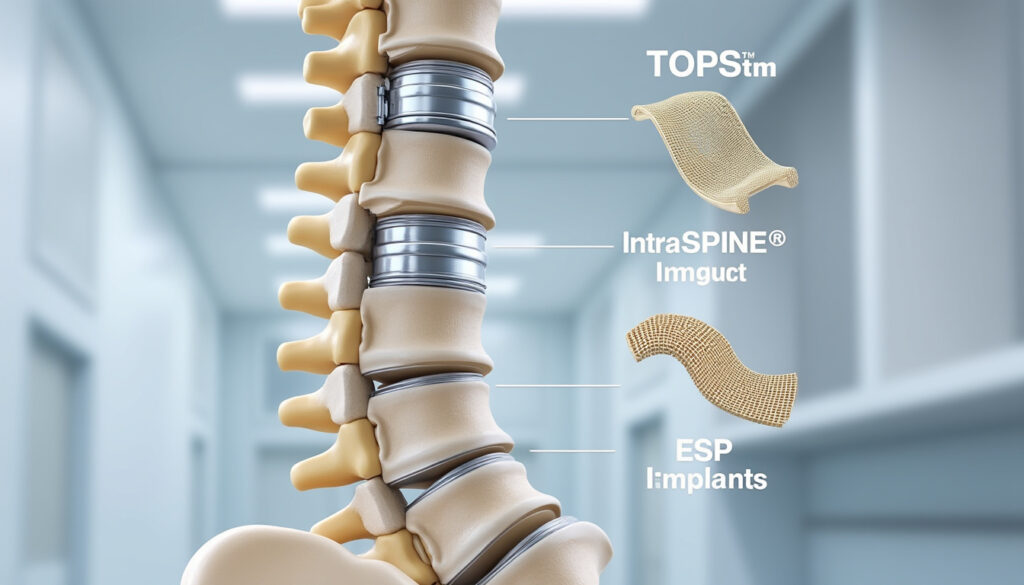
The evolving field of spinal surgery is witnessing a transformative shift, fueled by cutting-edge implant technologies such as TOPS, Intraspine, and ESP. These innovative implants redefine treatment possibilities by emphasizing preservation of natural spinal mechanics, while ensuring durable stabilization and…
Cutting-Edge Biomechanical Implants Elevating Surgical Effectiveness
The success of spinal surgery in France also owes much to the availability of state-of-the-art implants developed in partnership with leading manufacturers like Cousin Spine and Premia Spine. These implants are designed to restore mechanical stability while preserving or improving spinal kinematics.
Dynamic stabilization systems such as Intraspine provide a middle ground between rigid fusion and non-operative management by maintaining some degree of motion at the operated level. This aligns with recent research advocating for motion preservation to mitigate risks of adjacent segment degeneration, a common complication following fusion surgery.
- Dynamic interlaminar devices: Help stabilize without compromising flexibility.
- Customizable titanium and composite implants: Ensure biocompatibility and optimal weight distribution.
- 3D-printed vertebral replacements: Emerging technology for trauma or tumor reconstruction tailored to patient anatomy.
By integrating advanced biomaterials and engineering, Advanced Spine Care in France achieves superior clinical and functional outcomes, reflected in improved pain reduction and restored mobility for patients across varied pathologies.
| Implant Type | Purpose | Benefits |
|---|---|---|
| Intraspine Dynamic Stabilizer | Maintain spinal motion post-lumbar surgery | Preserves mobility, reduces adjacent segment load |
| 3D Printed Vertebra | Custom vertebral replacement in complex cases | Patient-specific fit, accelerated integration |
| Titanium Plates and Hardware | Provide rigid stabilization for fusion procedures | Robust fixation and durability |
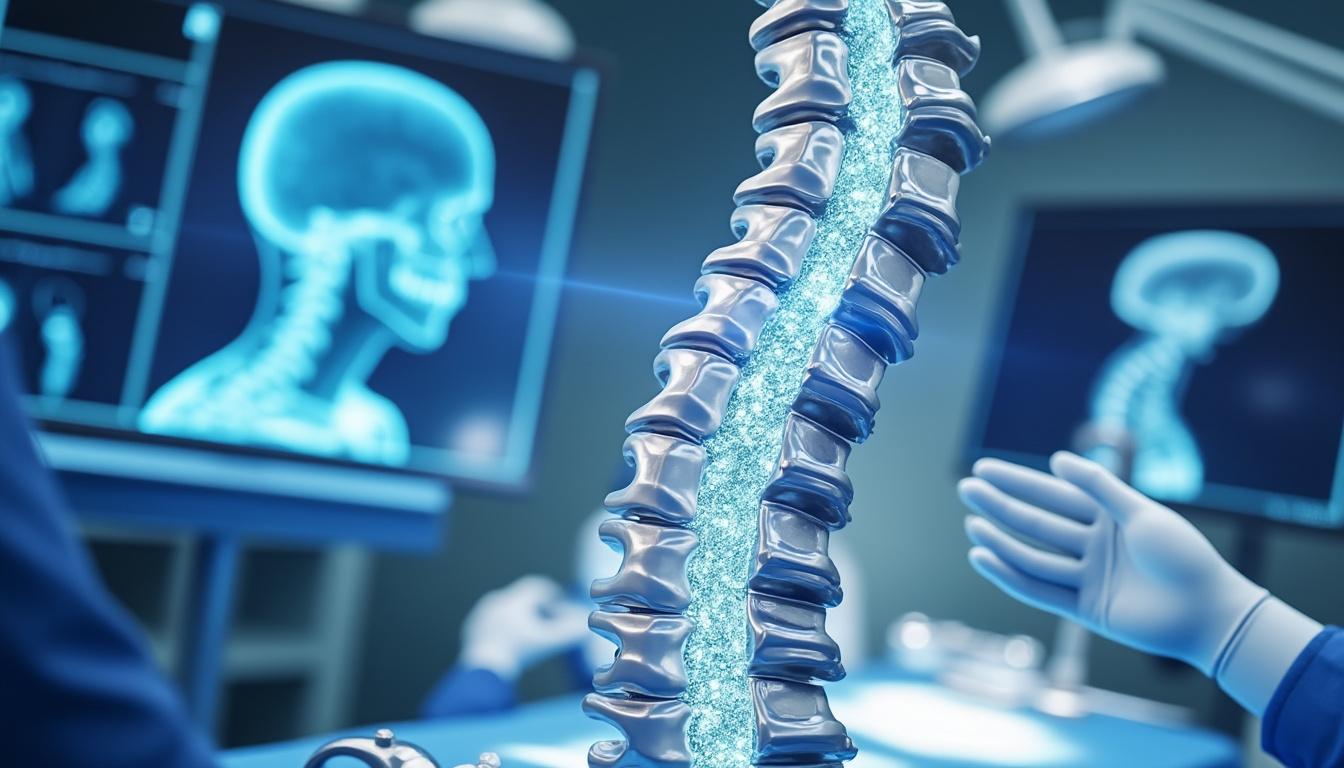

Preparing for Surgery in France: Key Indications, Benefits, and Limitations
In an evolving global healthcare landscape, France emerges as a beacon of advanced surgical expertise, particularly attracting international patients seeking expedited and innovative medical interventions. Patients from regions experiencing long wait times, such as Quebec, increasingly view France as an…
Advanced Imaging and Robotic Assistance Enhancing Surgical Precision
France is at the forefront of adopting revolutionary imaging and robotic navigation to improve the accuracy and safety of spinal surgery. Technologies such as 3D perioperative navigation enable surgeons to visualize the spine in multiple planes during the procedure, minimizing the risks of screw misplacement and nerve injury.
Robotic-assisted spine surgery is becoming a standard in many leading elite spine clinics across France, exemplified by the use of platforms developed by companies like eCential Robotics. These systems provide automatic adjustment of instruments, enhance steadiness during critical steps, and reduce intraoperative radiation exposure.
- 3D intraoperative imaging: Real-time visualization from multiple angles during implant placement.
- Robotic navigation systems: Ensure precise trajectory and reduce human error.
- Integration with preoperative planning: Customized surgical guides derived from CT and MRI scans.
The widespread application of these technologies by The French Spine Institute and similar centers significantly decreases complication rates and accelerates patient recovery, further substantiating the high recommendation for spine surgery in France.
| Technology | Function | Impact on Surgery |
|---|---|---|
| 3D Perioperative Navigation | Visualize spine anatomy intraoperatively | Reduced screw misplacement, decreased complication risk |
| Robotic-Assisted Surgery | Automated instrument control and guidance | Enhanced precision, minimized tissue damage |
| Preoperative Surgical Planning | Customized operative roadmap | Optimized procedure duration and accuracy |

Unveiling the Hidden Benefits of Quality and Certification in Devices
The landscape of device manufacturing and clinical application in 2026 has been fundamentally shaped by the rigorous interplay between quality management and certification processes. Within this complex framework, the hidden benefits of adhering to international standards and obtaining relevant certifications…
Personalized Patient Pathways and Lifelong Follow-up Models
Another reason spine surgery in France receives strong endorsement is its integration within patient-centered care pathways that span from initial consultation to far beyond the surgical episode. Every patient journey is customized considering pathology, lifestyle, and therapeutic goals, supported by expert guidance at every step.
This holistic approach includes structured preoperative assessment, tailored perioperative management, and an extensive rehabilitation program influenced by continuous biomechanical evaluations. Postoperative care is further complemented by digital health technologies facilitating remote monitoring and teleconsultations, enhancing accessibility and adherence to recovery protocols.
- Pre-surgical evaluation: Detailed imaging and clinical assessment ensuring optimal timing and approach of surgery.
- Custom surgical planning: Use of decision-making algorithms and expert consultations to devise individualized strategies.
- Comprehensive rehabilitation: Interdisciplinary programs involving physical therapists, occupational therapists, and psychologists.
- Long-term monitoring: Scheduled follow-ups employing digital platforms to detect and manage complications early.
The collaboration with entities like Neurothérapie Montréal exemplifies a commitment to long-term patient welfare and underscores why Trusted Spine Surgery in France is synonymous with quality, safety, and continuous care innovation.
Comparative Table: Why Spine Surgery is Highly Recommended
| Service Aspect ▲▼ | Description ▲▼ |
|---|
Why Experts Advocate for Comprehensive Preoperative Evaluations
In the complex and demanding field of spinal surgery, the emphasis on comprehensive preoperative evaluations has become a fundamental pillar supporting successful surgical outcomes. These evaluations, far beyond mere routine checks, integrate detailed analyses of patient health, surgical risk assessments,…
Spine Surgery in France: Integration of Innovation and Patient-Centered Ethics
France’s healthcare framework sets a benchmark by fusing innovation, expertise, and ethical principles that place the patient at the core of all decisions. This entails transparent communication, informed consent, and respect for individual cultural and linguistic needs, particularly evident in the transatlantic cooperation established with Québec.
Leading spinal surgeons abide by strict Canadian and Quebecois medical ethics standards while leveraging French innovation in surgery and postoperative care. This dual adherence ensures patients benefit from the safest and most advanced solutions, combined with a culturally sensitive and patient-tailored communication process. Furthermore, telemedicine consultations before and after surgery facilitate access to expert advice without geographical barriers.
- Ethical transparency: Clear explanations regarding surgical risks, benefits, and alternatives.
- Patient empowerment: Engagement in decision-making and education.
- Cross-cultural sensitivity: Language and cultural considerations to ease patient experience.
- Teleconsultations: Pre- and postoperative virtual sessions for convenience and follow-up.
These aspects coalesce into an integrated model of care that exemplifies why the French model of spine surgery is widely praised by independent international experts and highly recommended to patients seeking the highest standards of medical excellence.
What makes spine surgery in France trusted by experts?
Spine surgery in France is trusted due to its combination of rigorous surgeon training, advanced surgical techniques, innovative implants, and comprehensive patient care pathways supported by international collaborations.
How does minimally invasive surgery benefit spine surgery patients in France?
Minimally invasive spine surgery reduces trauma to surrounding tissues, decreases pain, shortens hospital stays, and promotes faster recovery, making it a preferred approach in French spine care centers.
What role do conservative treatments play before spine surgery in France?
Conservative treatments such as robot-assisted decompression and osteopathic care are emphasized for 3 to 6 months prior to surgery to improve symptoms and avoid unnecessary interventions, aligning with best practice guidelines.
How does robotic assistance improve surgical outcomes in French spine surgery?
Robotic assistance enhances precision in implant placement, reduces risk of nerve injury, and allows for customizable surgical navigation, leading to safer and more effective procedures.
Is postoperative care in French spine surgery personalized?
Yes, postoperative care is customized through coordinated rehabilitation, digital monitoring, and long-term follow-ups, often involving international partners to ensure continuous recovery support.
The Future of Surgery Lies in Stepwise Functional Recovery
The evolution of surgical care in 2026 reveals a compelling shift toward approaches that prioritize the holistic recovery of patients, moving beyond traditional metrics like length of hospital stay or mortality rates. This modern paradigm highlights the principle that the…