
Décompression neurovertébrale : une thérapie personnalisée pour traiter les cas complexes de sténose foraminale
November 2, 2025
Pincement discal cervical : pourquoi la décompression neurovertébrale est une option idéale
November 2, 2025
The evolving landscape of spinal surgery techniques offers patients a range of options from minimally invasive simple surgeries to complex fusion procedures, and innovative motion preservation methods. However, with this variety comes a critical need for precise patient selection, surgical planning, and postoperative management to avoid complications and optimize outcomes. Internationally, experts emphasize the importance of integrating advanced technologies such as robotic assistance and dynamic stabilization implants while being cautious of common pitfalls that can undermine surgical success. This extends notably to collaborations like those between Canadian and French healthcare providers, where streamlined pathways enhance access to state-of-the-art care.
The core challenge in modern spinal surgery lies in balancing the imperatives of spinal stability, patient mobility, and pain relief. Simple decompression surgeries preserve natural motion but can fail if underlying instabilities are not detected. Fusion surgeries offer solid stabilization but at the cost of sacrifice in spinal flexibility, sometimes leading to adjacent segment degeneration. Motion preservation techniques like dynamic stabilization implants strive to maintain segmental movement but require meticulous patient selection and surgical expertise to prevent complications or implant failures. Understanding these nuances and potential missteps is essential for surgeons and patients alike.
Understanding the Common Errors in Simple Spinal Surgery
Simple spinal surgeries, such as targeted nerve decompression, are often favored for conditions like a herniated disc without vertebral instability, given their minimally invasive nature and the preservation of natural spinal motion. The appeal lies in quicker recovery times and a reduction in hardware-related risks. For instance, removing impinging disc material can alleviate radicular pain effectively if the spine’s structural integrity remains intact.
However, a frequent oversight is performing decompressions without thoroughly evaluating for subtle or occult instabilities. Such neglect can cause recurrent symptoms or necessitate revision surgery. Moreover, improper patient positioning and suboptimal preoperative preparation may compromise surgical exposure, increasing the risk of nerve damage or incomplete decompression.
Examples of common pitfalls include:
- Ignoring signs of vertebral instability: Failure to identify spondylolisthesis or segmental motion abnormalities before surgery can lead to inadequate treatment.
- Overlooking comprehensive conservative management: Rushing to surgery without attempting specialized non-surgical approaches like robot-assisted neurodecompression prolongs recovery and increases risk.
- Incorrect surgical technique or patient positioning: Insufficient visualization can cause inadvertent nerve injury or partial relief.
- Lack of interdisciplinary communication: Coordination between radiologists, surgeons, and rehabilitation teams ensures accurate diagnosis and tailored treatment plans.
To mitigate these issues, protocols emphasize thorough imaging analysis—including dynamic radiographs—and a stepwise evaluation process involving experts such as those at leading spine surgery programs. Employing advanced intraoperative tools from companies like Medtronic and DePuy Synthes can aid in precision, but the foundation remains a meticulous preoperative evaluation.
| Common Errors in Simple Surgery | Preventive Measures | Impact of Neglect |
|---|---|---|
| Overlooking spinal instability | Dynamic imaging & multidisciplinary assessment | Recurrence of symptoms, failed surgery |
| Insufficient preparation and positioning | Preoperative rehearsal & patient optimization | Nerve injury, incomplete decompression |
| Inadequate communication between teams | Regular case meetings and coordinated workflow | Poor surgical outcomes, patient dissatisfaction |

Understanding Sciatic Pain: Key Symptoms and When to Seek Medical Advice
Sciatic pain is a prevalent condition impacting a wide demographic, manifesting primarily as intense pain radiating from the lower back down the leg. This pain stems from irritation or compression of the sciatic nerve, a major nerve extending through the…
Preventing Pitfalls in Spinal Fusion Procedures: Stability at What Cost?
Spinal fusion, involving the stabilization of one or more vertebral segments, remains a cornerstone for treating complex spinal pathologies such as spondylolisthesis, vertebral fractures, or severe deformities. By immobilizing affected segments using bone grafts and instrumentation from leading manufacturers like Zimmer Biomet, Stryker, and NuVasive, fusion surgery achieves durable stability and pain relief.
Despite its efficacy, fusion carries inherent risks and challenges. Loss of segmental mobility can predispose adjacent levels to accelerated degeneration, while excessive rigidity may contribute to chronic pain or hardware failure. Consequently, errors in selection, execution, and postoperative management can have lasting adverse effects.
- Underestimating mechanical loads: Failure to account for biomechanical stress on adjacent segments increases complications.
- Improper implant placement: Malpositioned screws or cages risk neural injury and fusion failure.
- Poor bone graft selection or handling: Insufficient graft material or contamination affects fusion success rates.
- Lack of postoperative surveillance: Inadequate monitoring delays identification of pseudoarthrosis or implant issues.
Thanks to robot-assisted navigation and imaging platforms from innovators such as Globus Medical and Aesculap, surgical accuracy is improving and complication rates decreasing. Still, the human factor—surgeon expertise and rigorous planning—remains paramount. Patient adherence to rehabilitation protocols also plays a crucial role, as found in comprehensive reviews on common problems after spinal fusion.
| Fusion Surgery Risk | Preventive Strategy | Potential Consequences |
|---|---|---|
| Adjacent segment disease | Careful fusion length planning & motion preservation techniques | New symptoms & further surgeries |
| Neural complications from hardware | Use of intraoperative imaging and robotic guidance | Neurological deficits |
| Pseudoarthrosis (non-union) | Optimized bone graft and hardware choice | Persistent pain, revision surgery |
| Infection | Strict aseptic techniques & perioperative antibiotics | Delayed healing or implant removal |
Given these risks, patients should also be advised of permanent lifestyle changes, such as avoiding high-impact activities, as detailed in discussions about post-fusion activity restrictions. Ultimately, a nuanced decision-making process weighing the benefits of stability against preserved motion is critical.

The Stepwise Role of Functional Recovery in Achieving Successful Outcomes
The journey to full recovery following spinal surgery is often complex and multifaceted, demanding a meticulously structured approach to ensure optimal functional outcomes. In recent years, the concept of functional recovery through a stepwise approach has garnered significant attention in…
Challenges and Best Practices in Motion Preservation Techniques
Dynamic stabilization, or motion preservation surgery, represents a significant advancement in managing spinal instability while maintaining physiologic segmental movement. Implant systems such as TOPS, Intraspine, and cutting-edge solutions from Smith & Nephew or SpineWave aim to alleviate pain and reduce neurological symptoms without the stiffness associated with fusion.
These devices provide an intermediate solution — stabilizing affected vertebral segments enough to prevent pathological motion yet allowing controlled mobility that preserves adjacent segment health. Nevertheless, new technology does not come without its unique set of pitfalls.
- Inappropriate patient selection: Candidates must be carefully evaluated; not all cases of instability suit motion preservation.
- Inexperience with implant systems: Surgeons require specific training and experience with device nuances.
- Technical errors during implantation: Misalignment or poor fixation compromises outcomes.
- Insufficient postoperative monitoring: Regular imaging and clinical evaluation help identify early device-related complications.
Clinical centers pioneering these techniques combine rigorous preoperative assessment with advanced tools to optimize results. Detailed treatment protocols and patient education materials, such as those summarized in specialized treatment guides, underscore the importance of a comprehensive approach.
| Dynamic Stabilization Challenge | Mitigation Strategy | Impact of Failure |
|---|---|---|
| Inaccurate patient selection | Multidisciplinary evaluation & criteria refinement | Suboptimal outcomes and revisions |
| Improper implant positioning | Surgeon training and robotic assistance | Persistent pain and device failure |
| Postoperative surveillance lapses | Structured follow-up programs | Delayed recognition of complications |
The future of spinal surgery is increasingly leaning towards techniques that integrate preservation of function with stability. This is exemplified by ongoing international comparisons of surgical outcomes and innovations in motion technology available in centers described on platforms focused on global approaches to spinal surgery.

Transatlantic Patient Journey: Insights into Indications, Benefits, and Challenges
The emergence of the Transatlantic Patient Journey as a strategic model within healthcare continues to capture attention for its innovative potential, especially in specialized fields such as spinal surgery. This cross-border care pathway integrates rigorous medical evaluation from Quebec with…
How International Collaboration Enhances Spinal Surgery Pathways
International collaborative frameworks between institutions in Quebec and France exemplify cutting-edge care pathways. Under expert direction, such as that of Dr. Sylvain Desforges, the integration of preoperative conservative treatment, expert surgical intervention, and postoperative follow-up creates a seamless continuum of care. This cooperation leverages resources from advanced facilities while aligning patient-centered care philosophies.
The journey typically involves:
- Rigorous conservative treatment evaluation: Including robot-assisted decompression or traction to minimize surgery where possible.
- Careful surgical candidate selection: Based on individual pathology and technical feasibility.
- Logistical coordination: Facilitated by partners like Franchir, responsible for travel, scheduling, and accommodation.
- Postoperative rehabilitation: Through specialized centers like Neurotherapy Montreal, ensuring functional recovery.
Such structured transitions reduce risks of miscommunication and complications, allowing patients to benefit from both the technological advances in French surgical centers and tailored rehabilitation in Canada. This model enhances patient confidence and fosters long-term well-being.
| Care Phase | Responsible Parties | Key Objectives |
|---|---|---|
| Evaluation & Conservative Care | Clinique TAGMED & Dr. Desforges | Thorough assessment, conservative management |
| Surgical Planning & Coordination | Franchir | Patient logistics and surgical matching |
| Surgical Intervention | French surgical teams | Precision surgery and immediate care |
| Postoperative Follow-up | Neurotherapy Montreal | Rehabilitation and functional optimization |
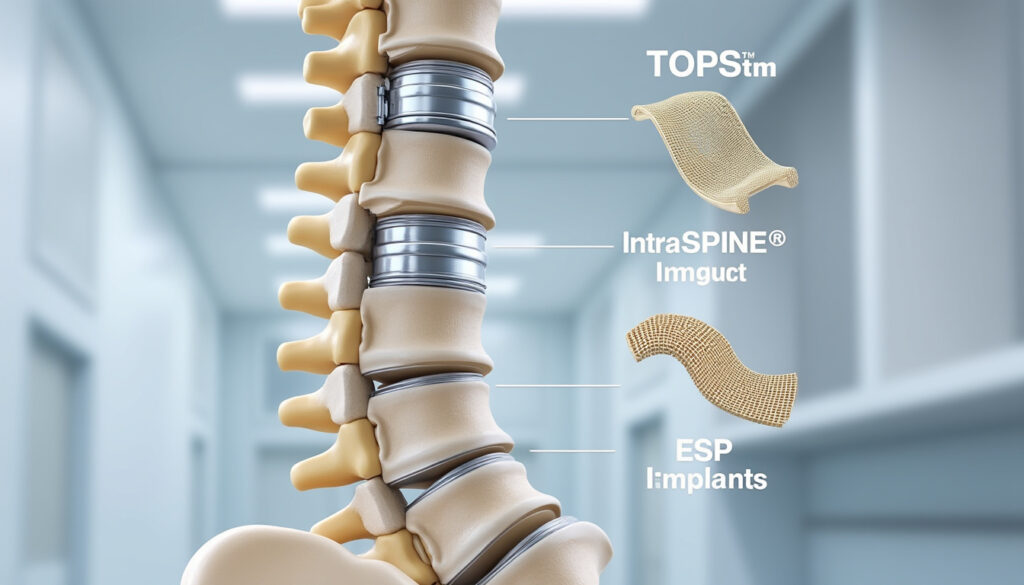
The evolving field of spinal surgery is witnessing a transformative shift, fueled by cutting-edge implant technologies such as TOPS, Intraspine, and ESP. These innovative implants redefine treatment possibilities by emphasizing preservation of natural spinal mechanics, while ensuring durable stabilization and…
Technological Innovations Minimizing Surgical Complications
The rapid integration of robotic assistance and 3D imaging into spinal surgeries has transformed operative precision. Platforms developed by industry leaders such as Orthofix and Stryker, alongside emerging robotics companies, facilitate better implant placement, reduced tissue trauma, and shorter operative times.
Examples of technological benefits include:
- Enhanced accuracy of pedicle screw insertion: Minimizes risk of nerve root injury.
- Improved visualization of anatomical landmarks: Through 3D reconstruction and augmented reality tools.
- Reduced radiation exposure: Via navigation systems optimizing fluoroscopy use.
- Greater consistency in implant positioning: Supported by real-time feedback.
These advances contribute to fewer postoperative complications and enhance overall patient satisfaction. Centers adopting these technologies often report improved outcomes in complex fusion and motion-preserving surgeries, aligning with best practices guidelines discussed in clinical blogs like Momentum Health’s best practices for spinal surgery.
| Technology | Clinical Advantage | Potential Limitation |
|---|---|---|
| Robotic Navigation (e.g., eCential Robotics) | Precision and reproducibility in implant placement | Learning curve and equipment cost |
| 3D Imaging and Augmented Reality | Enhanced anatomical understanding intraoperatively | Technical complexity |
| Minimally Invasive Techniques | Reduced postoperative pain and faster recovery | Limited visualization in complex cases |

Preparing for Surgery in France: Key Indications, Benefits, and Limitations
In an evolving global healthcare landscape, France emerges as a beacon of advanced surgical expertise, particularly attracting international patients seeking expedited and innovative medical interventions. Patients from regions experiencing long wait times, such as Quebec, increasingly view France as an…
Patient Preparation and Postoperative Management to Avoid Complications
Effective surgery extends beyond the operating room. Patient education and preparation play pivotal roles in reducing complications and enhancing recovery. Preoperative guidance on nutrition, activity modification, and psychological readiness contributes significantly to outcomes. Likewise, structured postoperative rehabilitation and ongoing pain management prevent chronic disability and implant-related issues.
Key components for minimizing postoperative problems include:
- Preoperative counseling: Ensure realistic expectations and compliance with rehabilitation.
- Multidisciplinary rehabilitation plans: Physical therapy tailored to surgery type and patient condition.
- Regular follow-up with imaging: Early detection of hardware loosening or nonunion.
- Management of neuropathic pain: Using pharmacologic and non-pharmacologic treatments.
Failure to adhere to post-surgical protocols is a common cause of long-term complications and is addressed thoroughly in resources like Spine-Health’s overview of fusion risks. Psychological support and ergonomic advice further support patient well-being and reduce relapse.
| Postoperative Factor | Recommended Action | Possible Consequence if Neglected |
|---|---|---|
| Patient adherence to rehab | Tailored therapy with close monitoring | Delayed recovery, persistent pain |
| Follow-up imaging | Scheduled intervals for hardware assessment | Missed complications, implant failure |
| Pain management | Multimodal approaches | Chronic neuropathic pain |
| Psychosocial support | Counseling and education | Depression, decreased quality of life |

Unveiling the Hidden Benefits of Quality and Certification in Devices
The landscape of device manufacturing and clinical application in 2026 has been fundamentally shaped by the rigorous interplay between quality management and certification processes. Within this complex framework, the hidden benefits of adhering to international standards and obtaining relevant certifications…
Critical Importance of Adhering to Conservative Treatment Before Surgery
Current expert opinion stresses that spinal surgery should be considered only after conservative management has failed or the severity of the spinal pathology necessitates urgent intervention. This ethical and evidence-based practice limits unnecessary surgical risks and optimizes patient benefit.
For example, advanced conservative techniques such as robotic-assisted neurodecompression and controlled traction therapy at specialist centers have demonstrated efficacy in symptom relief without the invasiveness of surgery. A program lasting typically 3 to 6 months allows comprehensive evaluation of response and the opportunity to refine treatment strategies.
- Robotic-assisted neurodecompression: Targeted relief of nerve compression without tissue disruption.
- Computer-controlled cervical or lumbar traction: Precise physiologic unloading of affected segments.
- Adjacent osteopathic and educational therapies: Enhance patient understanding and posture correction.
- Careful monitoring and reassessment: Facilitates timely progression to surgery if needed.
This conservative-first approach is reinforced by the framework provided by institutions such as specialized chiropractic and surgical centers that maintain stringent protocols to avoid premature surgery. Patients are empowered through education and supported in making informed, measured choices.
| Conservative Treatment Aspect | Details | Outcome Objective |
|---|---|---|
| Duration | Minimum 3-6 months of specialized care | Evaluate efficacy and delay surgery when possible |
| Techniques Applied | Robotic neurodecompression, traction, osteopathy | Reduce pain and improve function noninvasively |
| Follow-up Protocol | Clinical & imaging reassessment | Timely surgical planning if necessary |
| Patient Education | Comprehensive counseling and material | Informed decision-making and expectation management |
Why Experts Advocate for Comprehensive Preoperative Evaluations
In the complex and demanding field of spinal surgery, the emphasis on comprehensive preoperative evaluations has become a fundamental pillar supporting successful surgical outcomes. These evaluations, far beyond mere routine checks, integrate detailed analyses of patient health, surgical risk assessments,…
Establishing a Framework to Avoid Surgical Errors in Spinal Procedures
Errors in spinal surgery can have severe consequences, but many are preventable through disciplined approaches. Common pitfalls are often concentrated in preoperative assessment, intraoperative execution, and postoperative care.
For example, failure to verify the correct surgical site or patient can cause devastating wrong-site surgeries that remain among the most dreaded complications. Other errors include incorrect implant sizing or placement, and inadequate management of intraoperative bleeding or nerve irritation.
- Strict adherence to preoperative checklists: Verification of patient identity, surgical site, and procedure.
- Continuous surgeon and team education: Updating skills on new technologies and protocols.
- Use of advanced intraoperative navigation: Robotics and imaging reduce human error.
- Structured postoperative monitoring: Allows rapid response to complications.
Institutions adopting comprehensive error prevention frameworks, guided by research such as outlined in the nine common surgical errors in the operating room, report significant improvements in patient safety.
| Surgical Error Type | Preventive Action | Consequence if Unchecked |
|---|---|---|
| Wrong site surgery | Multiple time-outs and cross-checks | Severe morbidity, legal issues |
| Improper implant placement | Robotic-assisted navigation and training | Neurologic damage, revision |
| Intraoperative bleeding | Meticulous hemostasis and planning | Compromised surgical field, complications |
| Poor postoperative care | Multidisciplinary follow-up and patient education | Infection, implant failure |
Quizz : erreurs fréquentes à éviter en chirurgie simple, fusion et techniques de mouvement
What distinguishes simple spinal surgery from fusion or motion preservation?
Simple surgery focuses on decompression without hardware implantation, preserving spinal motion. Fusion immobilizes spinal segments to stabilize but reduces flexibility, while motion preservation aims to stabilize while maintaining some movement using dynamic implants.
How does robotic assistance reduce complications in spinal operations?
Robotic systems improve implant placement accuracy and provide better visualization, reducing risks such as nerve damage and wrong-site surgeries.
When should surgery be considered instead of conservative treatment?
Surgery is recommended after failure of specialized conservative treatments or when neurological deficits worsen, requiring urgent intervention.
What are the permanent lifestyle restrictions after spinal fusion?
Patients are often advised to avoid high-impact activities that place excessive stress on the fused segments, to reduce risk of adjacent segment degeneration and implant failure.
What role does postoperative rehabilitation play in spinal surgery outcomes?
Rehabilitation supports functional recovery, pain management, and prevention of complications such as stiffness or implant loosening.
The Future of Surgery Lies in Stepwise Functional Recovery
The evolution of surgical care in 2026 reveals a compelling shift toward approaches that prioritize the holistic recovery of patients, moving beyond traditional metrics like length of hospital stay or mortality rates. This modern paradigm highlights the principle that the…