
How Rehabilitation and Returning to Work Enhance Clinical Outcomes
June 29, 2026
Global Comparison: Spotlight on Partner Hospitals and Surgeons
June 30, 2026
As the landscape of healthcare continues to evolve, Quebec patients facing spinal surgery in France are witnessing a transformative shift thanks to a methodical approach called Comprehensive Preoperative Assessment. This detailed evaluation process encompasses more than just routine checks; it is a multifaceted strategy focused on optimizing patient safety, surgical outcomes, and overall patient care improvement well before the first incision.
Quebec’s healthcare system, historically challenged by long waiting times and limited access to cutting-edge surgical techniques, is now benefiting from international collaborations. Through seamless coordination between Quebec healthcare providers, international surgical teams, and specialized medical tourism agencies, patients obtain access to innovative procedures and a well-structured surgical preparation pathway in France. This international synergy not only accelerates care delivery but also significantly reduces surgical risks via advanced pre-surgery evaluation protocols.
At the heart of this transformation is the integration of risk assessment combined with personalized patient management, enabling tailored surgical strategies and optimized perioperative care. Anchored by experts including Dr. Sylvain Desforges and supported by Neurothérapie Montréal and SOS Tourisme Médical, the emphasis on comprehensive patient evaluation sets a new standard in healthcare transformation, positioning Quebec patients at the forefront of surgical safety and clinical excellence.
Key Components of Comprehensive Preoperative Assessment Elevating Quebec Healthcare Outcomes
The Comprehensive Preoperative Assessment involves various critical stages, each contributing to enhanced patient safety and surgical outcomes. The assessment begins with a meticulous review of the patient’s medical history, focusing on cardiovascular, metabolic, respiratory conditions, and any previous surgical or anesthetic complications. This comprehensive history-taking is indispensable to identify pre-existing risks and plan a customized surgical path.
Risk assessment tools such as the ASA (American Society of Anesthesiologists) Physical Status Classification are utilized to categorize patients based on their operative risk. This classification directly informs anesthetic planning and perioperative care management, ensuring the patient’s physiological capacities are thoroughly considered.
Physical examination plays a crucial role, with an emphasis on assessing skin condition, airway anatomy, cardiovascular and neurological status, and functional capacity. Quantitative evaluations like effort tolerance indices predict the ability to withstand surgery and anesthesia, crucial for patients undergoing complex spine surgeries.
Finally, tailored paraclinical testing is prescribed based on clinical indication rather than routine protocols. Blood analyses, electrocardiograms, and imaging studies are precisely selected to identify contraindications or coexisting conditions that may impact surgery or anesthesia risk, further emphasizing patient safety within the pre-surgical pathway.


Understanding Sciatic Pain: Key Symptoms and When to Seek Medical Advice
Sciatic pain is a prevalent condition impacting a wide demographic, manifesting primarily as intense pain radiating from the lower back down the leg. This pain stems from irritation or compression of the sciatic nerve, a major nerve extending through the…
The Impact of Personalized Surgical Preparation Pathways for Quebec Patients
Patients from Quebec embarking on spinal surgery in France benefit from a surgical preparation model rooted in personalization and comprehensive management. This patient-centered approach includes thorough communication, informed consent processes, and psychological support, minimizing anxiety and enhancing trust.
Marcel Mazaltarim’s role as a neurotherapy expert and personalized care coordinator exemplifies the importance of humanized engagement within complex healthcare journeys. His management of medical record aggregation, interdisciplinary validation, and logistical organization reduces operational delays and alleviates patient stress throughout the transatlantic surgical process.
This patient-focused navigation extends to managing travel logistics, accommodation, and transfers, crucial factors in ensuring physical and emotional readiness for surgery abroad. Accommodations are selected with patient comfort and mobility in mind, ensuring the environment promotes rapid preoperative recovery and postoperative rehabilitation readiness.
Such intricate surgical preparation pathways, underpinned by robust coordination between Quebec healthcare providers and French surgical centers, illustrate a potent model for healthcare transformation. The efficiency gained not only elevates system performance but crucially translates to improved patient outcomes and satisfaction.

The Stepwise Role of Functional Recovery in Achieving Successful Outcomes
The journey to full recovery following spinal surgery is often complex and multifaceted, demanding a meticulously structured approach to ensure optimal functional outcomes. In recent years, the concept of functional recovery through a stepwise approach has garnered significant attention in…
Leveraging Advanced Risk Assessment Techniques for Enhanced Patient Safety
Risk assessment is a cornerstone of patient safety within the comprehensive preoperative evaluation. Beyond basic medical history, risk stratification incorporates predictive analytics, scoring systems, and decision support tools to accurately assess operative risks.
In the context of spinal surgery, factors such as diabetes management, anticoagulant therapy, pulmonary function, and neurological status are critically evaluated and optimized preoperatively. This approach mitigates the risk of intraoperative complications, postoperative infections, and neurological sequelae.
Recent studies reinforce the efficacy of preoperative optimization, demonstrating reduced complication rates and shorter hospital stays. Implementation of evidence-based guidelines, coupled with real-time patient monitoring during initial assessments, further solidifies patient safety and surgical outcome improvement.
The comprehensive nature of these evaluations aligns closely with emerging perioperative medicine models championed within leading anesthesiology organizations, highlighting the centrality of such assessments for the future of healthcare delivery.


Transatlantic Patient Journey: Insights into Indications, Benefits, and Challenges
The emergence of the Transatlantic Patient Journey as a strategic model within healthcare continues to capture attention for its innovative potential, especially in specialized fields such as spinal surgery. This cross-border care pathway integrates rigorous medical evaluation from Quebec with…
Innovative Surgical Techniques Accessible to Quebec Patients through International Coordination
The partnership between Quebec-based healthcare teams and French surgical centers enables patients to access innovative surgical technologies often unavailable closer to home. Techniques such as minimally invasive endoscopic procedures, dynamic stabilization implants (e.g., TOPS, Intraspine), and robotic-assisted navigation systems are now integrated within Quebec patients’ pathways.
Minimally invasive endoscopic spine surgery offers significant benefits, including reduced postoperative pain, minimal tissue disruption, and faster return to daily activities. Courses such as the renowned FICV Spinal Solution Course and IRCAD Strasbourg Endoscopy Course support surgeon expertise, ensuring high technical proficiency in these procedures.
Dynamic implants preserve spinal mobility while stabilizing pathological segments, a breakthrough in treating conditions like spondylolisthesis or degenerative disc disease. These implants reduce adjacent segment disease, enhancing long-term surgical outcomes in patient populations with complex degenerative disorders.
Robotic-assisted surgical platforms equipped with 3D imaging facilitate precise implant placement, reduce operating times, and improve reproducibility. This technology-driven leap in surgical accuracy propels patient safety and outcome benchmarks to new heights.
| Technique / Implant | Primary Indications | Advantages Compared to Traditional Methods | Benefits for Patients |
|---|---|---|---|
| TOPS Dynamic Posterior System | Spondylolisthesis, lumbar instability | Preserves mobility, reduces adjacent segment arthritis | Decreased pain, improved lumbar function |
| Cervical Disc Prosthesis | Disc herniation, degenerative disc disease | Maintains segmental motion, natural cervical range of motion | Faster recovery, preserved neck mobility |
| Minimally Invasive Endoscopic Surgery | Spinal stenosis, lumbar disc herniation | Less postoperative pain, smaller scars | Accelerated return to routine activities |
| Intraspine Dynamic Interlaminar Prosthesis | Moderate lumbar instability | Biomechanically respects spinal motion, supports stabilization | Maintains mobility, improved quality of life |
Access to such cutting-edge surgical options demonstrates the critical advantage of international healthcare coordination for Quebec patients, effectively expanding therapeutic choices and enhancing surgical outcomes.
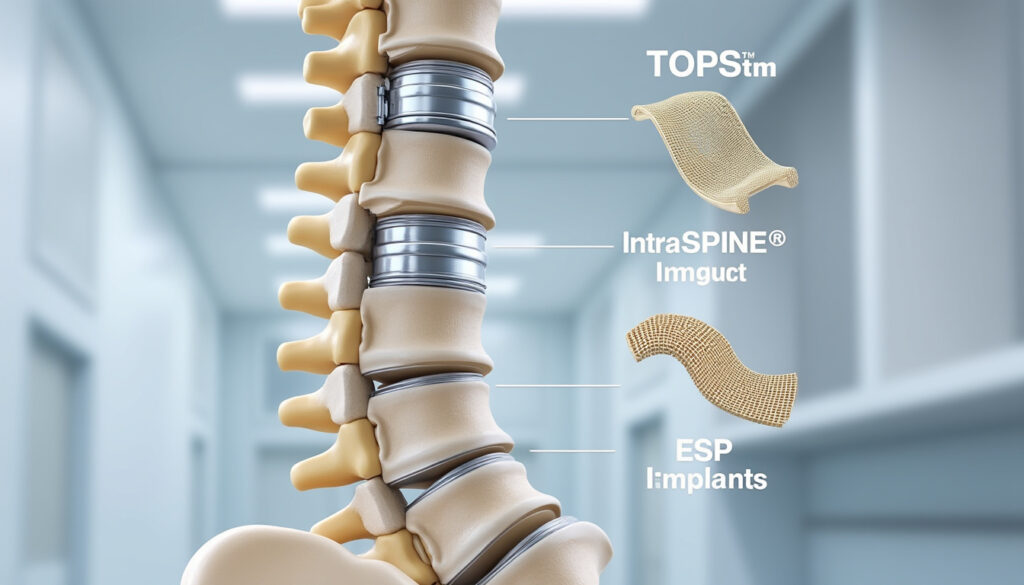
The evolving field of spinal surgery is witnessing a transformative shift, fueled by cutting-edge implant technologies such as TOPS, Intraspine, and ESP. These innovative implants redefine treatment possibilities by emphasizing preservation of natural spinal mechanics, while ensuring durable stabilization and…
Integrating Patient-Centered Communication and Informed Consent to Foster Surgical Success
Communication transparency constitutes a fundamental pillar in elevating patient safety and outcomes in the comprehensive preoperative pathway. Patients engaged in this process receive clear information about the planned intervention, associated risks, expected recovery, and alternative treatment options, enabling truly informed consent.
Maintaining an ongoing dialogue between healthcare teams and patients mitigates ambiguities and empowers individuals to take active roles in their care. This empowerment has been linked to decreased perioperative anxiety, improved adherence to preoperative instructions, and enhanced postoperative recovery.
Managing patient expectations through educational sessions, informational materials, and personalized consultations fosters a trusting relationship, which in turn positively influences surgical outcomes. Such a patient-centered approach underscores the healthcare transformation brought about by comprehensive preoperative assessment.

Preparing for Surgery in France: Key Indications, Benefits, and Limitations
In an evolving global healthcare landscape, France emerges as a beacon of advanced surgical expertise, particularly attracting international patients seeking expedited and innovative medical interventions. Patients from regions experiencing long wait times, such as Quebec, increasingly view France as an…
Critical Role of Postoperative Follow-Up Utilizing Advanced Neurofunctional Technologies
Postoperative care is an extension of the comprehensive surgical journey, with an emphasis on multidisciplinary rehabilitation and neurofunctional support. Quebec patients returning after surgery benefit from specialized follow-up programs at Neurothérapie Montréal, where technologies such as neurofeedback and biofeedback are integrated into rehabilitation protocols.
This neurofunctional approach enhances motor recovery, mitigates chronic pain, and supports neuroplasticity, promoting sustained functional improvement. According to recent clinical analyses, such tailored postoperative care is instrumental in reducing readmission rates and optimizing long-term patient outcomes.
The continuity of care from preoperative evaluation to advanced postoperative follow-up exemplifies healthcare transformation through integration and innovation. Patients experience improved mobility, pain control, and quality of life, underscoring the comprehensive nature of their care pathway.


Unveiling the Hidden Benefits of Quality and Certification in Devices
The landscape of device manufacturing and clinical application in 2026 has been fundamentally shaped by the rigorous interplay between quality management and certification processes. Within this complex framework, the hidden benefits of adhering to international standards and obtaining relevant certifications…
Essential Criteria and Documentation for Patient Eligibility in International Spinal Surgery
Determining surgical candidacy is a nuanced process requiring thorough evaluation of clinical presentation, imaging, and overall health status. Typical indications for surgery include severe disc herniation, spinal stenosis with neurological compromise, and unstable spondylolisthesis.
Preoperative assessments also focus on optimizing comorbidities such as diabetes and hypertension to minimize perioperative risks. A structured checklist for documentation ensures all pertinent clinical data is presented, preventing delays or cancellations:
- Comprehensive medical history and ongoing treatments
- Recent imaging studies: MRI, CT scan, X-rays
- Laboratory blood work and cardiac evaluations
- Medication and allergy information
- Contact details for sustained patient-provider communication
This clear preparation framework facilitates smooth patient flow through the complex international surgical pathway, reinforcing patient safety and experience.

Why Experts Advocate for Comprehensive Preoperative Evaluations
In the complex and demanding field of spinal surgery, the emphasis on comprehensive preoperative evaluations has become a fundamental pillar supporting successful surgical outcomes. These evaluations, far beyond mere routine checks, integrate detailed analyses of patient health, surgical risk assessments,…
Strategic Healthcare Transformation through Collaborative International Preoperative Models
The development of comprehensive preoperative assessment and international coordination for Quebec spine surgery patients exemplifies a strategic healthcare transformation. This partnership overcomes local system limitations by reducing wait times and delivering access to advanced surgical innovations that elevate patient outcomes.
The seamless integration of personalized evaluation, risk stratification, logistical management, patient education, and postoperative care underscores the model’s robustness. It reflects progressive healthcare ideals driving systemic change, improving quality of surgical care while respecting patient-centered values.
Such integrated approaches are aligned with emerging evidence from perioperative medicine literature, advocating multidisciplinary coordination to reduce complications and enhance functional recovery. This healthcare transformation journey promises to shape future global surgical pathways by fostering innovation and patient safety.
Comparison of Preoperative Assessment Methods
What are the key stages of a comprehensive preoperative assessment for spinal surgery in France?
The assessment starts with an in-depth medical history and targeted clinical examinations, followed by imaging and laboratory tests tailored to confirm surgical candidacy and ensure patient safety throughout the pathway.
How can I determine if I am a good candidate for spinal surgery in France?
Eligibility is based on health status, recent imaging results, and the absence of uncontrolled comorbidities. Guidance from a care coordinator helps clarify all relevant factors for surgery.
What conveniences does Neurothérapie Montréal provide in postoperative care?
They offer personalized postoperative rehabilitation integrating technologies like neurofeedback, enabling better recovery of mobility and pain control.
How is the logistical planning for surgery abroad managed?
A dedicated agency handles the coordination of travel, lodging, and transfers between airports and medical centers, easing stress and ensuring the patient’s comfort.
Why is clear communication essential before surgery?
Transparent information allows patients to understand risks, surgical steps, and alternatives, ensuring informed consent, building trust, and facilitating successful outcomes.

The Future of Surgery Lies in Stepwise Functional Recovery
The evolution of surgical care in 2026 reveals a compelling shift toward approaches that prioritize the holistic recovery of patients, moving beyond traditional metrics like length of hospital stay or mortality rates. This modern paradigm highlights the principle that the…