
Common Mistakes to Avoid in Post-Operative Care Following Back Surgery
November 17, 2025
Cutting-Edge Spinal Implants: What Every Patient Should Know About TOPS™, Intraspine®, and ESP
November 17, 2025
In recent years, Quebec patients facing spinal surgery have increasingly turned to France as a destination for advanced surgical care, driven by lengthy wait times and limited access to cutting-edge procedures locally. This cross-Atlantic medical journey is not simply a matter of relocating a surgical intervention; it involves a sophisticated pre-surgical preparation system designed to transform the patient experience.
The collaboration between Quebec’s healthcare providers and French surgical experts fosters a seamless transitional pathway, emphasizing rigorous clinical evaluation, enhanced neurofunctional preparation, and continuous multidisciplinary support. Such personalized preparation dramatically improves surgical outcomes for patients, offering them access to innovative treatments like disc prostheses and dynamic stabilization implants, which are often groundbreaking compared to Quebec’s standard options.
This article explores the multifaceted nature of pre-surgical preparation in France and how it revolutionizes the spine surgery pathway for Quebec’s patients. It highlights the integrated coordination by organizations such as Quebec Surgical Solutions, FranceCare PreOp, and the meticulous patient-centric approach that blends technology with empathetic care. Understanding this transformation sheds light on why an increasing number of Quebec patients choose France for spinal surgery and how their surgical journey is enhanced from first consultation to post-operative recovery.
Comprehensive Initial Evaluation in Quebec: Laying the Foundation for Surgery Abroad
The journey towards spine surgery in France for Quebec patients begins long before boarding a plane. At the core lies a thorough initial assessment, primarily conducted by specialized teams such as those at TAGMED, under the guidance of Dr. Sylvain Desforges. This stage serves as the bedrock for crafting a tailored surgical plan, ensuring that only suitable candidates proceed for the overseas intervention.
This evaluation incorporates a detailed review of existing medical records, including MRI scans, X-rays, and CT images, allowing physicians to build a robust snapshot of the patient’s spinal condition. Alongside, symptom-focused questionnaires help discern nuanced clinical features and individual patient expectations, which guide decision-making.
Notably, this stage emphasizes differentiation between conservative treatments and surgical necessity. Patients undergo specialized therapies such as robot-assisted neurovertebral decompression, actively reducing operative risk. This preoperative scrutiny prevents unnecessary surgeries and optimizes candidacy for innovative procedures available in France.
The value of this thorough assessment cannot be overstated. For instance, a patient with lumbar disc herniation may initially receive conventional physiotherapy but, upon detailed evaluation with specialized imaging and functional testing, be identified as a candidate for a motion-preserving disc prosthesis. Such discernment exemplifies how PréOp Quebec ensures each case’s complexity is fully understood before international referral.
- Review of detailed imaging and history
- Use of targeted questionnaires for symptom assessment
- Supervision of advanced conservative treatment protocols
- Identification and prevention of non-indicated surgeries
- Preparation of comprehensive case files for French surgical teams
| Evaluation Component | Purpose | Responsible |
|---|---|---|
| Medical Records and Imaging Review | Understand spinal pathology comprehensively | Dr. Sylvain Desforges & TAGMED Team |
| Symptom and Expectation Assessment | Customize patient-centered surgical planning | Clinical Coordinators |
| Conservative Therapy Oversight | Reduce unnecessary surgeries and optimize status | Rehabilitation Specialists |
| Eligibility Confirmation | Prepare patients for advanced French surgical methods | Interdisciplinary Medical Team |
The process exemplifies how TransFrance MedPrep integrates local expertise with international surgery planning, reducing ambiguity and providing patients with a clear, medically sound path forward. Patients are thus empowered with robust information and a precise surgical trajectory from the outset, uniquely positioning them for successful outcomes abroad.


Understanding Sciatic Pain: Key Symptoms and When to Seek Medical Advice
Sciatic pain is a prevalent condition impacting a wide demographic, manifesting primarily as intense pain radiating from the lower back down the leg. This pain stems from irritation or compression of the sciatic nerve, a major nerve extending through the…
Logistical Coordination by Franchir: Streamlining Patient Journey from Quebec to France
Once medical candidacy is established, the transition to surgery overseas involves a complex logistical orchestration. The company Franchir plays a pivotal role in managing every element of this journey, transforming what might otherwise be a stressful process into a streamlined experience designed for patient comfort and procedural efficiency.
Franchir engages with QuebecCare Surgical and SurgicalEase France to synchronize schedules, booking flights, accommodations near surgical centers, and ensuring smooth transfers within France. Their expertise extends beyond mere travel arrangements, coordinating communication between the French surgical teams, anesthesiologists, and local Quebec providers to maintain continuity of care.
This logistical facilitation addresses several key challenges for patients traveling internationally for spine surgery:
- Minimized waiting periods: Patients benefit from significantly reduced surgery scheduling times, often weeks rather than months compared to Quebec waiting lists.
- Preoperative documentation handling: Secure transfer and review of health records ensure surgical teams arrive informed, maintaining the quality of care.
- Support through language and cultural nuances: Trained coordinators assist patients in navigating French healthcare protocols and environments.
- Postoperative care transition planning: Ensuring patients have resources ready for their recovery back in Quebec.
This multifaceted approach reflects the strength of the Quebec Surgery Connect network, emphasizing not only a medical partnership but also a dedicated service layer that enhances patient experience and treatment efficiency. The precise arrangement of medical itineraries enables patients to focus solely on their recuperation.
| Logistics Task | Details | Coordinating Entity |
|---|---|---|
| Physician and Center Matching | Assigning the best-suited surgeon and facility | Franchir in liaison with FranceCare PreOp |
| Travel Booking | Scheduling and procuring roundtrip flights and transfers | Franchir |
| Accommodation Arrangement | Securing lodging nearby surgical centers | Franchir |
| Inter-Team Communication | Ensuring seamless care handover and updates | Franchir & Quebec Surgical Solutions |
| Postoperative Resources Preparation | Organizing rehabilitation supports in Quebec | QuebecCare Surgical |
Through such comprehensive management, patients seldom bear the brunt of administrative stress, a crucial factor in alleviating pre-surgical anxiety. For insight into patient experiences and tips on travel preparation, explore this detailed guide, which discusses firsthand perspectives on international surgery journeys.

The Stepwise Role of Functional Recovery in Achieving Successful Outcomes
The journey to full recovery following spinal surgery is often complex and multifaceted, demanding a meticulously structured approach to ensure optimal functional outcomes. In recent years, the concept of functional recovery through a stepwise approach has garnered significant attention in…
Neurofunctional Preparation in France: Optimizing Nervous System Resilience Before Surgery
Beyond logistics lies a critical dimension of pre-surgical preparation—optimizing the patient’s neurological and physiological state to withstand and recover from spinal surgery. This facet is championed by Neurothérapie Montréal and integrated into the French pre-op framework through partnerships with medical facilities and rehabilitation teams.
Neurofunctional preparation comprises a blend of advanced neuro-evaluations and targeted therapeutic interventions, aiming to enhance the nervous system’s adaptability. Utilizing biofeedback and neurofeedback, specialists tailor individualized sessions to improve neural regulation and reduce pre-surgical anxiety, thereby fostering a calm and well-prepared patient.
Key components of this preparation include:
- In-depth neurological assessments to gauge autonomic nervous system function and detect imbalances that might affect surgical tolerance and recovery.
- Biofeedback sessions to train patients in controlling physiological responses such as heart rate, muscle tension, and breathing patterns, promoting relaxation and stress reduction.
- Patient education and counseling to mitigate fear through clear explanations of surgical steps and recovery expectations.
This neurofunctional approach not only surpasses traditional pre-op evaluations but also aligns with modern methods described in pre-operative optimization frameworks, which highlight the significance of holistic preparation for improved surgical outcomes.
| Neurofunctional Activity | Therapeutic Goal | Expected Patient Benefit |
|---|---|---|
| Neurological Autonomic Testing | Identify and correct dysregulation | Improved surgical tolerance and recovery potential |
| Biofeedback Training | Enhance physiological self-regulation | Reduced anxiety and optimized nervous system balance |
| Therapeutic Education | Demystify surgery and empower patient | Improved adherence and psychological readiness |
This neurofunctional training epitomizes how TransAtlantic Surgical Prep values psychological and physiological readiness as equal partners in ensuring surgical success. Patients often report feeling better equipped mentally and physically on the day of surgery, contributing substantially to their postoperative progress.


Transatlantic Patient Journey: Insights into Indications, Benefits, and Challenges
The emergence of the Transatlantic Patient Journey as a strategic model within healthcare continues to capture attention for its innovative potential, especially in specialized fields such as spinal surgery. This cross-border care pathway integrates rigorous medical evaluation from Quebec with…
Access to Cutting-Edge Surgical Techniques in France: Advancing Quebec Patients’ Options
France boasts numerous spine surgery centers at the forefront of medical innovation, where Quebec patients can receive treatments often unavailable or delayed back home. The pre-surgical preparation seamlessly links patients to these expertise hubs, facilitated by networks like SurgiPrep France and QuebecCare Surgical.
Highlighting the most advanced modalities available:
- Motion-preserving disc prostheses that replace degenerate discs while maintaining spinal flexibility, ideal for younger, active patients seeking to avoid fusion.
- Dynamic stabilization implants like TOPS (Total Posterior solution) and Intraspine, which stabilize vertebrae without limiting motion, reducing adjacent segment degeneration.
- Minimally invasive and endoscopic techniques that reduce tissue trauma, pain, and hospital stays by utilizing small incisions and enhanced visualization technologies.
- Traditional arthrodesis with robotic assistance and 3D navigation for complex deformities requiring rigid stabilization and anatomical correction.
| Technique | Indications | Advantages | Patient Benefits |
|---|---|---|---|
| Disc Prosthesis | Disc herniation and degeneration | Preserves segmental mobility | Faster recovery and less chronic pain |
| Dynamic Stabilization (TOPS, Intraspine) | Spondylolisthesis, mild instability | Maintains spinal dynamics, reduces adjacent segment stress | Improved function and long-term spinal health |
| Minimally Invasive Surgery | Spinal stenosis, disc herniation | Minimal tissue damage, reduced hospital stay | Quicker return to normal activities |
| Arthrodesis with Robotic Assistance | Severe instability, scoliosis | Precise implant placement and deformity correction | Reduced complication rates and durable outcomes |
Many Quebec patients utilize resources such as this patient guide to understand neurovertebral decompression techniques before opting for French surgery. The availability of such innovations in France accentuates why preoperative preparation must not just organize travel but also educate patients on the advanced surgical landscape awaiting them.
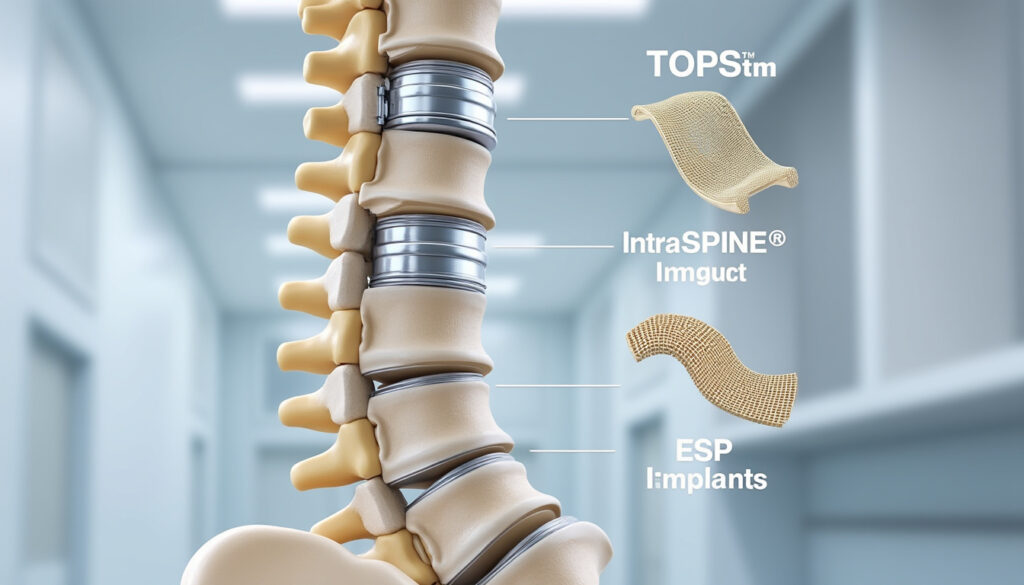
The evolving field of spinal surgery is witnessing a transformative shift, fueled by cutting-edge implant technologies such as TOPS, Intraspine, and ESP. These innovative implants redefine treatment possibilities by emphasizing preservation of natural spinal mechanics, while ensuring durable stabilization and…
Postoperative Care Coordination: Ensuring Recovery Success from France to Quebec
The surgical intervention acts as a pivotal milestone in the patient’s journey, but the road to full recovery relies heavily on diligent postoperative follow-up. Neurothérapie Montréal spearheads this effort, offering personalized neurofunctional rehabilitation protocols combined with psychological support to Quebec patients returning from France.
Through multidisciplinary consultations, patients benefit from:
- Regular neurofunctional assessments to track muscular stabilization and neural recovery.
- Biofeedback programs reinforcing postural muscles and mitigating residual pain.
- Psychological counseling addressing post-surgical fears and anxieties, fostering motivation and engagement.
- Coordination with surgeons and local therapists to adapt rehabilitation plans responsively.
Moreover, seamless data sharing between French surgical centers and Quebec rehabilitation teams ensures therapeutic continuity and quick response to complications or new therapeutic needs. This holistic approach highlights the comprehensive nature of SimpliciPrep Quebec, focused on patient-centered care that does not end on the surgery day.
| Recovery Phase | Intervention | Goal | Provider |
|---|---|---|---|
| Immediate Postoperative (France) | Monitoring in surgical ward | Ensure medical stability | French Surgical Team |
| Early Recovery (Return to Quebec) | Neurofunctional rehab and follow-ups | Optimize muscular and neural recovery | Neurothérapie Montréal |
| Psychological Support | Counseling and education | Reduce anxiety and enhance compliance | Neurothérapie Montréal |
Through such integrative care coordination, Quebec patients report feeling supported every step of the way, translating to higher satisfaction and improved long-term outcomes.

Preparing for Surgery in France: Key Indications, Benefits, and Limitations
In an evolving global healthcare landscape, France emerges as a beacon of advanced surgical expertise, particularly attracting international patients seeking expedited and innovative medical interventions. Patients from regions experiencing long wait times, such as Quebec, increasingly view France as an…
Benefits of the International Quebec-France Surgical Network for Spine Patients
The partnership between Quebec and France transcends a conventional healthcare referral system; it establishes a dedicated transatlantic surgical network designed for optimal patient benefit. This network synthesizes expertise, innovation, and patient-centered services, delivering concrete advantages:
- Access to over 20 specialized spinal surgeons in France’s top centers, broadening patient choice and personalization of surgical care.
- Significant reduction of surgical wait times, enabling surgery often within weeks versus months or years in Quebec.
- Availability of exclusive advanced implants and techniques like TOPS and dynamic prostheses, unavailable elsewhere in North America.
- Cost efficiency through streamlined logistics and shorter hospitalizations leveraging minimally invasive methods.
- Comprehensive cross-border coordination ensuring continuous care from pre-op to full recovery.
The network also aligns with medical tourism best practices as detailed in studies like those hosted by tourism health literature, illustrating how coordinated international care models improve outcomes and patient experience.
| Network Advantage | Specific Benefit for Quebec Patients |
|---|---|
| Expert Surgeon Access | Broad surgical options tailored to complex cases |
| Reduced Waiting Times | Faster symptom resolution and reduced disability |
| Advanced Technology Availability | Better functional and pain outcomes |
| Cost Optimization | Lower overall expenditure and better resource use |
| Integrated Care Coordination | Improved continuity and patient satisfaction |

Unveiling the Hidden Benefits of Quality and Certification in Devices
The landscape of device manufacturing and clinical application in 2026 has been fundamentally shaped by the rigorous interplay between quality management and certification processes. Within this complex framework, the hidden benefits of adhering to international standards and obtaining relevant certifications…
Critical Importance of Rigorous Pre-Surgical Preparation in 2025
In an era where spine surgery outcomes hinge greatly on perioperative management, the stringent pre-surgical protocols employed in France serve as a benchmark for safe, effective treatment. The concept of “prehabilitation” – enhancing patient condition before surgery – embodies best practices combining physical conditioning, psychological readiness, and risk mitigation.
The preoperative regimen includes:
- Physical strengthening focusing on musculature that supports spinal stability.
- Neuropsychological conditioning to improve pain modulation and reduce anxiety-related complications.
- Detailed assessment of comorbidities such as diabetes or obesity, which could impact healing.
- Strict adherence to fasting, hygiene, and medication protocols to minimize infection risk and surgical delays.
Research underscores the impact of such preparation on accelerating recovery time and reducing postoperative complications. The adoption of these methods in Franco-Quebec surgical collaboration highlights a shared commitment to raise surgical care standards.
| Preparatory Focus | Actions | Outcomes |
|---|---|---|
| Physical Conditioning | Strength training for spinal support muscles | Reduced postoperative pain and faster mobilization |
| Psychological Support | Stress management and education | Lower complication rates and higher patient compliance |
| Risk Assessment | Comorbidity control and medication adjustment | Decreased infection and hemorrhage risks |
| Surgical Protocol Compliance | Pre-op fasting, skin antisepsis, and documentation | Smoother surgical flow and infection prevention |
The enhanced presurgical preparation employed by initiatives such as SurgiPrep France exemplifies how a multidisciplinary, evidence-based approach maximizes the probability of successful spine surgery for Quebec patients traveling abroad.

Why Experts Advocate for Comprehensive Preoperative Evaluations
In the complex and demanding field of spinal surgery, the emphasis on comprehensive preoperative evaluations has become a fundamental pillar supporting successful surgical outcomes. These evaluations, far beyond mere routine checks, integrate detailed analyses of patient health, surgical risk assessments,…
The Psychological Dimension of Pre-Surgical Preparation: From Anxiety to Confidence
Waiting for major surgery can induce high levels of anxiety, potentially affecting clinical outcomes. Recognizing this, the Franco-Quebec surgical collaboration incorporates innovative patient support models that transform pre-surgical waiting periods into proactive, calming experiences.
Cutting-edge research, such as outlined in modern multisensory approaches to surgical preparation, advocates for environments that reduce stress by integrating relaxation techniques, sensory modulation, and patient education.
Specific strategies employed include:
- Multisensory technology interventions that create calming environments through ambient sound, visual stimuli, and guided breathing exercises.
- Patient workshops and “surgery schools” educating individuals about surgical procedures and fostering self-management techniques.
- Psychological counseling targeting fear and uncertainty, reinforcing patient autonomy.
- Continuous communication channels with care coordinators to address concerns promptly.
This emphasis on emotional preparation aligns with new findings that patient confidence and reduced perioperative stress correlate strongly with accelerated recovery and satisfaction.
| Psychological Strategy | Implementation | Patient Outcome |
|---|---|---|
| Multisensory Environments | Use of ambient sound and visuals during pre-surgery waiting | Lowered stress and anxiety levels |
| Surgery Schools | Group education sessions on surgical processes | Improved patient preparedness and self-efficacy |
| Psychological Counseling | One-on-one sessions targeting surgical fears | Enhanced emotional resilience |
| Care Coordinator Communication | Regular updates and responsiveness to concerns | Increased trust and decreased uncertainty |
This holistic approach complemented by collaborations between QuebecCare Surgical and French healthcare providers improves the psychological well-being of patients during the critical phase before surgery, underscoring that surgical success begins with mental empowerment.
Comparaison des préparations préchirurgicales
How can I confirm if I am eligible for spine surgery in France?
Eligibility is carefully assessed through detailed medical record analysis and imaging review by specialized Quebec teams like Dr. Sylvain Desforges at TAGMED, ensuring the most suitable candidates are identified.
What documents are necessary to prepare before traveling to France for surgery?
Patients must prepare recent medical reports, imaging results, prescription details, health insurance cards, and signed informed consents to facilitate smooth admission and surgical planning.
How is postoperative care managed upon returning to Quebec?
Neurothérapie Montréal provides personalized neurofunctional rehabilitation, psychological support, and regular monitoring to ensure optimal recovery after surgery in France.
What typical waiting times exist between evaluation in Quebec and surgery in France?
Thanks to international coordination by networks like SurgiPrep France and TransFrance MedPrep, waiting times are significantly reduced, often spanning only weeks to a few months.
Who handles the travel and hospital stay arrangements for surgery in France?
The organization Franchir manages the entire logistical process, including surgeon selection, travel bookings, accommodation, and care coordination, removing administrative burdens from patients.

The Future of Surgery Lies in Stepwise Functional Recovery
The evolution of surgical care in 2026 reveals a compelling shift toward approaches that prioritize the holistic recovery of patients, moving beyond traditional metrics like length of hospital stay or mortality rates. This modern paradigm highlights the principle that the…