

Post-Operative Care After Back Surgery: A Comprehensive Guide for Quebec Patients
November 21, 2025
How Quality and Certification of Medical Devices Enhance Clinical Outcomes
November 21, 2025
Comprehensive preoperative assessments have emerged as a transformative cornerstone in modern surgical preparation, redefining how patient outcomes are optimized before the first incision. By transcending traditional checklists, these thorough evaluations integrate multifaceted elements such as risk stratification, medical optimization, and perioperative care to guide clinical decision-making with unprecedented precision. As surgical technologies evolve and patient profiles become increasingly complex, the hidden benefits of such evaluations reveal themselves as critical for safeguarding patients and enhancing recovery trajectories.
In 2025, distinctive international healthcare collaborations, particularly the progressive partnerships between Quebec and France within spinal surgery pathways, showcase the pivotal role of well-orchestrated preoperative protocols. These programs not only facilitate patient safety by meticulously reviewing medical, surgical, and psychological backgrounds but also enable custom-tailored interventions that reflect the latest advancements in personalized medicine. The integration of dynamic assessment tools, combined with cross-border coordination, exemplifies an innovative outpatient-to-surgery paradigm that reduces complications and improves functional restoration.
How Comprehensive Preoperative Assessment Enhances Surgical Preparation and Patient Outcomes
At its core, comprehensive preoperative assessment is far more than a rudimentary health screening; it is an instrumental process that anticipates and mitigates risks while personalizing the surgical journey according to the patient’s unique health landscape. This evaluation encompasses an in-depth review of an individual’s medical history, physical examination, and a series of laboratory and imaging investigations that collectively inform on vital organ function and potential contraindications.
Risk stratification serves as a foundational principle underpinning the framework of these assessments. By categorizing patients according to their perioperative risk profiles, clinicians can implement targeted interventions such as optimizing hypertensive control, managing diabetes, or addressing nutritional deficiencies before surgery. For example, addressing uncontrolled diabetes in advance not only reduces infection rates but contributes to better wound healing and a shorter hospital stay.
Medical optimization extends beyond mere stabilization; it involves refining therapies to ensure compatibility with anesthesia and minimizing adverse outcomes. Patients on anticoagulant therapy undergo tailored adjustments to balance bleeding risks with thrombotic prevention, underscoring the interplay between pharmacological management and procedural timing. Moreover, preoperative pulmonary evaluations identify those at risk for postoperative respiratory complications, enabling preventive strategies such as respiratory physiotherapy.
This rigorous preparation significantly correlates with improved surgical outcomes. Studies reveal that patients who undergo comprehensive evaluation experience fewer postoperative complications, reduced ICU admissions, and expedited functional recovery. Such findings reinforce the assessment’s role as a critical intervention point that harmonizes surgical technique, anesthesia planning, and perioperative monitoring into a coherent patient-centered pathway. Detailed insights into these aspects can be found in resources discussing the importance of preoperative evaluations for safe surgeries and the fundamental principles of pre-operative assessments.
- Thorough medical and psychological history collection to identify risk factors and contraindications.
- Physical examination focused on cardiovascular and pulmonary status to assess anesthesia fitness.
- Laboratory tests including coagulation profiles and metabolic panels to uncover silent pathologies.
- Imaging studies such as MRI or CT scans to precisely define surgical targets and anatomical variations.
- Adjustment of medications to minimize perioperative interactions.
| Assessment Component | Objective | Clinical Benefit |
|---|---|---|
| Review of Medical History | Detect chronic illnesses and surgeries | Guides risk stratification and tailored management |
| Laboratory Investigations | Evaluate coagulation and organ function | Reduces perioperative bleeding and organ-related complications |
| Cardiopulmonary Evaluation | Assess heart and lung capacity | Prevents anesthesia-related adverse events |
| Imaging Modalities | Visualize surgical site | Facilitates precise surgical planning and technique selection |
| Medication Review | Identify drug interactions | Minimizes perioperative risks |


Understanding Sciatic Pain: Key Symptoms and When to Seek Medical Advice
Sciatic pain is a prevalent condition impacting a wide demographic, manifesting primarily as intense pain radiating from the lower back down the leg. This pain stems from irritation or compression of the sciatic nerve, a major nerve extending through the…
International Collaboration in Preoperative Evaluation: The Quebec-France Spinal Surgery Paradigm
One of the foremost examples of comprehensive evaluation transforming surgical care emerges from the Quebec-France partnership within spinal surgery pathways. Facilitated by expert coordination through entities such as Neurothérapie Montréal and organizations involved in medical tourism, this transatlantic collaboration exemplifies a refined patient-centric approach to surgical preparation.
Patients undergo standardized initial assessments at specialized centers like TAGMED in Quebec, where clinicians including Dr. Sylvain Desforges ensure proper patient selection and conservative treatment optimization. Subsequently, Neurothérapie Montréal oversees the comprehensive preoperative evaluation, synchronizing clinical data and investigations for seamless transmission to French surgical teams and coordinating logistical details through service providers such as Franchir.
The advantages of this cross-border program are multifold: it permits accelerated access to leading-edge surgical techniques including motion-preserving implants (TOPS, Intraspine) and minimally invasive procedures approved in France. Additionally, personalized consultation cycles prepare patients mentally and physically while incorporating perioperative education to reduce anxiety and enhance recovery prospects.
- Streamlined evaluation protocols ensuring eligibility and optimized care
- International coordination to reduce delays and logistical complexities
- Access to surgeons skilled in innovative spinal techniques
- Integrated pre- and post-operative multidisciplinary support
- Patient-centered communication accommodating cultural and geographic factors
| Stakeholder | Role | Impact on Patient Pathway |
|---|---|---|
| TAGMED | Initial patient evaluation and conservative management | Ensures accurate surgical candidacy and medical optimization |
| Neurothérapie Montréal | Preoperative follow-up and coordination | Continuity of care and clinical data synthesis |
| Franchir | Patient orientation and logistical organization | Reduces patient stress and streamlines surgical scheduling |
| SOS Tourisme Médical | Informational support and administrative assistance | Clarifies eligibility and procedural requirements |
The conceptual framework and real-world implications of this program underscore how comprehensive evaluation protocols serve as a keystone for achieving superior perioperative results in spine surgery. For a broader perspective on planning transnational surgical care, consult literature on comprehensive preoperative assessment as a pivotal patient care strategy.

The Stepwise Role of Functional Recovery in Achieving Successful Outcomes
The journey to full recovery following spinal surgery is often complex and multifaceted, demanding a meticulously structured approach to ensure optimal functional outcomes. In recent years, the concept of functional recovery through a stepwise approach has garnered significant attention in…
Technological Advances Reinforcing Preoperative Evaluation and Clinical Decision-Making
The rapid evolution of surgical technology in 2025 complements and expands the scope of comprehensive preoperative assessments. Sophisticated imaging modalities, such as high-resolution MRI and 3D-printed anatomical models, now routinely support detailed visualization of patient-specific spinal pathologies, allowing surgeons to design precise intervention strategies.
Robotics and computer-assisted navigation have substantially enhanced intraoperative accuracy, but preoperative data quality remains critical in driving these systems effectively. Comprehensive evaluations collect and consolidate data points essential for tuning robotic platforms and tailoring intraoperative decision-making, reducing operative times and improving implant placement.
For instance, the use of FDA-approved robotic systems guided by 3D imaging reduces the risk of neurological complications and improves implant positioning consistency. Concurrently, dynamic assessments of patient biomechanics help decide the suitability of minimally invasive versus fusion surgeries, balancing stability and mobility preservation.
- Integration of 3D imaging enhances anatomical accuracy
- Preoperative data guides robotic-assisted navigation systems
- Custom implants and patient-specific surgical plans
- Reduced operative times and anesthesia exposure
- Improved postoperative functional outcomes
| Technology | Function | Benefit in Preoperative Planning |
|---|---|---|
| 3D MRI and CT Imaging | Detailed anatomical visualization | Informs surgical approach and implant selection |
| Robotic Navigation Platforms | Guidance for instrument positioning | Enhances precision and safety |
| 3D Printed Spine Models | Preoperative simulation and planning | Improves surgical rehearsal and patient education |
| Biomechanical Assessments | Functional spine analysis | Optimizes implant choice and surgical technique |
| Advanced Data Analytics | Outcome prediction and risk modeling | Enables informed clinical decision-making |
The incorporation of these innovations synergizes with clinical evaluation protocols to elevate precision medicine in surgical contexts. Insights into how cutting-edge technologies interplay with patient assessment can be further explored via resources on spinal surgery navigation and robotic assistance and the progress of minimally invasive spine surgery documented in recent clinical analyses.


Transatlantic Patient Journey: Insights into Indications, Benefits, and Challenges
The emergence of the Transatlantic Patient Journey as a strategic model within healthcare continues to capture attention for its innovative potential, especially in specialized fields such as spinal surgery. This cross-border care pathway integrates rigorous medical evaluation from Quebec with…
Multidisciplinary Approaches Optimizing Medical and Psychological Patient Preparation
Effective preoperative assessment reaches beyond assessing physical readiness; it entails a holistic strategy incorporating psychological and nutritional dimensions that profoundly influence surgical outcomes. In 2025, contemporary frameworks emphasize integrating neurotherapy, nutritional counseling, and psychological support in preoperative workflows.
Addressing preoperative anxiety through targeted psychological consultation reduces perioperative stress responses, which in turn can lower postoperative pain and accelerate recovery. Nutritionists conduct detailed assessments to enhance wound healing capacity by correcting deficits such as anemia or vitamin insufficiencies. Neurotherapeutic modalities, including biofeedback and neurofeedback, optimize neuromuscular control pre-surgery, potentially improving postoperative functional gains.
This multidisciplinary care model underscores the importance of perioperative care as a continuum rather than discrete surgical episodes. Coordinated follow-up after surgery extends recovery support, addressing complications early and adapting rehabilitation protocols dynamically to patient progress.
- Psychological interventions to reduce anxiety and improve cooperation
- Nutritional assessments to enhance tissue repair
- Neurotherapeutic techniques for functional enhancement
- Personalized postoperative care plans
- Continuous patient education on recovery expectations
| Care Dimension | Implementation | Expected Improvement |
|---|---|---|
| Psychological Support | Consultations and coping strategies | Decreased anxiety and better procedural adherence |
| Nutrition Counseling | Dietary optimization and supplementation | Improved wound healing and immune function |
| Neurotherapy | Biofeedback and neurofeedback programs | Enhanced motor function and pain management |
| Postoperative Follow-Up | Scheduled visits and tailored rehabilitation | Faster recovery and fewer complications |
A detailed exploration of integrated patient care pathways around preoperative assessment is available through authoritative sites such as comprehensive preoperative assessment insights for Quebec patients. These programs highlight how humanized care amplifies clinical successes from preparation through recovery.

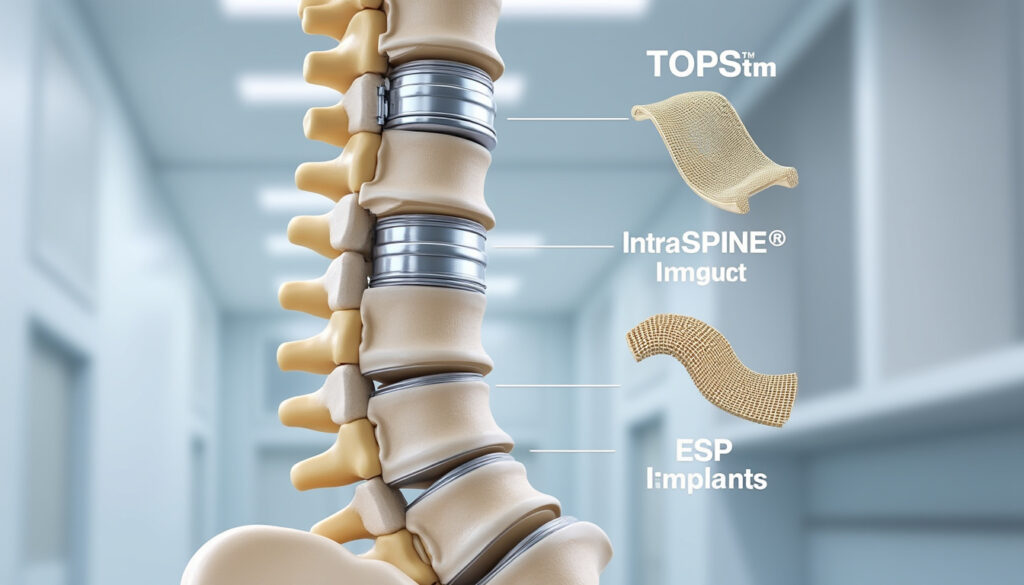
The evolving field of spinal surgery is witnessing a transformative shift, fueled by cutting-edge implant technologies such as TOPS, Intraspine, and ESP. These innovative implants redefine treatment possibilities by emphasizing preservation of natural spinal mechanics, while ensuring durable stabilization and…
Essential Steps and Protocols in Comprehensive Preoperative Evaluation
The architecture of a thorough preoperative assessment is structured around a series of sequential steps designed to mitigate uncertainty and prepare the patient comprehensively for surgery. Each stage plays a distinctive role, validating patient readiness and informing perioperative strategies for safety and efficacy.
- Medical and Surgical History Analysis: Identifies chronic conditions, previous surgeries, and allergies vital for planning.
- Physical Examination: Focuses on relevant systems, particularly cardiac and respiratory, to assess fitness.
- Laboratory Testing: Includes coagulation profiles, organ function markers, and nutritional status indicators.
- Imaging Procedures: Employs MRI or CT scans to define anatomical details critical for surgical precision.
- Medication Review and Management: Evaluates all current drugs to prevent perioperative adverse interactions.
- Risk Assessment and Stratification: Integrates clinical and diagnostic data to prioritize interventions.
- Patient Education and Psychological Preparation: Prepares patients emotionally and informs them of surgical expectations.
- Multidisciplinary Planning and Coordination: Engages specialists for a seamless continuity of care.
| Step | Purpose | Outcome |
|---|---|---|
| History Analysis | Discover medical risks and allergies | Safety and tailored anesthesia plan |
| Physical Exam | Assess functional reserve | Fitness verification |
| Laboratory Tests | Detect metabolic and hematological issues | Reduction of perioperative complications |
| Imaging | Guide surgical approach | Precision in treatment delivery |
| Medication Review | Prevent harmful interactions | Enhanced perioperative safety |
| Risk Stratification | Focuses intervention priorities | Risk reduction |
| Patient Education | Inform and reduce anxiety | Better cooperation and outcome |
| Multidisciplinary Coordination | Ensure comprehensive care | Seamless surgical experience |
For a stepwise, detailed roadmap supporting preoperative evaluations, consider reviewing a comprehensive guide to preoperative evaluation that bridges theoretical principles with practical applications.

Preparing for Surgery in France: Key Indications, Benefits, and Limitations
In an evolving global healthcare landscape, France emerges as a beacon of advanced surgical expertise, particularly attracting international patients seeking expedited and innovative medical interventions. Patients from regions experiencing long wait times, such as Quebec, increasingly view France as an…
The Impact of Preoperative Assessment on Reducing Surgical Risks and Enhancing Recovery
Beyond the immediate perioperative period, the hidden benefits of meticulous preoperative assessments materialize profoundly in the reduction of surgery-related complications and the facilitation of an expedited recovery. Optimizing patient conditions pre-surgery translates directly to better physiological resilience and reduced postoperative morbidity.
Statistically significant evidence correlates thorough preoperative evaluation programs with lowered incidences of postoperative infections, cardiovascular events, and neurological sequelae particularly in spinal procedures. Preoperative management of modifiable risk factors such as hypertension, diabetes, and anemia supports faster healing and decreases hospital length of stay.
Furthermore, personalized perioperative care plans derived from comprehensive assessments foster enhanced patient engagement, improving compliance with rehabilitation and lifestyle modifications. Such initiatives are crucial for surgical success, as outlined by multiple researches and clinical reports.
- Prevention of postoperative complications through targeted medical optimization
- Structured perioperative monitoring enabled by risk stratification
- Decrease in unplanned ICU admissions and reoperations
- Shortened hospitalization and improved functional outcomes
- Enhanced patient confidence and reduced anxiety
| Risk Factor | Preoperative Intervention | Outcome Impact |
|---|---|---|
| Hypertension | Medication adjustment and monitoring | Reduced cardiac events |
| Diabetes Mellitus | Glycemic control optimization | Lower infection rates |
| Anemia | Iron supplementation and evaluation | Improved wound healing and reduced transfusion needs |
| Pulmonary Dysfunction | Respiratory physiotherapy prehabilitation | Fewer respiratory complications |
| Medication Interactions | Reviewed and managed perioperative plans | Decreased bleeding and adverse drug effects |
The evidence supporting these effects is continuously consolidated, with ongoing research advocating for widespread adoption of comprehensive preoperative assessment protocols across surgical disciplines. Further exploration of these clinical benefits is accessible via studies about the importance of preoperative assessment to surgical outcomes and overviews of why these examinations are central to successful surgery.

Unveiling the Hidden Benefits of Quality and Certification in Devices
The landscape of device manufacturing and clinical application in 2026 has been fundamentally shaped by the rigorous interplay between quality management and certification processes. Within this complex framework, the hidden benefits of adhering to international standards and obtaining relevant certifications…
Patient-Centered Care Models in Preoperative Assessment: Humanizing Surgical Pathways
The evolution of preoperative assessment embraces a patient-centered philosophy that balances cutting-edge medical protocols with empathetic care. This approach recognizes that patient anxiety, comprehension, and active participation are integral to optimal outcomes.
Facilitated communication channels between international healthcare providers and patients foster transparency about surgical indications, procedural risks, and recovery expectations. Customized education sessions and shared decision-making empower patients, reinforcing trust and adherence to treatment plans.
Moreover, the role of multidisciplinary teams encompassing surgeons, anesthesiologists, nurses, therapists, and coordinators exemplifies this holistic model. Patients benefit from synchronized care pathways that anticipate their medical, psychological, and logistical needs.
- Patient education tailored to cultural and individual factors
- Preoperative counseling addressing fears and enhancing compliance
- Collaborative decision-making involving the entire care team
- Continuity of care across geographical boundaries
- Outcome monitoring with feedback loops for quality improvement
| Feature | Patient Impact | Care Team Benefit |
|---|---|---|
| Tailored Education | Improved understanding and reduced anxiety | Better adherence and fewer complications |
| Holistic Counseling | Enhanced emotional resilience | Streamlined perioperative care |
| Shared Decision-Making | Empowered patient participation | Aligned treatment goals |
| Cross-Border Coordination | Smooth transitions and trust building | Optimized resource utilization |
| Quality Feedback | Continuous care improvements | Data-informed clinical adjustments |
In-depth discussions on patient-centered preoperative pathways are elaborated in expert articles, including those analyzing patient testimonials during recovery and guides to comprehensive initial assessments.
Quiz : Les bénéfices cachés d’une évaluation préopératoire complète

Why Experts Advocate for Comprehensive Preoperative Evaluations
In the complex and demanding field of spinal surgery, the emphasis on comprehensive preoperative evaluations has become a fundamental pillar supporting successful surgical outcomes. These evaluations, far beyond mere routine checks, integrate detailed analyses of patient health, surgical risk assessments,…
Emerging Trends and Future Directions in Preoperative Assessment Protocols
Advancements in genomics, artificial intelligence, and telemedicine signal a dynamic future for comprehensive preoperative assessments. Predictive analytics applied to large clinical datasets will refine risk models, facilitating personalized surgical preparation with even greater accuracy.
Remote monitoring and virtual consultations walk hand-in-hand with wearable technology, enabling continuous health status tracking and timely intervention prior to hospital admission. Furthermore, integration of patient-reported outcomes through digital platforms enriches clinical decision-making with real-world data, supporting adaptive care pathways that evolve during the perioperative period.
These innovations dovetail with expanding global healthcare networks, fostering equitable and accessible delivery of high-quality surgical preparation. The particularities of transnational collaborations like those bridging Quebec and France will inspire models for international standardization of assessment protocols and patient-centered surgical pathways.
- Use of AI-driven predictive risk stratification tools
- Telemedicine for remote preoperative evaluations
- Wearables enabling continuous vital sign monitoring
- Integration of patient-reported outcomes in clinical workflows
- International harmonization of assessment standards
| Emerging Technology | Contribution to Preoperative Assessment | Potential Impact |
|---|---|---|
| Artificial Intelligence | Predicts individualized surgical risks | Personalized optimization and safer surgeries |
| Telemedicine | Provides remote consultations and testing | Improves access and reduces pre-surgery delays |
| Wearable Devices | Tracks vital signs continuously | Early detection of deterioration |
| Digital Patient-Reported Outcomes | Incorporates patient experiences | Enhances adaptive clinical decision-making |
| International Protocol Harmonization | Standardizes preoperative processes | Facilitates cross-border surgical care |
Explorations of such forward-looking strategies can be enriched by insights from ongoing clinical research and international symposia, highlighting the future trajectories of preoperative care optimization.

The Future of Surgery Lies in Stepwise Functional Recovery
The evolution of surgical care in 2026 reveals a compelling shift toward approaches that prioritize the holistic recovery of patients, moving beyond traditional metrics like length of hospital stay or mortality rates. This modern paradigm highlights the principle that the…
Educational Pathways and Professional Training Shaping Preoperative Assessment Expertise
The proficiency of healthcare professionals entrusted with conducting comprehensive preoperative assessments directly influences patient safety and surgical success. Accordingly, specialized educational programs and certifications have proliferated globally to embrace the complexity of this role.
Universities and professional societies offer diplomas and inter-university courses focusing on spinal surgery, perioperative care, and evaluation methodologies. For example, international entities like the Société Française de Chirurgie Rachidienne provide rigorous curriculum designed to enhance skills in both operative and preoperative clinical decision-making. Such programs emphasize evidence-based practice, multidisciplinary communication, and technological integration.
- Courses focusing on diagnostic and evaluation techniques in surgery
- Workshops on advanced imaging interpretation and risk assessment models
- Training on patient communication and psychological support
- Certification in multidisciplinary perioperative care coordination
- Hands-on experience with robotic surgery and navigational systems
| Program | Institution | Core Competencies |
|---|---|---|
| DIU Chirurgie du Rachis | Société Française de Chirurgie Rachidienne | Spinal surgery expertise and preoperative evaluation |
| DU Pathologies du Rachis | Université Paris | Comprehensive diagnosis and perioperative management |
| FICV Spinal Solution Course | Université de Bordeaux-Institut de la Colonne | Advanced surgical planning and evaluation technologies |
| EuroSpine Endoscopic Spine Course | IRCAD Strasbourg | Minimally invasive and endoscopic techniques |
| Certification in Perioperative Care | Various Medical Centers | Multidisciplinary coordination and patient-centered care |
Information on specialized medical education programs reveals how evolving expertise parallels advancements in evaluation protocols and surgical innovation. Additional details on these offerings are accessible through academic portals like the Diplôme Inter-Universitaire de Chirurgie du Rachis and the FICV spinal solution courses.
Guidance for Patients Navigating Comprehensive Preoperative Assessment for Spine Surgery
For patients confronting the prospect of spine surgery, understanding the value and process of comprehensive preoperative assessment can alleviate apprehension and foster informed participation. Awareness of obligatory investigations, multidisciplinary consultations, and individualized optimization underscores the central tenets of modern surgical care.
Patients are encouraged to provide complete medical history, present accurate lists of medications and allergies, and submit recent imaging studies for review. Active dialogue with care coordinators ensures that personal needs and expectations are addressed, aligning surgical objectives with quality-of-life goals.
Reliable patient resources and support systems facilitate education on the benefits of comprehensive preparation, including how preoperative assessment can sometimes help avoid surgery altogether by identifying conservative treatment strategies. The importance of engaging with trusted platforms offering knowledge on preoperative pathways, such as those innovating Quebec-France care pathways, is paramount.
- Provide comprehensive and accurate medical documentation
- Undergo recommended laboratory and imaging tests timely
- Engage openly in multidisciplinary consultations
- Educate yourself on surgical options and preparatory measures
- Utilize support networks for psychological and logistical guidance
| Preparation Step | Patient Action | Benefit |
|---|---|---|
| Medical Records Submission | Complete and up-to-date documentation | Facilitates accurate assessment |
| Diagnostic Testing | Timely completion of tests | Enables thorough evaluation |
| Consultations | Active participation and questioning | Promotes individualized care |
| Information Seeking | Exploring trusted resources | Reduces anxiety and enhances cooperation |
| Support Systems | Psychological and logistical assistance | Smoother surgical journey |
Comprehensive patient guides such as the guide to initial assessments and questionnaires provide invaluable insight supporting proactive patient engagement and safety.
What tests are typically required in a comprehensive preoperative assessment?
These include blood tests, cardiopulmonary evaluations, and targeted imaging like MRI or CT scans to precisely assess the spine and overall health.
How is eligibility for spine surgery determined?
Eligibility is carefully evaluated through an initial clinical assessment by specialized teams, with ongoing multidisciplinary review ensuring patients meet criteria for surgical intervention.
What are the benefits of preoperative assessment for international patients?
These assessments optimize surgical preparation, reduce risks, accelerate access to innovative techniques abroad, and ensure continuous personalized care.
What happens after the preoperative assessment is completed?
Following approval, logistical arrangements for surgery are made, the procedure is performed, and post-operative monitoring is managed to support recovery.
Which documentation should patients prepare for their evaluation?
Patients should provide recent medical records, imaging results, blood work, medication lists, and allergy information to facilitate a thorough review.