
Minimally Invasive Surgery in Longueuil: Enhancing Post-Operative Recovery
May 16, 2026
Herniated Disc in Pointe-Claire: Essential Tips for Optimal Recovery and Neurovertebral Decompression Therapy
May 16, 2026
In recent years, the field of surgery has undergone transformative changes driven by a paradigm shift towards conservative treatments. This evolution reflects a broader trend within healthcare, emphasizing patient-centered care, rapid recovery, and reducing the inherent risks of surgical interventions. As advanced diagnostics and medical technology continue to develop, healthcare providers increasingly advocate for minimally invasive and non-invasive methods as preferable alternatives to traditional procedures. These treatment alternatives not only reduce physical trauma but often lead to better long-term outcomes, shaping the future trajectory of surgical practice.
The recognition of the potential hazards associated with invasive surgeries, such as complications, extended hospital stays, and prolonged recovery times, has sparked a renewed focus on conservative therapies. These include physiotherapy, targeted pharmacological management, regenerative medicine, and lifestyle modifications designed to restore function and alleviate symptoms without resorting to operative measures. This comprehensive shift, deeply embedded in surgical innovation, prioritizes strategies that maintain anatomical integrity and encourage natural healing mechanisms, signaling a new era for clinical decision-making.
Expanding the Scope of Conservative Treatments in Modern Healthcare
Conservative treatments have rapidly expanded their role across various medical disciplines, especially in areas traditionally dominated by surgery. Conditions once routinely treated with invasive procedures now frequently benefit from conservative approaches that emphasize symptom management, functional restoration, and the prevention of further deterioration.
An illustrative example is the management of spinal disorders. Traditionally, many spinal pathologies necessitated extensive surgeries, such as spinal fusion or disc replacement. However, advances in conservative care—including customized physical therapy, epidural injections, and precision-guided rehabilitation protocols—have enabled many patients to avoid surgery altogether. For some, these non-invasive methods yield comparable, if not superior, outcomes relative to traditional open surgeries, with fewer complications and substantially improved patient recovery experiences.
A significant factor driving this shift is the development of advanced imaging techniques and diagnostic tools, which allow clinicians to accurately assess disease severity and monitor progress without subjecting patients to invasive explorations. Moreover, the integration of personalized medicine, incorporating patient-specific risk profiles and comorbidities, has refined treatment selection, ensuring that conservative therapies are employed judiciously to maximize efficacy while minimizing adverse effects.
These developments also dovetail with healthcare trends focusing on cost containment and resource optimization. Conservative treatments often reduce hospitalization durations, decrease opioid dependence, and lower the overall economic burden associated with surgical interventions. Consequently, many healthcare systems worldwide have incorporated them as first-line strategies for managing chronic musculoskeletal and neurological conditions.

Key Components Driving the Expansion of Conservative Care
- Advanced imaging and diagnostics enabling precise non-invasive assessment
- Regenerative medicine approaches harnessing the body’s healing potential
- Evidence-based rehabilitation protocols tailored for individual patient needs
- Multidisciplinary care teams fostering comprehensive management plans
- Technological innovations such as robotic-assisted therapy and tele-rehabilitation

Understanding Sciatic Pain: Key Symptoms and When to Seek Medical Advice
Sciatic pain is a prevalent condition impacting a wide demographic, manifesting primarily as intense pain radiating from the lower back down the leg. This pain stems from irritation or compression of the sciatic nerve, a major nerve extending through the…

The Stepwise Role of Functional Recovery in Achieving Successful Outcomes
The journey to full recovery following spinal surgery is often complex and multifaceted, demanding a meticulously structured approach to ensure optimal functional outcomes. In recent years, the concept of functional recovery through a stepwise approach has garnered significant attention in…
Minimally Invasive Surgery: Bridging Traditional Procedures and Conservative Treatments
The advent of minimally invasive surgery represents a critical bridge that merges the benefits of traditional surgical procedures with the philosophies underpinning conservative treatments. These techniques, including laparoscopic surgery, endoscopic interventions, and robotic-assisted procedures, significantly reduce surgical trauma by limiting the size of incisions and minimizing disruption to healthy tissues.
Minimally invasive surgery has become a cornerstone in advancing the future of surgery. By leveraging cutting-edge medical technology, surgeons can perform complex interventions with enhanced precision and control, often resulting in reduced blood loss, lower infection rates, and shorter hospital stays. Patient recovery times have drastically improved, generating a positive shift in postoperative outcomes and patient satisfaction.
For example, in orthopedic surgery, arthroscopic techniques have largely supplanted open procedures for certain joint repairs. This shift illustrates how minimally invasive methods can maintain surgical efficacy while incorporating principles of conservative care—preserving anatomical structures and minimizing patient risk. The incremental innovation evidenced in these methods continues to evolve, with future prospects including augmented reality guidance and AI-assisted surgical planning to enhance precision further.
Despite these advances, it is crucial to recognize that minimally invasive surgery remains, fundamentally, a surgical approach. The decision to pursue such procedures must consider individual patient factors alongside alternative non-invasive strategies. Access to comprehensive information, such as detailed guides contrasting conservative treatments and surgical options, empowers patients and clinicians to navigate treatment pathways effectively.
Advantages of Minimally Invasive Techniques
| Benefit | Explanation | Impact on Patient Recovery |
|---|---|---|
| Smaller Incisions | Reduced tissue damage and scarring | Quicker wound healing and less pain |
| Reduced Blood Loss | Minimizes risks associated with transfusions | Faster mobilization and reduced complications |
| Shorter Hospital Stay | Lowers risk of hospital-acquired infections | Earlier return to daily activities |
| Enhanced Surgical Precision | Improves outcomes through better visualization and control | Decreases revision surgery rates |
| Lower Postoperative Pain | Decreases opioid dependency post-surgery | Improved quality of life following treatment |

Transatlantic Patient Journey: Insights into Indications, Benefits, and Challenges
The emergence of the Transatlantic Patient Journey as a strategic model within healthcare continues to capture attention for its innovative potential, especially in specialized fields such as spinal surgery. This cross-border care pathway integrates rigorous medical evaluation from Quebec with…
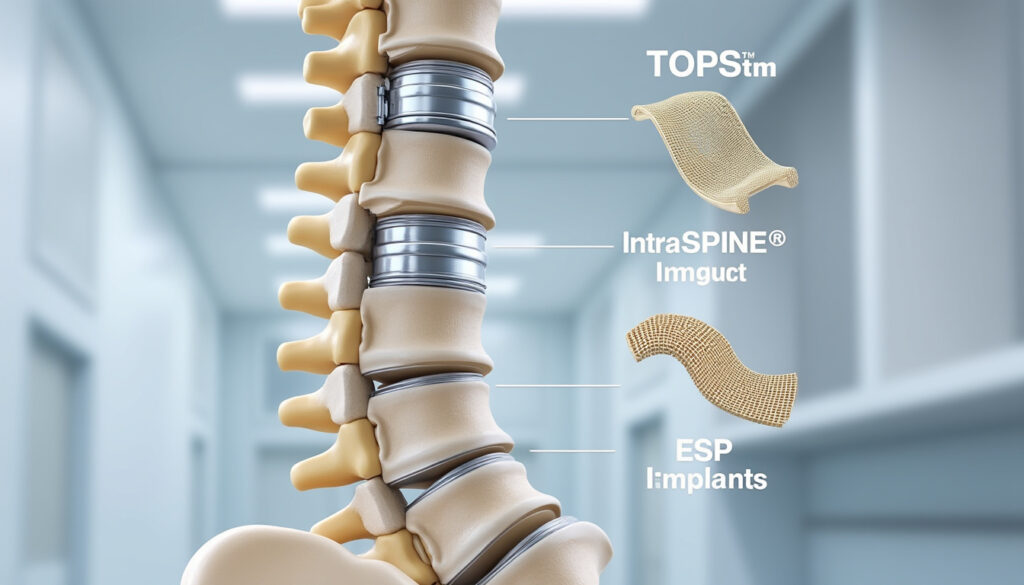
The evolving field of spinal surgery is witnessing a transformative shift, fueled by cutting-edge implant technologies such as TOPS, Intraspine, and ESP. These innovative implants redefine treatment possibilities by emphasizing preservation of natural spinal mechanics, while ensuring durable stabilization and…
The Role of Medical Technology in Shaping the Future of Surgery
The landscape of surgery is increasingly intertwined with advances in medical technology that promote conservative treatment options. Innovations such as high-definition imaging, AI-assisted diagnostics, wearable health monitors, and refined biomaterials are facilitating less invasive, more effective management of complex conditions.
Integration of AI algorithms assists clinicians not only in diagnostic accuracy but also in prognostic assessment—identifying patients likely to benefit most from conservative versus surgical interventions. This tailored approach helps reduce unnecessary procedures, optimizing outcomes while conserving healthcare resources. Additionally, the advent of robotic surgical systems is refining traditional surgical techniques, promising enhanced dexterity and precision while reducing patient trauma.
Wearable devices now enable continuous monitoring of vital signs and physical activity levels, providing real-time data to guide rehabilitation and adjust conservative treatment plans dynamically. These technologies represent a shift toward proactive, personalized healthcare, which aligns perfectly with evolving treatment alternatives.
With ongoing research and development, it is expected that further technological disruptions will continue to narrow the divide between conservative and surgical treatments, emphasizing non-invasive methods as first-line approaches whenever feasible. For instance, developments in bioprinting and regenerative engineering hold promise for repairing damaged tissues without resorting to traditional surgical replacement.


Preparing for Surgery in France: Key Indications, Benefits, and Limitations
In an evolving global healthcare landscape, France emerges as a beacon of advanced surgical expertise, particularly attracting international patients seeking expedited and innovative medical interventions. Patients from regions experiencing long wait times, such as Quebec, increasingly view France as an…

Unveiling the Hidden Benefits of Quality and Certification in Devices
The landscape of device manufacturing and clinical application in 2026 has been fundamentally shaped by the rigorous interplay between quality management and certification processes. Within this complex framework, the hidden benefits of adhering to international standards and obtaining relevant certifications…
Impact of Conservative Treatments on Patient Recovery and Quality of Life
One of the most compelling motivators steering the future of surgery toward conservative treatments is the remarkable improvement in patient recovery and quality of life experienced with non-invasive or minimally invasive methods. Reduced surgical trauma, diminished pain levels, and faster functional restoration are hallmarks of such approaches.
Research consistently shows that patients undergoing conservative treatments often report lower rates of postoperative complications, quicker mobilization, and higher satisfaction with their care journey. For individuals suffering from chronic conditions such as herniated discs or joint degeneration, treatment alternatives that delay or even eliminate the need for surgery are particularly valuable.
Moreover, conservative strategies often emphasize lifestyle adjustments, physical therapy, and patient education to promote sustained wellness. These foundational elements extend benefits beyond immediate symptom relief, fostering long-term health improvements and preventing recurrence.
An informative resource outlining what patients should know about conservative treatments versus surgery at a regional level, such as in Quebec, provides practical insights for shared decision-making and aligns treatment expectations with clinical realities: What Quebec Patients Need to Know About Conservative Treatments vs Surgery.
Patient-Centered Recovery: Key Factors
- Minimized physical and psychological stress resulting from less invasive care
- Faster return to work and social activities through expedited healing processes
- Lower dependency on pain medications and associated side effects
- Long-term functional improvement facilitated by ongoing rehabilitation
- Enhanced patient engagement and education supporting adherence to treatment plans

Why Experts Advocate for Comprehensive Preoperative Evaluations
In the complex and demanding field of spinal surgery, the emphasis on comprehensive preoperative evaluations has become a fundamental pillar supporting successful surgical outcomes. These evaluations, far beyond mere routine checks, integrate detailed analyses of patient health, surgical risk assessments,…

The Future of Surgery Lies in Stepwise Functional Recovery
The evolution of surgical care in 2026 reveals a compelling shift toward approaches that prioritize the holistic recovery of patients, moving beyond traditional metrics like length of hospital stay or mortality rates. This modern paradigm highlights the principle that the…
Healthcare Trends Supporting the Shift Toward Conservative Surgical Options
The increasingly evident benefits of conservative treatments have led to significant healthcare trends that prioritize these approaches over traditional procedures. Policy-makers, insurers, and provider networks are revising guidelines and reimbursement models to support the integration of conservative care pathways as first-line interventions.
Among these trends is the growing implementation of multidisciplinary care teams that include physical therapists, pain specialists, and rehabilitation experts alongside surgeons. This collaborative model ensures patients receive holistic evaluations and customized treatment plans emphasizing conservative management unless surgical intervention is rendered essential.
Healthcare systems are also investing in patient education platforms and telehealth services to increase accessibility to conservative treatment resources. These modalities prepare patients to engage actively in their care while reducing barriers such as travel and appointment wait times.
The emergence of value-based care frameworks further incentivizes conservative treatments by focusing on outcomes rather than volume, promoting cost-effectiveness and patient satisfaction in equal measure. These systemic changes are reshaping clinical practice patterns globally and driving surgical innovation to emphasize non-invasive methods.

Critical Factors Influencing the Choice Between Conservative Treatments and Traditional Procedures
Optimal decision-making regarding the use of conservative treatments versus traditional surgical procedures hinges on several key considerations. These factors integrate patient-specific clinical presentations, anatomical factors, comorbidities, and lifestyle demands, alongside technological availability and practitioner expertise.
Severity and progression of the underlying condition remain paramount. Early-stage pathologies without significant structural compromise frequently respond well to conservative approaches, whereas advanced disease with neurological deficits or mechanical instability may necessitate surgical intervention. Comorbid conditions can also contraindicate surgery, making non-invasive treatments preferable in many cases.
Patient preferences and expectations are integral, underscoring the need for thorough counseling informed by current evidence, including elucidating benefits, risks, and potential outcomes. Transparency empowers patients to actively participate in selecting appropriate treatment alternatives aligned with their goals.
Access to specialized care, evolving surgical techniques, and ongoing research further complicate the landscape. Understanding the interplay of these factors helps clinicians tailor individualized pathways that balance safety, efficacy, and quality of life.
Listing Major Influencing Factors for Treatment Decisions
- Pathology stage and severity
- Patient comorbidities and overall health
- Availability of minimally invasive options
- Patient lifestyle and functional demands
- Clinician expertise and technological resources
- Patient preference and informed consent
Integrating Conservative Treatments Into Surgical Practice: Challenges and Opportunities
The integration of conservative treatments into established surgical practice presents both challenges and promising opportunities for the future of healthcare. Surgeons and healthcare systems face the task of balancing the technical demands of surgical innovation with patient safety and evidence-based practice.
Challenges include potential resistance from practitioners accustomed to traditional protocols and the need for comprehensive training in emerging conservative modalities. Ensuring equitable access to these newer treatments also requires infrastructure investments and system-wide coordination.
Conversely, embracing conservative treatments offers opportunities for improved patient outcomes, reduced healthcare costs, and fostering a culture of innovation and continuous learning. Collaborative research efforts and data sharing will be critical to refining indications and optimizing these integrated care pathways.
Programs that combine conservative treatment modalities with minimally invasive surgery offer hybrid approaches tailored to complex cases, highlighting the dynamic nature of the future surgical landscape. These synergistic strategies exemplify how healthcare trends can evolve to meet rising patient expectations while managing resources effectively.
Future of Surgery: Treatment Comparison
What defines conservative treatments compared to traditional surgery?
Conservative treatments focus on non-invasive or minimally invasive methods like physical therapy, medication, and lifestyle changes to manage conditions without resorting to extensive surgical operations.
Are minimally invasive surgeries always preferable to traditional procedures?
While minimally invasive surgeries offer many advantages, they are not suitable for all cases. Treatment choice depends on disease severity, patient factors, and expected outcomes.
How do conservative treatments impact patient recovery?
They typically reduce recovery times, decrease pain and complication risks, and improve overall quality of life by supporting natural healing and patient engagement.
Where can patients find reliable information about treatment choices?
Resources like this comprehensive guide provide valuable insights for patients facing decisions between conservative and surgical options.